693. Once more to new creation, awake, and death gainsay, for death is swallowed up of life, and Christ is risen today! ~George Newell Lovejoy

Angels, roll the rock away;
Death, yield up thy mighty prey:
See, He rises from the tomb,
Glowing with immortal bloom.
~Rev. Thomas Scott
Screen shot 2015-04-03 at 8.26.06 PM

It is by the blood of Christ’s “immortal bloom” that we are washed clean and saved. Should we invite him into our hearts, His body and blood, the “bread of life,” will feed our souls while the Father’s Creation continues to provide the “bread” or “manna” that nourishes our physical bodies. We are invited guests at the Lord’s lavish table, and whilst we partake of His feasts, we are lovingly watched over by the Holiest of Holies. A supreme sacrifice has been made for our presence at this table on which our sustenance and salvation have been laid; our very presence at the banquet is a holy blessing, a gift from God in whose image we are made. So it is fitting and right that we spend every day and each meal in awe and wonder and praise of our Savior, Jesus. All our days are wondrous new invitations to grow into the fullness of our potential, and the privilege to do so was paid for by the Messiah’s immeasurable agony. Christ is Risen! Praise be to God! Happy Easter!

In the beginning was the Word, and the Word was with God, and the Word was God. He was with God in the beginning. Through him all things were made; without him nothing was made that has been made. In him was life, and that life was the light of all mankind. The light shines in the darkness, and the darkness has not overcome it. ~John 1:1-5   ✝

**Images via Pinterest, collage by Natalie

692. Could life so end, half told; its school so fail? Soul, soul, there is a sequel to thy tale! ~Robert Mowry Bell

See the land, her Easter keeping,
Rises as her Maker rose.
Seeds, so long in darkness sleeping,
Burst at last from winter snows.
Earth with heaven above rejoices…
~Charles Kingsley

Screen shot 2015-04-03 at 8.35.03 PM

These realities, of which Kingsley speaks, are meant to stir in humanity an ancient sense of belonging and in turn spark a desire to seek Yahweh, the Ancient of Days, but should they not, finding God in Christ is something even the blind can do. Our Creator sent us His son over 2000 years ago to be our memory and remind us of who we are and to whom we belong. Jesus is a revelation of our loving Father, of His amazing Grace, and of His Kingdom’s intention. And as the Messiah, Christ offers mortals, all of whom are subjected to detrimental temptation by malevolent forces in a fallen world, salvation, and then He, as their spiritual leader, directs those, who accept His offer, into righteous rhythms of life, into a willingness to serve others, and into the dance of life–a dance in which the whole universe can be seen as a partner.

“Easter is not a time for groping through dusty, musty tomes or tombs to disprove spontaneous generation or even to prove life eternal.  It is a day to fan the ashes of dead hope, a day to banish doubts and seek the slopes where the sun is rising, to revel in the faith which transports us out of ourselves and the dead past into the vast and inviting unknown.”  ~Author unknown, as quoted in the Lewiston Tribune

…fixing our eyes on Jesus, the pioneer and perfecter of faith. For the joy set before Him He endured the cross, scorning its shame, and sat down at the right hand of the throne of God. ~Hebrews 12:2 ✝

**Images via Pinterest, collage by Natalie
578. Wisdom sails with wind and time. ~John Florio

There’s a whisper in the wind,
there’s a star agleam to guide us,
and a voice is calling, calling…
let us go.
~Edited and adapted excerpt
from a poem by Robert William Service

Screen shot 2014-12-14 at 3.10.31 PM

The Sabbath dawned in gray attire and blowing gusty winds that sent scores of fallen leaves scampering across the lawn or swirling in checkered little eddies. Then down, down, down the grayness lowered until at last it began to shed its rainy tears, tears not wept in sadness but in joy. The birds who’d been darting back and forth to and from the feeders and the sheltering bamboo were gone, and now except for the rain, the yard was still and silent. However, empty it was not for in the midst of it all moved the ruach, a mere breath, the holy breath of Yahweh, the Ancient of Days. This wind, this holy breath was whispering that it was He who had used the phrase Ruach Yahweh in His promise that the redeeming Messiah would be empowered by the Holy Spirit; so come let us prepare to behold and adore this Messiah, this Savior, this Christ, this Immanuel, the Lord of all Creation.

“The virgin will conceive and give birth to a son, and they will call him Immanuel” (which means “God with us”). ~Matthew 1:23   ✝

** Edited image via Pinterest with added Scriptural text by Natalie

565. Come, come thou bleak December wind, and blow the dry leaves from the tree! ~Samuel Taylor Coleridge

Through bare trees
I can be winter’s innocence,
unashamed needfulness,
the thin and reaching limbs 
of a beggar,
longing to touch 
but the hem of the sun.
~Lisa Lindsey

Screen shot 2014-12-01 at 1.21.28 PM

It’s the first morn of December. It’s cold. It’s gray. Leaves are brown, dying, or gone. Branches already bare resemble arms reaching to the heavens for something or someone. A norther continues to blow open wider and wider the gates of the year’s Sabbath, and the wings and winds of change are palpable in the frosty air. In the garden’s resounding gong, in its tinkling wind chimes, and in its clanging bells I hear portents of the changes. I’m reminded not only by these sounds but also by the morning’s silences that December is a time of expectancy, a time of waiting, and a time of preparation; moreover, it is a time to share in the ancient longing for the Messiah’s birth as well as a time to look forward to His second coming. And since our time coin for this year is almost spent, it is time now more than ever to let love reign our hearts, to let peace be our constant prayer, to let compassion and giving pour our of our gratitude for another year of Yahweh’s gifts, blessings, fulfilled promises, and miracles. And it is also time, now and always, to reach for the heavens and praise God for all that He is, for all that He has done, and all that He continues to do for His children!

Now, my God, may your eyes be open and your ears attentive to the prayers offered in this place. ~2 Chronicles 6:40   ✝

** Image via Pinterest, but edited by Natalie

380. Flowers are the alphabet of angels, whereby they write on the hills and fields mysterious truths. ~Benjamin Franklin

Yet, the great ocean hath no tone of power mightier
to reach the soul, in thought’s hushed hour,
than yours, ye Lilies! chosen thus and graced!
~Mrs. Felicia D. Hemans

Image

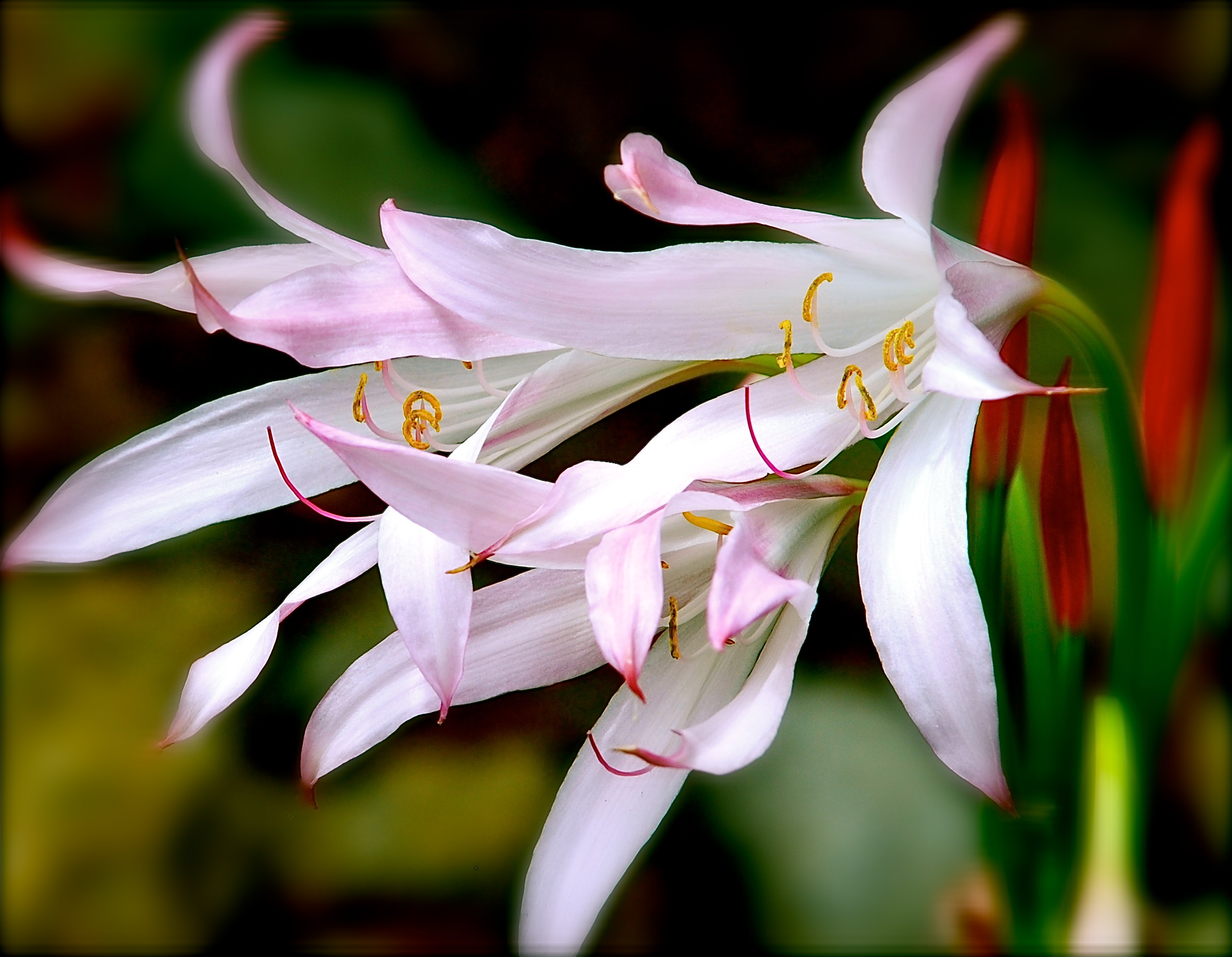
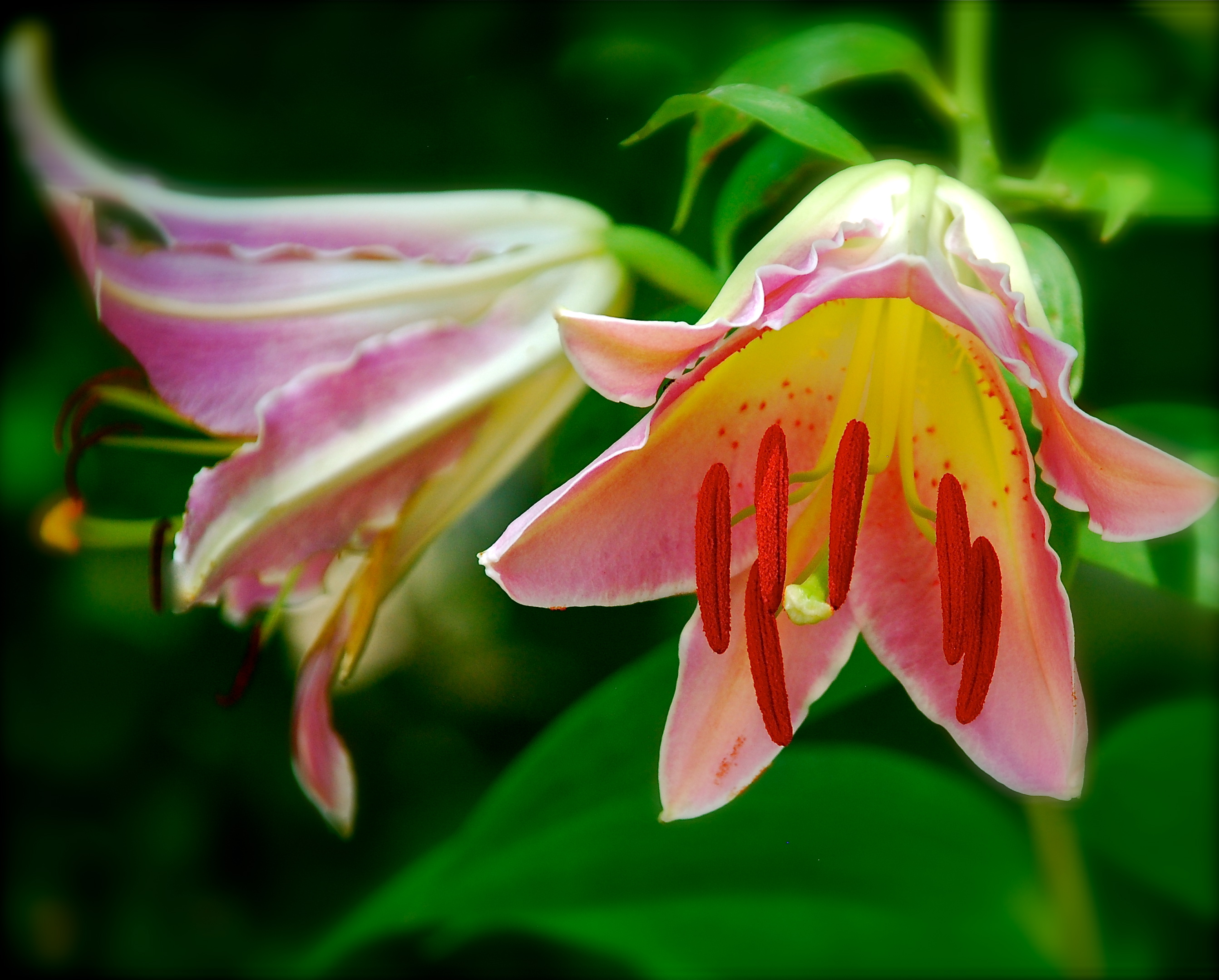
Lilies, beautiful lilies, I adore them! And I feel sure they’ve written “mysterious truths” on many a hill and field since they’ve been cultivated for thousands and thousands of years. Lilies were the holy flower of the ancient Assyrians, and there’s an ancient legend that says the lily sprang up from the tears Eve shed as she left the Garden of Eden. It has also been written that the lily-of-the-valley grew up from the tears shed by Mary over the death of her son, Jesus, the Messiah. The word lily in French is lis and the fleur-de-lis may be a stylized representation of a lily. However there’s been much controversy and debate about whether the stylized flower is a lily or a wild yellow iris instead. Despite the disputes, at some point in the Middle Ages, the fleur-de-lis did in fact become a religious symbol associated with the lily. That may have stemmed from words in the Song of Solomon and other passages of scripture or literary works since Christ has often been depicted amid stylized lilies.

Image

My coming to faith did not start with a leap but rather a series of staggers from what seemed like one safe place to another. Like lily pads, round and green, these places summoned and then held me up while I grew. Each prepared me for the next leaf on which I would land, and in this way I moved across the swamp of doubt and fear. ~Anne Lamott

Image

My beloved has gone down to his garden, to the beds of spices, to browse in the gardens and to gather lilies. ~Song of Songs 6:2 ✝

Thank you, Lord Jesus, that you save, you heal, you restore, and you reveal Your Father’s heart to us! You have captured me with grace and I’m caught in Your infinite embrace!

355. Forget diamonds, wear a crown of daisies. ~Sandra O’Connell

… At my feet the white-petaled daisies display
the small suns of their center piece their–if you don’t mind
my saying so–their hearts. Of course
I could be wrong, perhaps their hearts are pale and
narrow and hidden in their roots. What do I know,
But this: it is heaven itself to take what is given,
to see what is plain;
what the sun lights up willingly…
~Excerpt from “Daisies” by Mary Oliver

Image

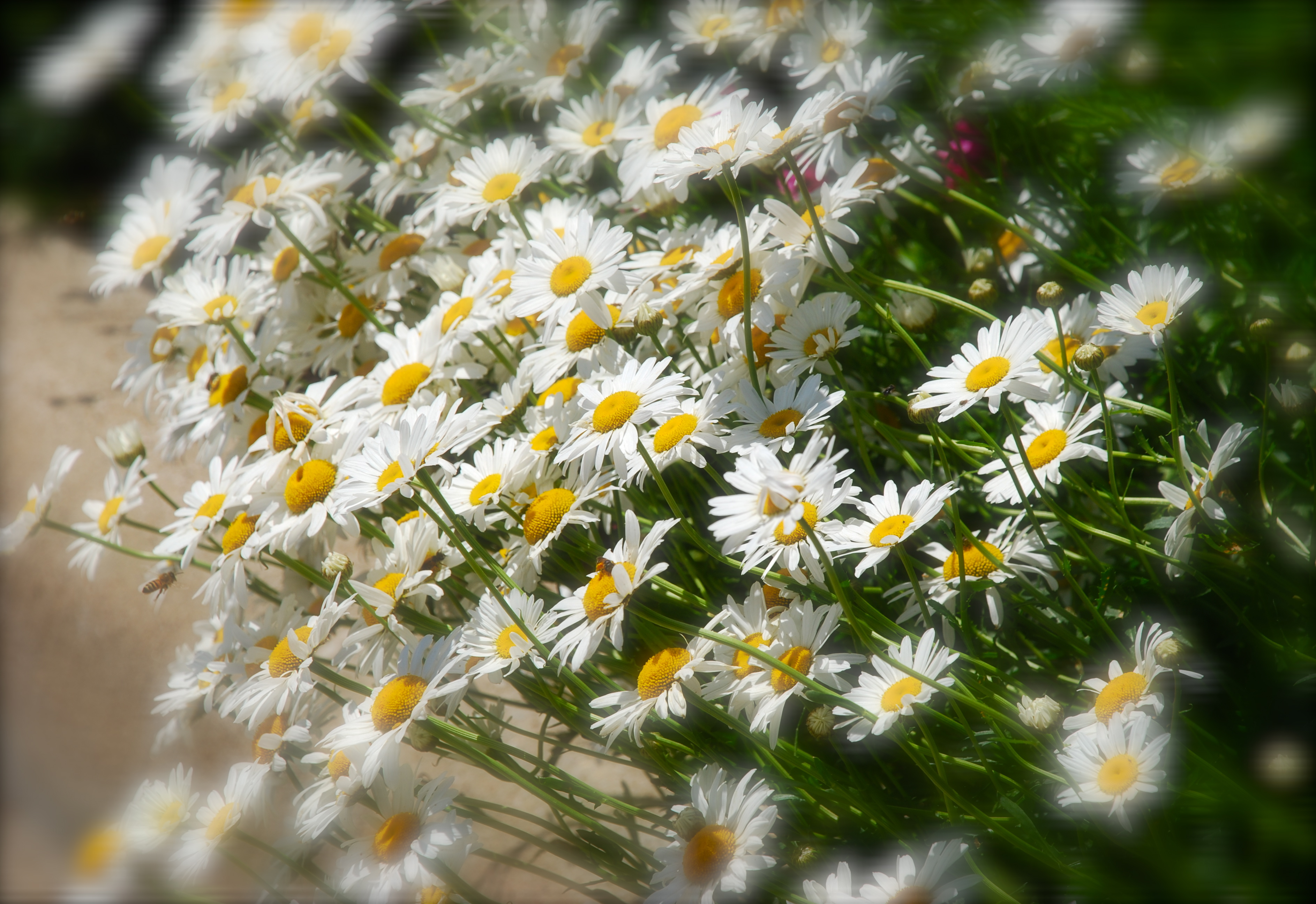
He loves me, he loves me not, he loves me, he loves me not, he loves me… It’s funny how some things, even those learned in early childhood, never fade from memory. I’ll bet most, if not all of you, remember pulling the petals off a daisy and reciting this ditty over and over again until the final petal gave up the supposed truth. Georgia O’Keefe, the American artist who painted those amazing, large-format pictures of enlarged blossoms, said of them, “When you take a flower in your hand and really look at it, it’s your world for a moment. I want to give that world to someone else. Most people in a city rush around so they have no time to look at a flower. I want them to see it whether they want to or not.” Why would she feel that way? I think it’s because there is just something in the “world of a flower” that exudes sanctitude and goodness, a revelation that sheds light into the mysteries of life. And its words seem to say over and over again, “I speak of a divine and devoted lover. I tell tales of a garden created in a faraway place, a long time ago. I describe a tragic fall therein from divine Grace. I relate attempts to redeem the lost children of subsequent generations. I narrate stories of a Savior who did His father’s bidding. I share the story of the Christ’s sacrifice and His magnanimous offer of redemption. I talk of holy men bound to spread the Messiah’s story who, as they moved from one monastery garden to another, spread species of my kind from place to place. I inspire men of rhymes to write poetry about me that speaks to human hearts. I sing hopeful, prophetic melodies of my faithful return year and year, millennia upon millennia. I whisper words from above of unending love into listening ears. Quite simply, if you look at me and hold me, cherish me and revere me, I will make known to you the Creator of heaven and earth, and you will forever bless His holy name for He is the One who answered once and for all your childhood query.

But I am like an olive tree flourishing in the house of God; I trust in God’s unfailing love for ever and ever. ~Psalm 52:8 ✝

Thank you, Lord Jesus, that you save, you heal, you restore, and you reveal Your Father’s heart to us! You have captured me with grace and I’m caught in Your infinite embrace!

291. The more I see you, the more I find you, the more I find you, the more I love you. ~Kari Jobe

Come, gentle Spring!
Ethereal mildness!
Come.
~James Thomson

Image

Spring is coming!  Its earliest harbingers have arrived to tell me so.  And with it, as always, comes a heightened sense of awe and wonder, a sense of such that I acquired at a very early age.  Thus I look not outside Creation nor separate from it, to find God.  The words of Romans 1:20 in Scripture intimates that “the world is a place of revelation and the whole of life is sacramental.”  So it is that Creation is enough to reveal God to humanity, but it is not enough for its salvation.  For that we need Jesus, the Messiah; He is the only one who has the ability to offer us salvation.  Thankfully, with a profession of faith that He is Lord and a penitent heart, it is ours for the asking.

“Come to me, all you that are weary and are carrying heavy burdens, and I(Jesus) will give you rest.  Take my yoke upon you, and learn from me; for I am gentle and humble in heart, and you will find rest for your souls. For my yoke is easy, and my burden is light.”  ~Matthew  11:28-30   ✝

225. Stripes that are red like the blood shed for me. ~Author Unknown

There’s a song in the air!
There’s a star in the sky!
~Joseph G. Holland

Image

The strongest connection one might make between the origins of the candy cane and any intentional Christian association is to guess that possibly some unknown person, at some indefinite time, took a long-existing form of sweet (i.e., straight white sticks of sugar candy) that was already associated with Christmas and produced bent versions of it to represent a shepherd’s crook and/or make it easier to hang on Christmas trees, but even that general association is nothing more than mere supposition with no supporting evidence behind it.  This is charming folklore, but one should not lose sight of the fact that such stories of the candy cane’s origins are, like Santa Claus, myths and not “true stories.”

There is one verifiable (albeit indirect) religious connection associated with the modern candy cane, however.

In 1919 Bob McCormack began making candy canes for local use and sales in Albany, Georgia, and by the middle of the century his company (originally the Famous Candy Company, then the Mills-McCormack Candy Company, and later Bob’s Candies) had become one of the world’s leading candy cane producers. But candy cane manufacturing initially required a fair bit of labor that limited production quantities (the canes had to be bent manually as they came off the assembly line in order to create their ‘J’ shape,) and it was McCormack’s brother-in-law, a Catholic priest named Gregory Harding Keller, who came up with the solution: Father Keller invented the Keller Machine that automated the process of shaping straight candy sticks into candy canes.   ~Barbara Mikkelson

The woman said to him, “I know Messiah is coming” (who is called Christ).  “When he comes, he will proclaim all things to us.”  ~John 4:25  ✝

222. Green thoughts emerge from some deep source of stillness which the very fact of winter has released. ~Michael Osler

I danced in the morning when the world was begun
I danced in the moon and the stars and the sun;
I was called from the darkness by the song of the earth,
I joined in the singing and she gave me birth.

Dance, then, wherever you may be!
I am the Lord of the Dance, said he,
And I’ll lead you on, wherever you may be,
I will lead you all in the Dance, said he!

The moon in her phases and the tides of the sea,
the movement of the Earth, and the seasons that will be
Are rhythm for the dancing and a promise through the years–
The Dance goes on through joy and tears.
~Excerpts from the Lord of the Dance, traditional

Image
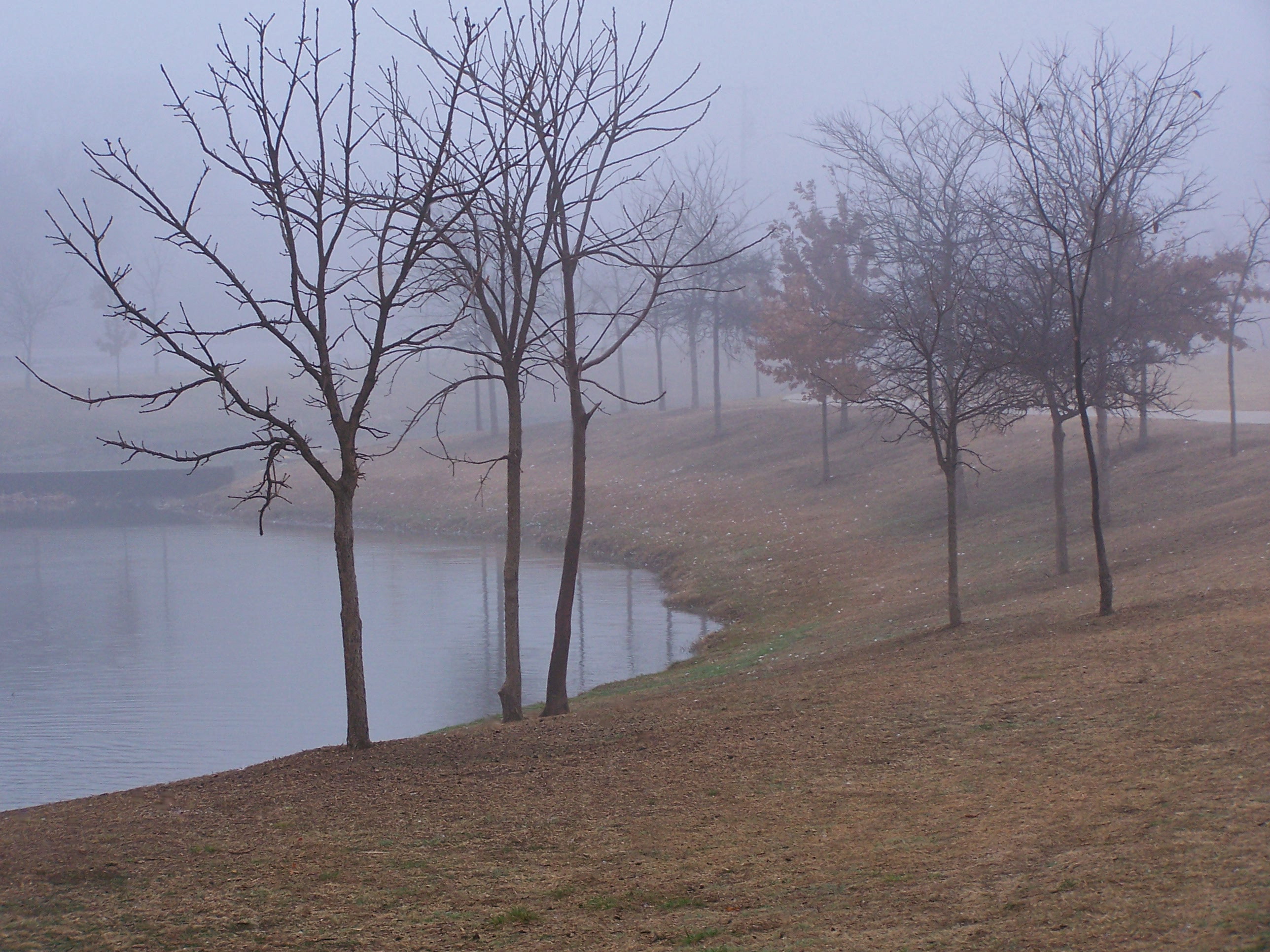
**Photo taken by Natalie on a foggy morning when a blue norther blew in to announce winter’s arrival

The beginning of the good news of Jesus Christ, the Son of God.  ~Mark 1:1  ✝

152. A bit of fragrance always clings to the hand that gives roses. ~Chinese Proverb

Under a lawn, than skies more clear,
Some ruffled Roses nestling were,
And snuggling there, they seem’d to lie
As in a flowery nunnery;
They blush’d, and looked more fresh than flowers
Quickened of late by pearly showers. . .
~Robert Herrick, 17th century English poet

Image

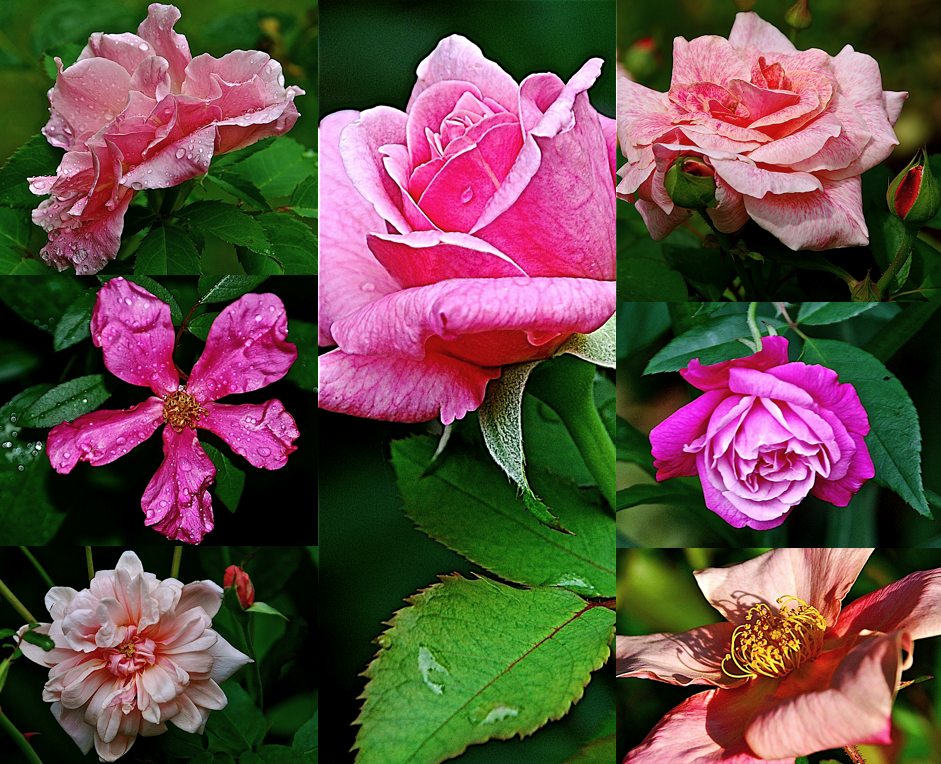
As you can see in my photographic “nunnery,” the “sisters” are all roses, but all are not wearing the same “habit.”  They all have petals, but the number of petals is not the same.  They’re all pink, but it is not the same shade of pink.  They all start out as not-so-different buds, but when open they do not all look alike.  Even the scents are not all the same.  However, there are those who been known to say, like I did at one time, that all roses are more or less the same.  But “a rose is a rose is a rose” is simply not the case.  When I fell in love with gardening, I started learning about the many varieties of roses, and after growing them I realized that each species has its own unique personality and appearance.  What surprised me the most was that according to fossil findings the roses we see today are the descendants of ones that have been growing for over 35,000,000 years.  It wasn’t until after prehistoric times, though, that treks of one kind or another began to spread them all around the world.  These early migrations are reported to have originated in places like Persia, Egypt, Mesopotamia, and China.  Then later on many of them traveled along with the spread of Christianity because monks would move them from one monastery garden to another during the Crusades, and it was some of those early Christians who identified the five petals of the single rose (lower right photo) with the five wounds of  the Messiah.

For we are to God the pleasing aroma of Christ among those who are being saved. . .  ~2 Corinthians 2:15