189. Every single story nature tells is gorgeous. ~Natalie Angier

How little note is taken of the deeds of Nature!
What paper publishes her reports?
Who publishes the sheet music of the winds,
or the written music of water written in river lines?
Who reports the works and ways or the clouds,
those wondrous creations coming into being
every day like freshly upheaved mountains?
And what record is kept of nature’s colors – the clothes she wears
– of her birds, her beasts – of her livestock?
~John Muir
Image

When life is lived close to nature, one sups at banquets the earth lays upon sacred plains and holy, high altars.  These moving, kaleidoscopic feasts are found in or on waters, woods, hills, mountains, meadows, fields, deserts, even rocky, jagged cliffs.  Therein or on the planet’s vistas and colors bedazzle the eyes; her shapes and textures fascinate the hands; her scents and fragrances thrill the nose; her rhythms and symphonies seduce the ears while through it all and all the while the human heart is comforted by God’s faithfulness and His divinely appointed seasons.  Simply put, under the sun, moon, and stars and in haunts where breezes blow, grasses grow, and waters flow the human spirit and the soul are nurtured while his life is sustained by the Creator’s grace and lavish spreads.

He (God) performs wonders that cannot be fathomed, miracles that cannot be counted.  ~Job 5:9  ✝
188. We have not wings; we cannot soar; but, we have feet to scale and climb, by slow degrees, by more and more, the cloudy summits of our time. ~Henry Wadsworth Longfellow

You raise me up, so I can stand on mountains;
You raise me up, to walk on stormy seas;
I am strong, when I am on your shoulders;
You raise me up…to more than I can be.
~Josh Groban, American singer and songwriter

Image

There is a peacefulness in a gray, cloudy day.  The air, normally charged with energy from the sun, loses its intensity and floats lightly on the gentle wings of tranquil contentment.  Noises are quieter and more mellow under lowering, billowy clouds not angry with the fury of storms.  My steps are slower, less urgent, as I move on the footpaths of the routine daily tasks before me.  Pushing up from deep within a still, small voice, often neglected, is more audible in the day’s silences.  It speaks of matters of the heart and the spirit, never of worldly affairs, nor greed, nor lust, nor gain in this world of men and madness.  Instead the voice nudges me to be in active pursuit of His plans for my life, not in the grand designs of my own folly.  It tries to keep me from complacency hiding under the guise of ignorance and brings light into dark places where I’m to face bigger issues that I often would rather ignore because it’s so much easier to do so.  The voice is not, however, a judgmental one; it is instead an encouraging, affirming agent that lifts me up on high, sacred ground.

“And after the earthquake, a fire, but the Lord was not in the fire: and after the fire a still small voice.”  1 Kings 19:12  ✝

183. Why are there trees I never walk under but large and melodious thoughts descend upon me? ~Walt Whitman

And this our life,
exempt from public haunt,
finds tongues in trees,
books in running brooks,
sermons in stones,
and good in everything.
~William Shakespeare

Image

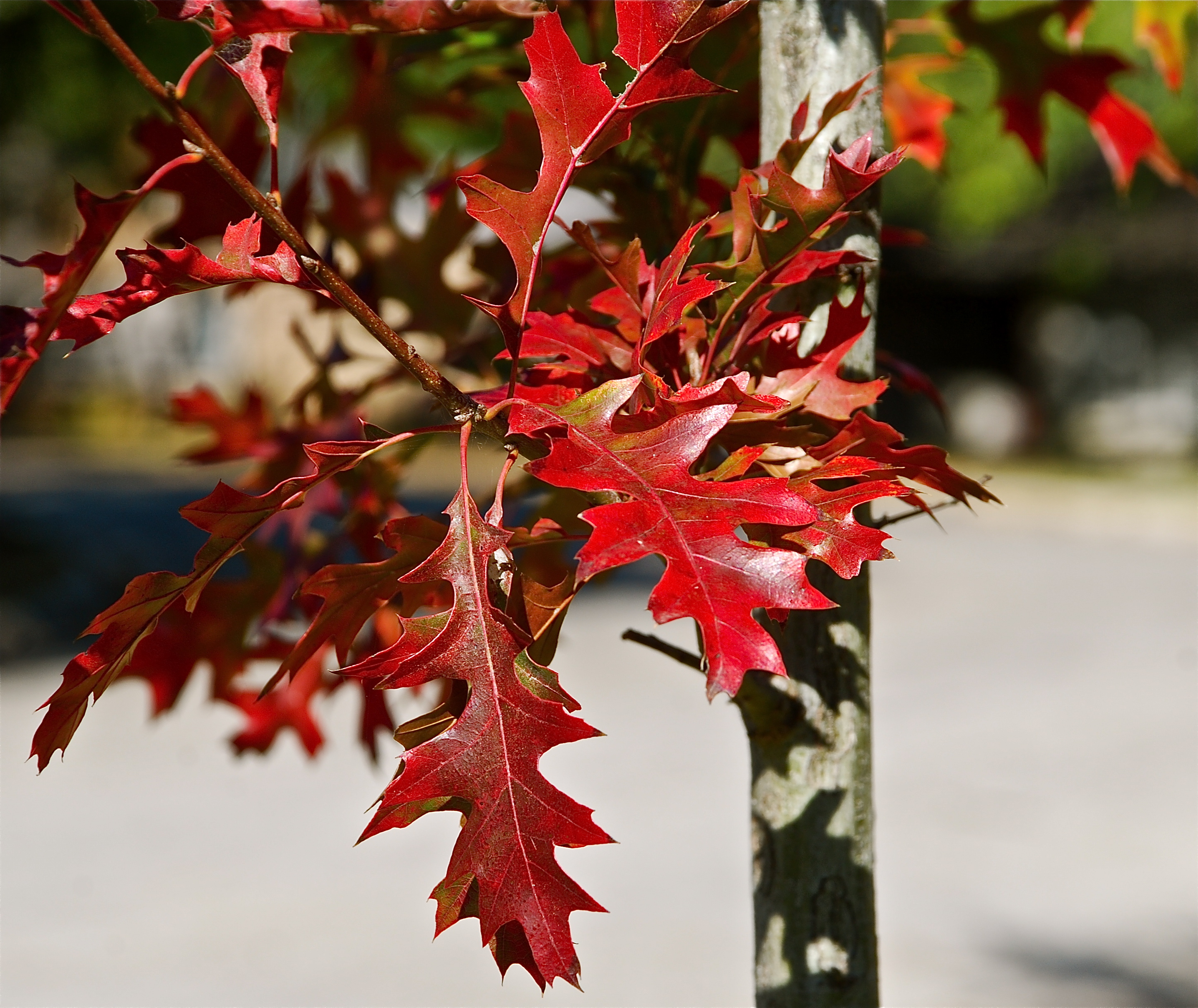
Standing beneath the Shumard Red Oak made me feel like I was standing in a temple of the Most High.  The breeze was ruffling its leaves, and they in turn were prompting sacred tongues to utter incantations of their divine purpose.  For though the leaves face eminent extinction and expulsion from the branches, in their dying they’ll fall and create warm blankets to cover the ground.  In so doing they will protect the life that lies beneath the surface during winter’s cold, cold days.  Even at the close of winter their goodness will not be at an end for as they deteriorate, the remaining bits and pieces will add nutrients to enhance the soil.  Thus goes the circle of life and the interdependency of all things.

God’s voice thunders in marvelous ways; He does great things beyond our understanding.  ~Job 37:5  ✝

169. Everything is mended by the soil. ~Andrew Crofts

The best things in life are nearest:
Breath in your nostrils,
light in your eyes,
flowers at your feet, duties at your hand,
the path of light just before you.
Then do not grasp at the stars, but do life’s plain,
common work as it comes, certain that daily duties and
daily bread are the sweetest things in life.
~Robert Louis Stevenson

Image

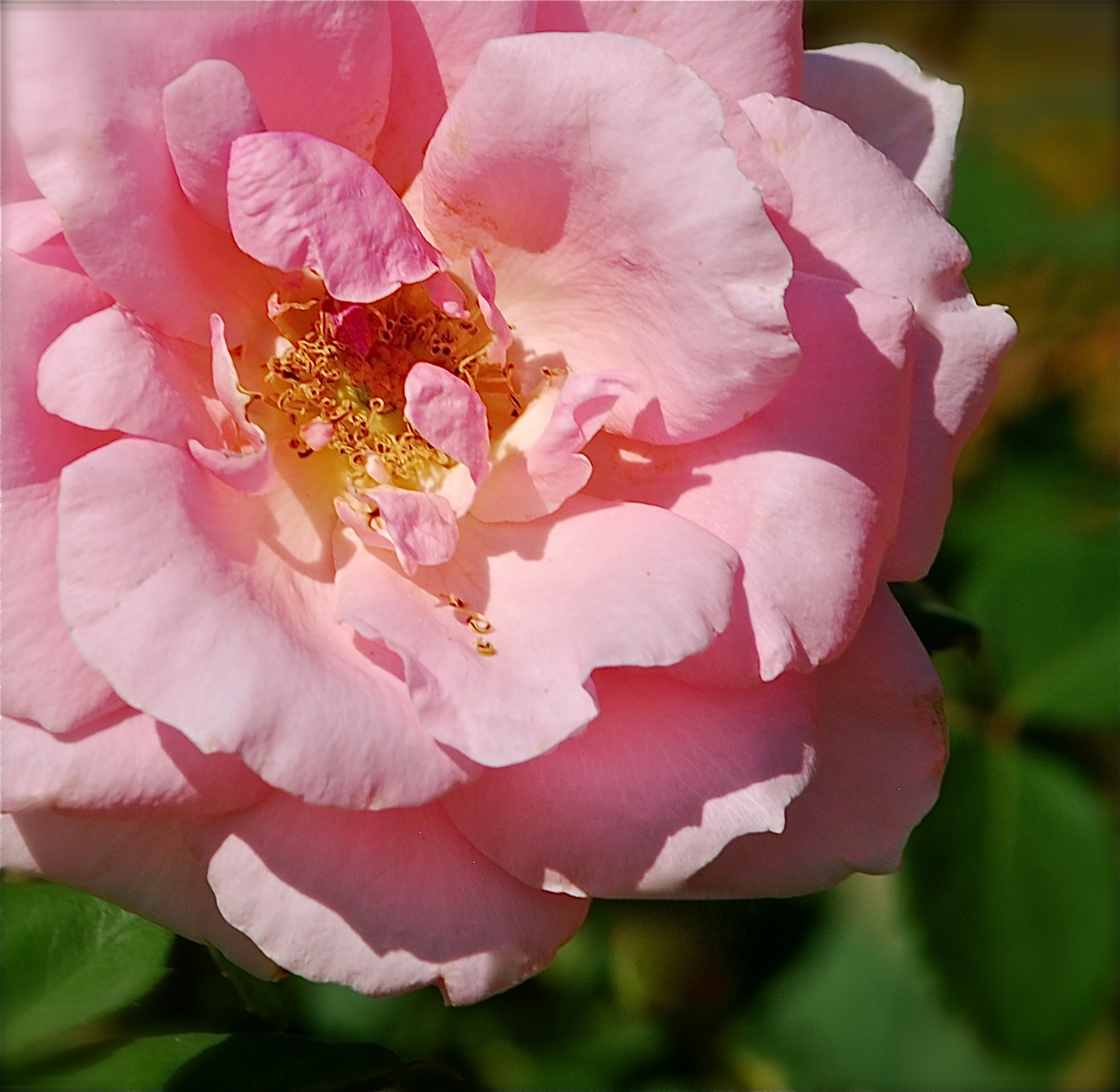
What a picture perfect day it has been!  After several very coolish, gray days, the sun regained control of the eastern horizon at dawn today, and it has remained the sole ruler of a deeply blue, autumnal sky the rest of the day.  The temperature has been in the 60’s and 70‘s making it this gardener’s idea of a perfect day.  The “breath in my nostrils” has been scented with attar of roses, the “light in my eyes” has brought me wondrous sights, the “flowers at my feet” have fed my hungry soul, the “duties at hand” have energized my aging body, and the “path of light” before me has once again led to God’s amazing throne of Grace.  It just doesn’t get any better than that, at least in my book.

May the light of your soul guide you.
May the light of your soul bless the work that you do
with the secret love and warmth of your heart.
May you see in what you do the beauty of your own soul
.May the sacredness of your work bring healing, light,
and renewal to those who work with you
and to those who see and receive your work.
May your work never weary you.
May it release within you wellsprings of
refreshment, inspiration, and excitement.
May you be present in what you do.
May you never become lost in bland absences.
May the day never burden.
May dawn find you awake and alert,
approaching your new day with
dreams, possibilities, and promises.
May evening find you gracious and fulfilled.
May you go into the night blessed,
sheltered, and protected.
May your soul calm, console, and renew you.
~Author unknown

From the fruit of his lips a man is filled with good things as surely as the work of his hands rewards him.  ~Proverbs 12:14   ✝

168. A garden without its statue is like a sentence without its verb. ~Joseph W. Beach

Man becomes aware of the sacred because it manifests itself, shows itself,
as something wholly different from the profane.
In each case we are confronted by the same mysterious act–
the manifestation of something of a wholly different order,
a reality that does not belong to our world,
in objects that are an integral part of our natural “profane” world.
~Mircea Eliade, Romanian historian, writer, and professor

Image

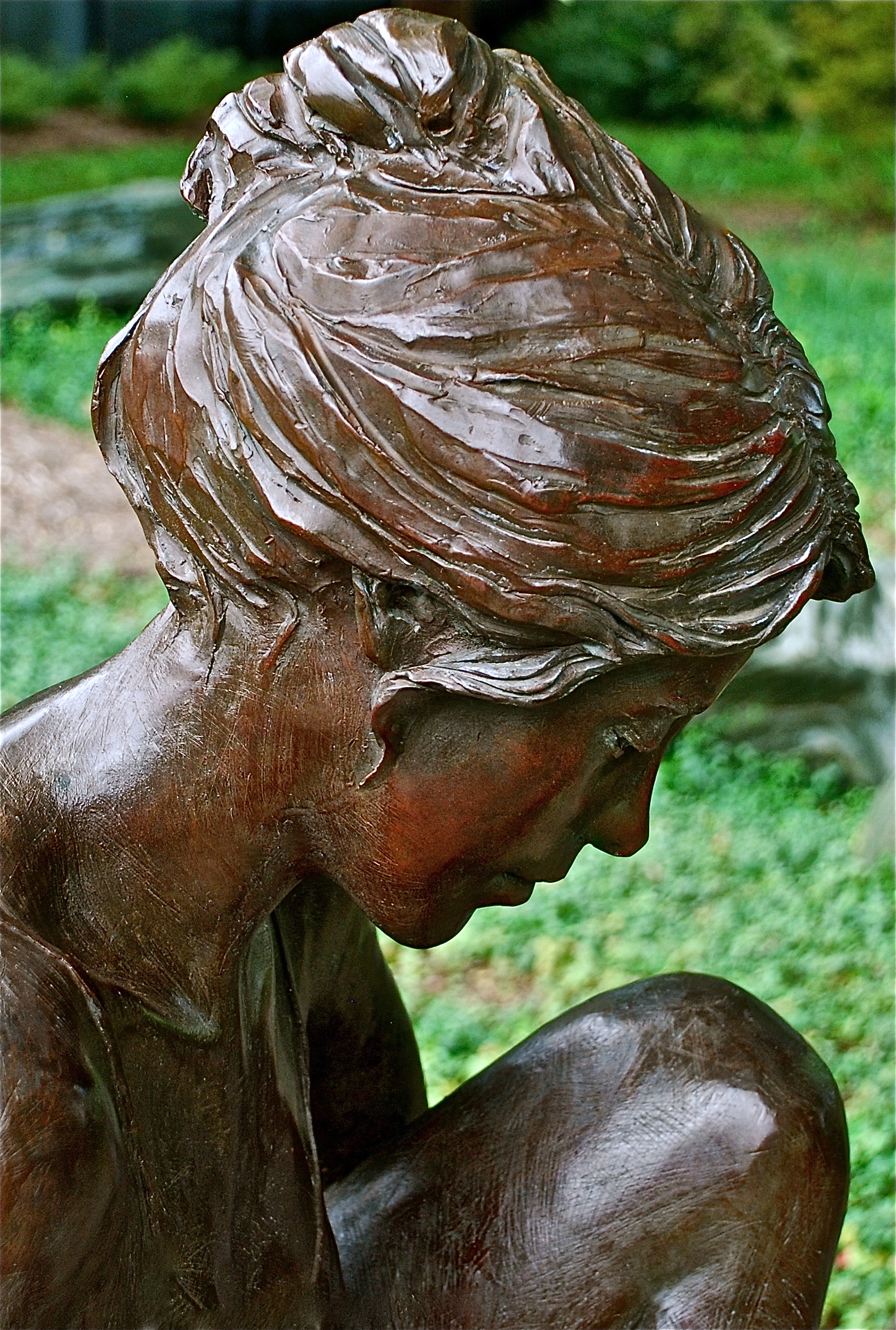
Although I dearly wish it were, the statue in the photo is not in my garden.  She is one of several scattered around our city’s Botanical Gardens.  The captivating sculpture in her quiet reverie and reverence is not unlike a “be” verb in that she expresses a state of being, and I think she does it ever so engagingly.  In fact, when I look at her, especially her bowed head, I get the feeling I’m observing someone deep in contemplative prayer.  Given that, I’m always a little reluctant at first to move in too close for fear of disturbing her petitions.  William Faulkner said that “the aim of every artist is to arrest motion, which is life, by artificial means and hold it fixed so that a hundred years later, when a stranger looks at it, it moves again since it is life.”  How successful then was the artist who crafted this bronze “lady of the garden!”  I’ve always sensed life and movement in her, and as an admiring observer, I am moved inwardly in her presence.  Her movement is not flamboyant; instead it is more of a faint in and our movement of breath.  Another thing that fascinates me about the statue is that there is a warmth in her presence even on bitterly cold, wintry days.  It’s a kind of glowing warmth that speaks of life, holy and not in the least profane.

Sing to Him, sing praise to Him; tell of all His wonderful acts.  Glory in His holy name; let the hearts of those who seek the Lord rejoice.  Look to the Lord and His strength; seek His face always.  ~1 Chronicles 16:9-11  ✝

166. Another fall, another turned page: there was something of jubilee in that annual autumnal beginning…. ~Wallace Stegner

The foliage had been losing its freshness through the month of August,
and here and there a yellow leaf showed itself like a first gray hair…
September dressed herself in showy dahlias and
splendid marigolds and starry zinnias.
October, the extravagant sister, ordered an immense amount of
the most gorgeous forest tapestry to make glorious her grand spectacle.
~Edited and adapted excerpt from Oliver Wendell Holmes

Image

The first leafy sign of autumn appeared on the Dogwood today, and it triggered a flood of “color” musings in my mind.  Chestnut and chocolate!  What’s not to love about a season that clears off summer’s calamities, piles delectable hues back on nature’s palette, and calls for a pot of hot chocolate?  Lemon and lime!  Grasses, flowers, fruits, berries, and even a beastie or two weave fabulous garlands in the sacred temple bound by earth and sky.  Maroon and mahogany!  Chilling winds induce chemical changes in leaves that conjure up magic shows on woody altars in earth’s forests.  Mauve and mulberry!  The leaves on maples, oaks, dogwoods, pears, persimmons, and other trees give birth to colorful, parchment-like jewels that will one day snap off, swirl in little eddies, and play like children upon the ground.  Orange and ochre!  Pumpkins made to squat on porches or bales of hay tickle the fancy of mortal tongues anxiously awaiting fall feasts and winter banquets.  Red and russet!  Roses, asters, and Maximilian sunflowers invoke a breath of spring not stifled by summer’s heat to keep the year’s last child in colorful array.  Sable and sapphire!  Skies often shrouded by gauzy, gray clouds are swept clear by northerly winds as cold fronts advance.  On such days a spectacular brilliance can be seen on the brows of morn followed by daylight hours drenched in deep, dreamy shades of blue.  Sterling and pewter!  Plumed grasses shift and sigh in authorship of haunting, autumnal hymns.  Ah, how lovely are the many colors of autumn and the Holy One who made them!

As long as earth endures, seedtime and harvest (spring and autumn), cold and heat, summer and winter, day and night will never cease.  ~Genesis 8:22  ✝

165. Some praise the Lord for Light, the living spark; I thank God for the Night, the healing dark. ~Robert William Service, “Weary”

Night, the beloved.
Night, when words fade and things come alive.
When the destructive analysis of day is done,
and all that is truly important becomes whole and sound again.
When man reassembles his fragmentary self
and grows with the calm of a tree.
~Antoine de Saint-Exupéry

Image

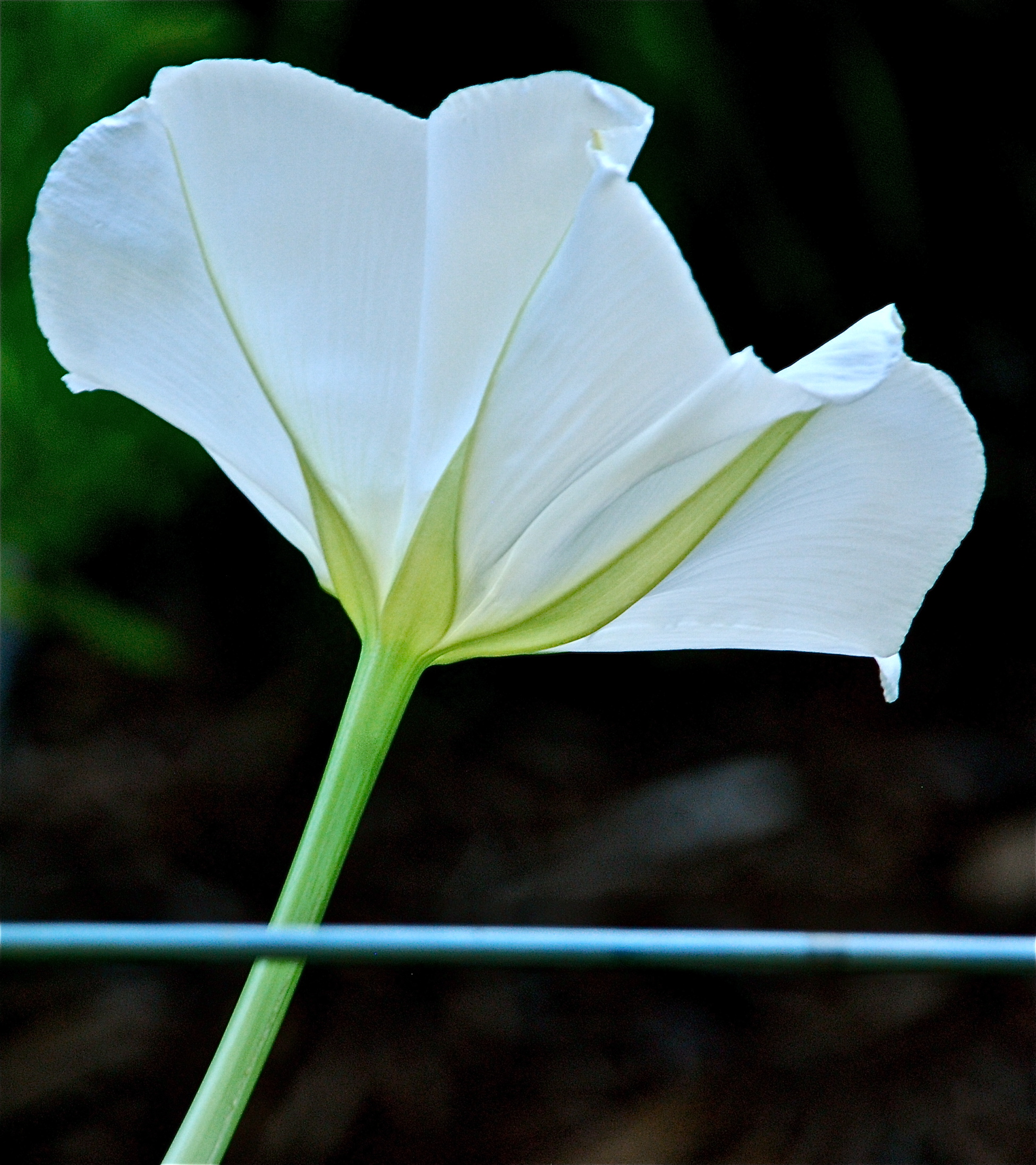
The air was crisp and cool; day’s light had just slipped away.  Wet blades of grass sparkled in a kind of diamond-dusted majesty under the glow of a rising harvest moon.  As if to punctuate my scattered thoughts, tiny aircraft lights glided from time to time through the darkening indigo sky.  When I began glancing around the yard, the images that confronted me seemed to be popping up like photos in a slowly advancing slide show.  The first one I saw was of the red turk’s caps underneath the rose arch, then the white moonflowers on the neighbor’s fence, fattening seed pods under the oak, a Celtic cross, a flying moth, an intermittently  shrouded moon.  The spell was broken only for a short while when the fragrance from my potted herbs temporarily seduced my nose.  Then the slide show started up again with a flash of yellow and white lights, followed by a rustling noise, leafy branches hanging low, a sculpted monk, stone rabbits, and a fleeting little lizard.  Music in the distance floated down the alley, and when I turned to follow the sound, I was startled by ghostly shadows dancing on the shed in the deepening darkness.  However the fear was fleeting and not enough to alleviate my growing sleepiness.  It wasn’t until water tapped noisily in the nearly drained fountain and a pair of feral cats came meowing at my feet that I was jolted out of my reverie.  And it had been such a lovely respite for a weary soul, always is when under the holy hosts of heaven that light the night.

And God said, “Let there be lights in the vault of the sky to separate the day from the night, and let them serve as signs to mark sacred times, and days and year…   ~Genesis 1:14  ✝

163. The only noise now was the rain, pattering softly with the magnificent indifference of nature for the tangled passions of humans. ~Sherwood Smith

The richness of the rain made me feel safe and protected;
I have always considered the rain to be
healing–a blanket–the comfort of a friend.
Without at least some rain…I yearn
for the vital, muffling gift of falling water.
~Douglas Coupland

Image

It’s apparent after yesterday’s post that I love everything about the phenomenon of rain–the sound of it, the sensual feel of it, the look of it, the smell of it.  But when it comes to rain, it is not simply a love affair in the heart.  It is a worshipful adoration I feel deep down in my soul.  Especially after the long of absence of rain from my world, it is extremely comforting and reassuring to hear the “pitter-pattering” sounds of it falling on the ground, on the rooftop, on the window panes.  Watching it makes me feel as though I’m witnessing, first hand, cascading miracles; listening to it washes through my being like a healing balm that quiets the disturbing sense of separateness from the sacred;  the “sweet tears of heaven” cannot even be ignored in my sleep.

Praise the Lord!  Autumn’s rain has furthered Spring’s promise.  Rejoice.  The evidence of God’s faithfulness has blanketed the land.  Rejoice.  God’s in His heaven and our Savior sits at His right hand.  Rejoice.  The Creator of heaven and earth adores and watches over all that He has made.  Rejoice.

This is the day which the Lord has made; let us rejoice and be glad in it.  ~Psalm 118:24  ✝

46. A Robin Redbreast in a cage puts all Heaven in a rage. ~William Blake, English poet, painter and printmaker

When father takes his spade to dig
then Robin comes along;
And sits upon a little twig
And sings a little song.
~Laurence Alma-Tadema

Image

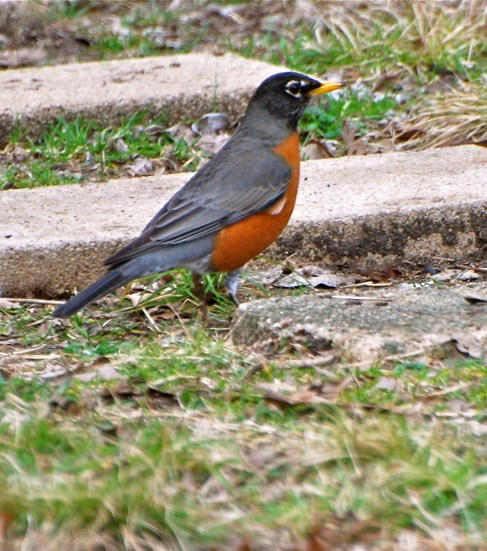
The introductory line is from Blake’s “Auguries of Innocence,” a somewhat lengthy poem consisting of a series of paradoxes in which Blake juxtaposes innocence with evil and corruption. The word augury in the title means omen or token, and the robin is the poem’s first noted “augury of innocence.”  The robin’s song, personality, and countenance are such that it’s obvious why the poet saw the act of putting one in a cage as not only an enraging violation but also as a profound perversion of holiness.  The sweet song and colorful markings of a robin make the bird a delightful harbinger of spring’s infancy and innocence.  Looking forward to its coming is one of my favorite rites in spring’s passage, and like “all heaven” I’d be incensed if the bird’s freedom were taken away and its song silenced.  Below is a legend about the robin that again ties the bird to the blameless and sacred.  Although the truthfulness of legends is questionable, I’m fascinated that somehow, somewhere, and in some way the robin was connected to the Messiah.

The Legend of the First Robin

One day, long ago, a little bird in Jerusalem saw a large crowd gathered around a man carrying a heavy wooden cross.  On the man’s head was a crown made from a thorn branch.  The thorns were long and sharp.  The little bird saw that the thorns were hurting the man.  It wanted to help Him, so it flew down and took the longest, sharpest thorn in its tiny beak.  The bird tugged and pulled until the thorn snapped from the branch.  Then a strange thing happened.  A drop of blood fell onto the bird’s breast, staining it bright red.  The stain never went away.  And so today the robin proudly wears a red-breast, because it helped a man named Jesus.  

“But ask the animals, and they will teach you, or the birds of the air, and they will tell you; or speak to the earth, and it will teach you, or let the fish of the sea inform you.  Which of all these does not know that the hand of the LORD has done this?  In His hand is the life of every creature and the breath of all mankind. . .”  ~Job 12:7-10   ✝

40. Spring shows what God can do with a drab and dirty world. ~Virgil Kraft

Awake, thou wintry earth –
fling off thy sadness!
Fair vernal flowers, laugh forth –
your ancient gladness!
~Thomas Blackburn

Image

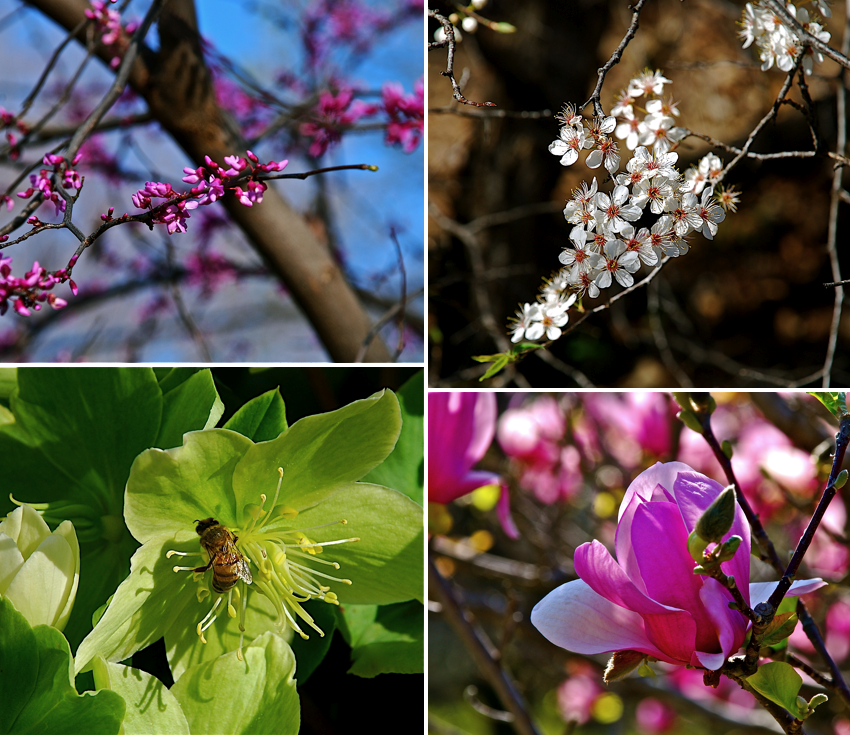
Leaf by leaf, bud by bud, and blossom by blossom the spring of the year advances.   On warmish days, earth casts off its wintry gloom, and breezes broadcast sweetly-scented aromas.  The first butterflies then dare to soar and the hungry bees hum amid the glad laughter issuing forth from flowering bulbs and trees.  As a result the year’s initial poetry of rebirth is penned by the pollinating, aerial whirring of dainty wings.  In the meantime as I hurry about trying to taking photos of the blossoming narratives and their paramours, I often find myself asking the same question Walt Whitman once did.  “Why are there trees I never walk under but large and melodious thoughts descend upon me?”  The answer I’ve decided is that the arms of trees reach towards the heavens to gather sacred messages meant to draw mankind near to “the living Word of God in nature” as well as what is read in Scripture.

In our area the first verses of  “tree” poetry come from Saucer Magnolias.  Their big, goblet-shaped flowers pen exquisite couplets in pink and white.  Soon to follow are the brilliant white blossoms of Star Magnolias.  Though not quite enough lines to form a fourteen-lined sonnet, their twelve exquisite, “petal-poesy” lines form rhyming schemes as lovely as any Shakespearean sonnet.  Next and in perfect rhyming sequences come the double samaras.  Samaras, the scarlet, dual winged fruits of the Red Maple, look like long, slender fairy wings as they dance choric rhymes writ by the winds.  Then come the Eastern Redbuds and Bradford Pears that compose stunning free-verse stanzas in purple and white, each resplendent branch, a psalm written in praise of its Maker.  For a pollinator now there’s no quandary about where sweet nectaries are to be found for stanza after stanza they and I are lead in springtime to earth’s most festive and delicious banquets.

He has taken me to the banquet hall, and His banner over me is love.  ~Song of Songs 2:4