156. I have always been delighted at the prospect of a new day, a fresh try, one more start, with perhaps a bit of magic waiting somewhere behind the morning. ~J. B. Priestley

I do believe in an everyday sort of magic–
the inexplicable connectedness we sometimes experience
with places, people, works of art and the like;
the eerie appropriateness of moments of synchronicity;
the whispered voice, the hidden presence,
when we think we’re alone.
~Charles de Lint
Image

Rose Fyleman (1877-1957) was an English writer and poet of exceptional talent who was best known for her works on the “fairy folk” for children.  She also translated many rare children’s books from French and German into their first English translations.  She eventually became the editor of one of the first children’s magazines called The Merry Go Round.  Rose was born in Nottingham, England, and there is speculation that it could have been the magical setting of Nottingham which led her to believe in fairies.  Whatever the reason, she blessed generations of readers with her lovely fairy poems.

It was one of Rose’s poem, Fairies at the Bottom of the Garden, which prompted my post last night about toadstools.  I loved her poetry as a child and I love it still.  I am passionate about gardening and its lore, and when I see creatures like the one in my photo I see how easy it would be to invent stories about “fairies.”  Besides what he said above, Charles de Lint, explained childhood this way:  “It is easy to believe in magic when you’re young.  Anything you couldn’t explain was magic then.  It didn’t matter if it was science or a fairy tale.  Electricity and elves were both infinitely mysterious and equally possible — elves probably more so.”  I believe Creation is both miracle and magic, and the more we try to explain it the more we see how miraculous and magical it is.  R. A. Salvatore said “a world without mystery is a world without faith,” and so it is because it is our faith that tells us what magic is “waiting somewhere behind the morning” and whose is the “whispered voice, the hidden presence, when we think we’re alone.”

There are fairies at the bottom of the garden!
It’s not so very, very far away;
You pass the gardener’s shed and you just keep straight ahead.
I do so hope they’ve really come to stay. . .
~for more of Fyleman’s work go to:  http://www.fairyamber.com/rfyleman.html

By faith he left Egypt, not fearing the king’s anger: he persevered because he saw Him who is invisible.  ~Hebrews 11:27
155. Observe the cautious toadstools…Pale and proper and rootless, they righteously extort their living from the living. ~W. D. Snodgrass

What did I see today?
I saw a fairies’ gypsy camp.
The tents were toadstools, brown and gray,
Among the bracken, soiled and damp.
~An excerpt from “The Fairy Camp” by Danske Dandridge,
Danish poet and garden muse

Image

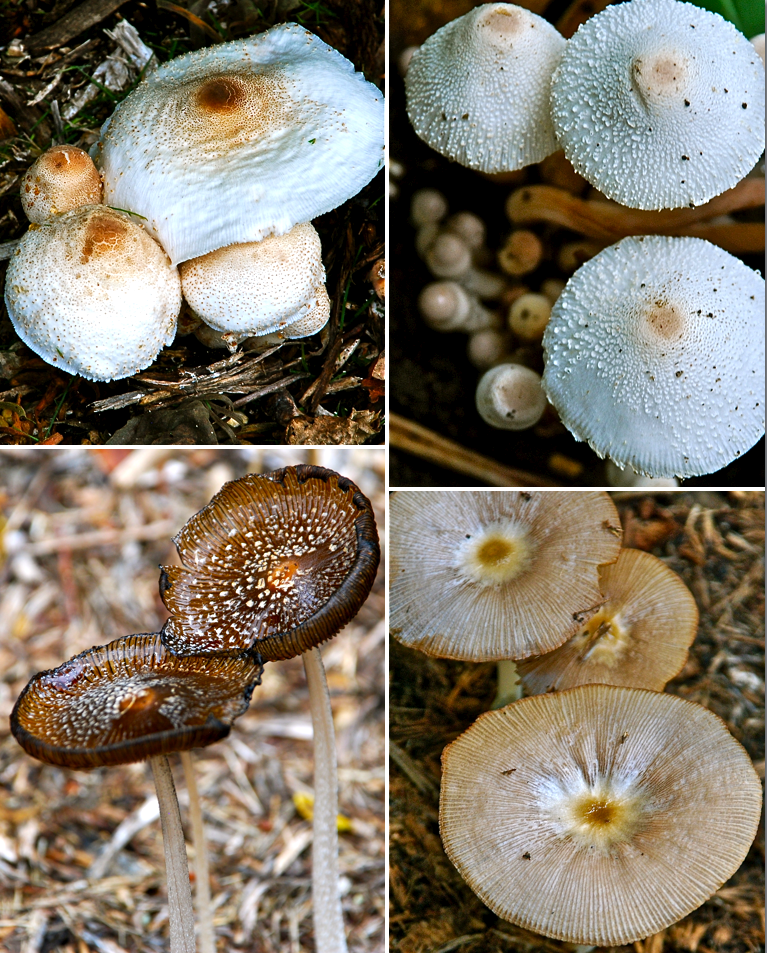
In tales of yore fairies were depicted as pixie-like creatures with gossamer wings, colorful clothing, and magic wands.  Do you believe in them?  The child in me did, and my adult self has had a hard time convincing her otherwise.  It was an especially hard sell when I’d come across toadstools like the ones above.  Such as they never failed to prompt thoughts of fairies that lived in enchanted realms and oftentimes were sighted among flowers, hills, streams, and woodlands.  The storytellers of such tales claimed that the elfish beauties rode on fairy steeds or took to wing in order to flit from flower to flower.  They also said that when a host of fairies gathered together to sing and dance, they were often found in a “fairy ring of toadstools.”  When that was so, we, the readers, were admonished to step lightly around the toadstools or to tip-toe gingerly past them.  Ah, what sweet childhood days were those!  Now the innocence of my youth and my belief in fairy tales may be gone, but not unlike a toadstool that extorts its “living from the living,” I secure my salvation from living in Christ.

For we did not follow cleverly devised stories when we told you about the coming of our Lord Jesus Christ in power, but we were eyewitnesses of His majesty.  ~2 Peter 1:16  ✝

154. “Just living is not enough,” said the butterfly, “one must have sunshine, freedom, and a little flower.” ~Hans Christian Andersen

Bees sip honey from flowers
and hum their thanks when they leave.
The gaudy butterfly is sure that
the flowers owe thanks to him.
~Rabindranath Tagore

Image

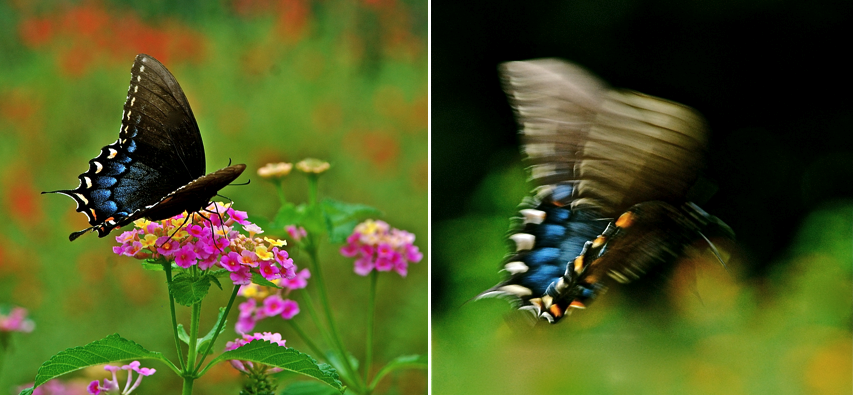
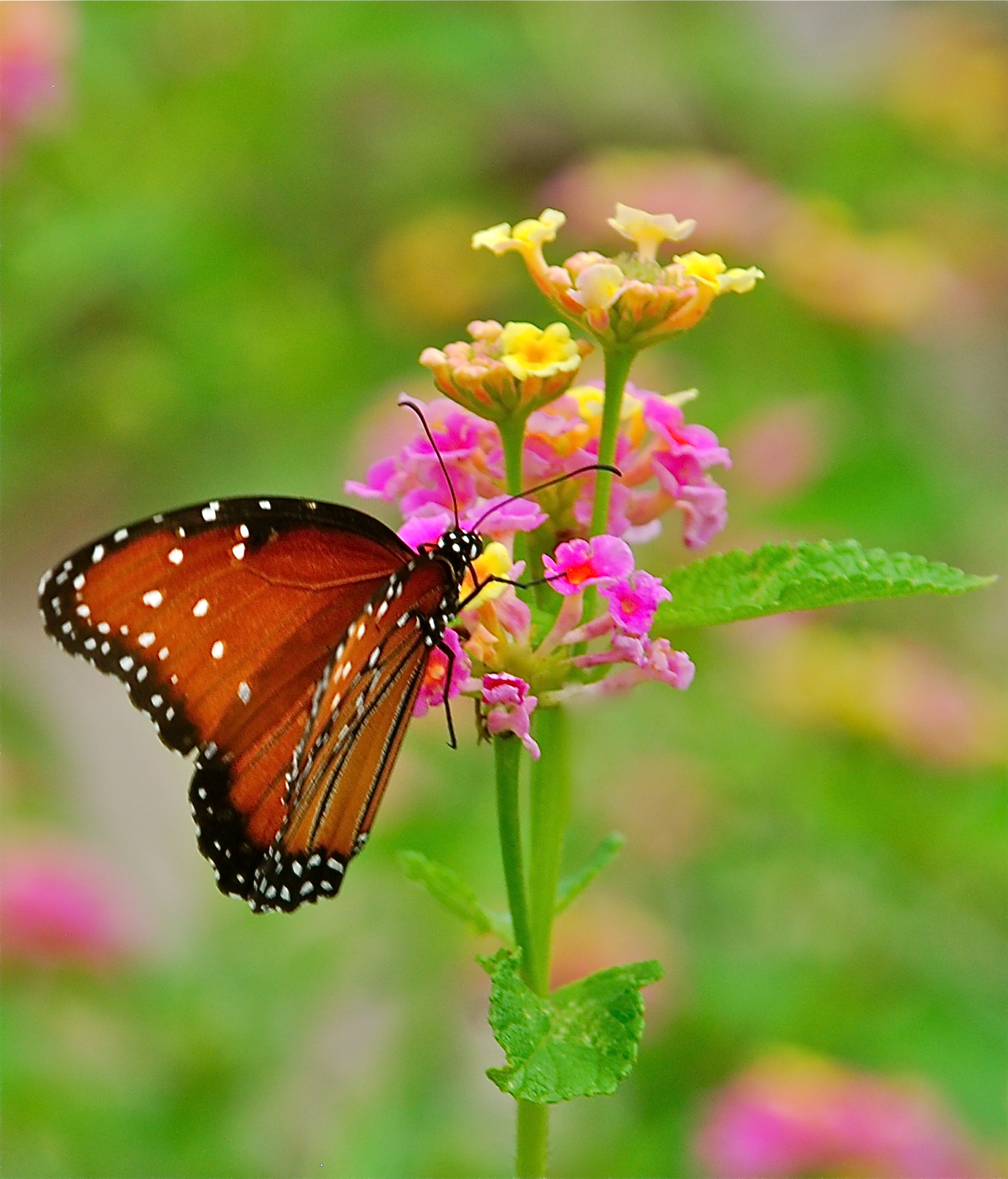
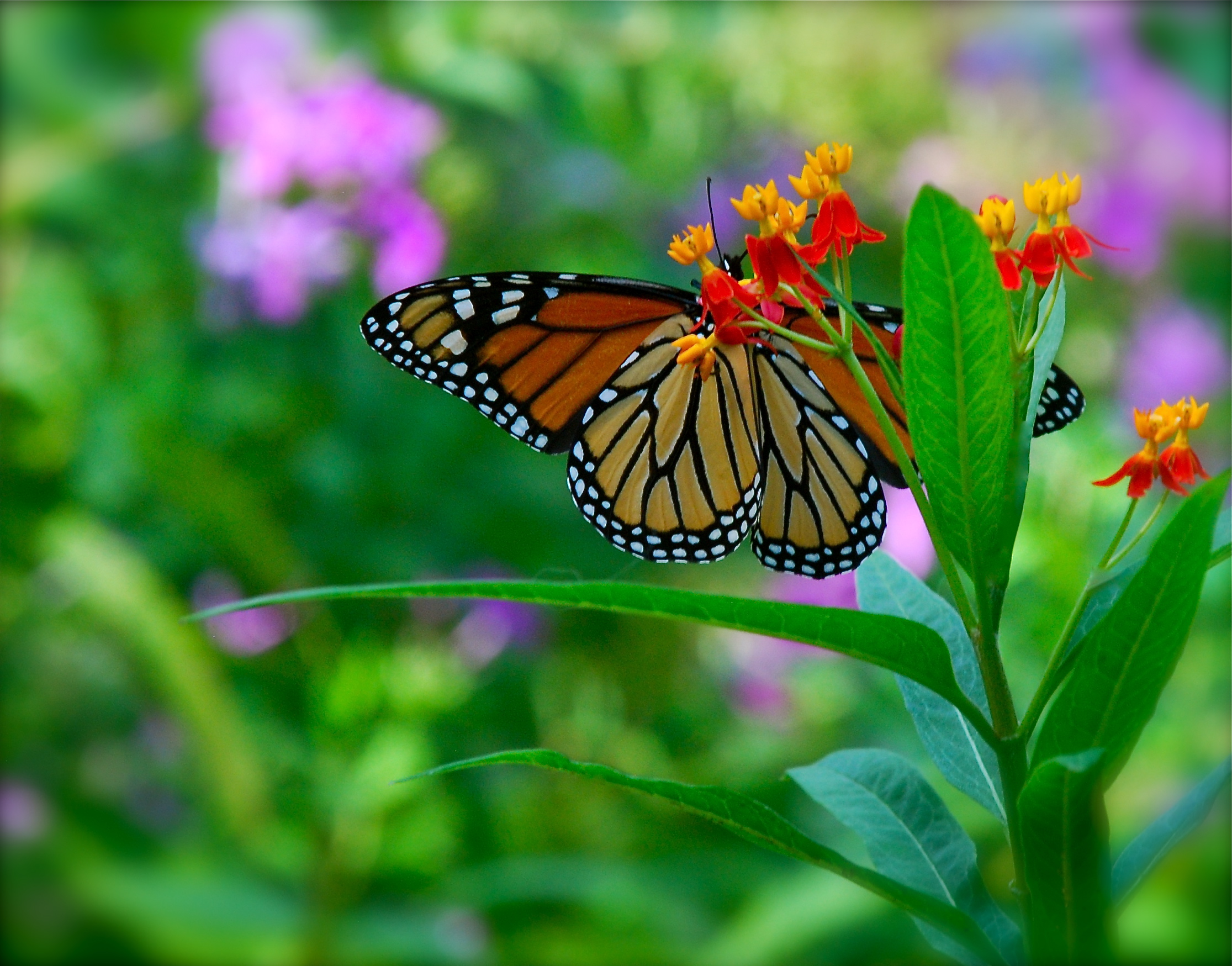
Could there be a more mesmerizing or glamorous creature than the butterfly?  No matter where I am or what I’m doing, the winged beauties stop me in my tracks.  Envious of their dance and fascinated by the way they feed, I watch in awe as they gracefully float from one flower to another.  On this particular trip to our local Botanic gardens, I was thrilled to get a pretty good shot of a swallowtail in flight.  As you can see, butterflies are beautiful even when their likenesses are blurred.  Butterflies, often described as self-propelled or flying flowers, have long been venerated all over the world.  We see a variety of artistic depictions of them in many cultures, including the 3500-year-old ones on Egyptian hieroglyphs.  They are also the darlings that inspired the images of “butterfly fairies” both in art and as fictional characters in stories.  They have been used as well as symbols of God’s favor, good luck, the human soul, love, and rebirth.  Simply put, they are to the world of insects what the rose is in the world of flowers–incomparably beautiful.

How sweet are Your words (Lord) to my taste, sweeter than honey in my mouth.  ~Psalm 119:103  ✝

153. The soul would have no rainbow had the eyes no tears. ~John Vance Cheney

The flower offered of itself
And eloquently spoke of God
In languages of rainbows
Perfumes,
And secret silence. . .
~Phillip Pulfrey, photographer, painter, and poet

Image

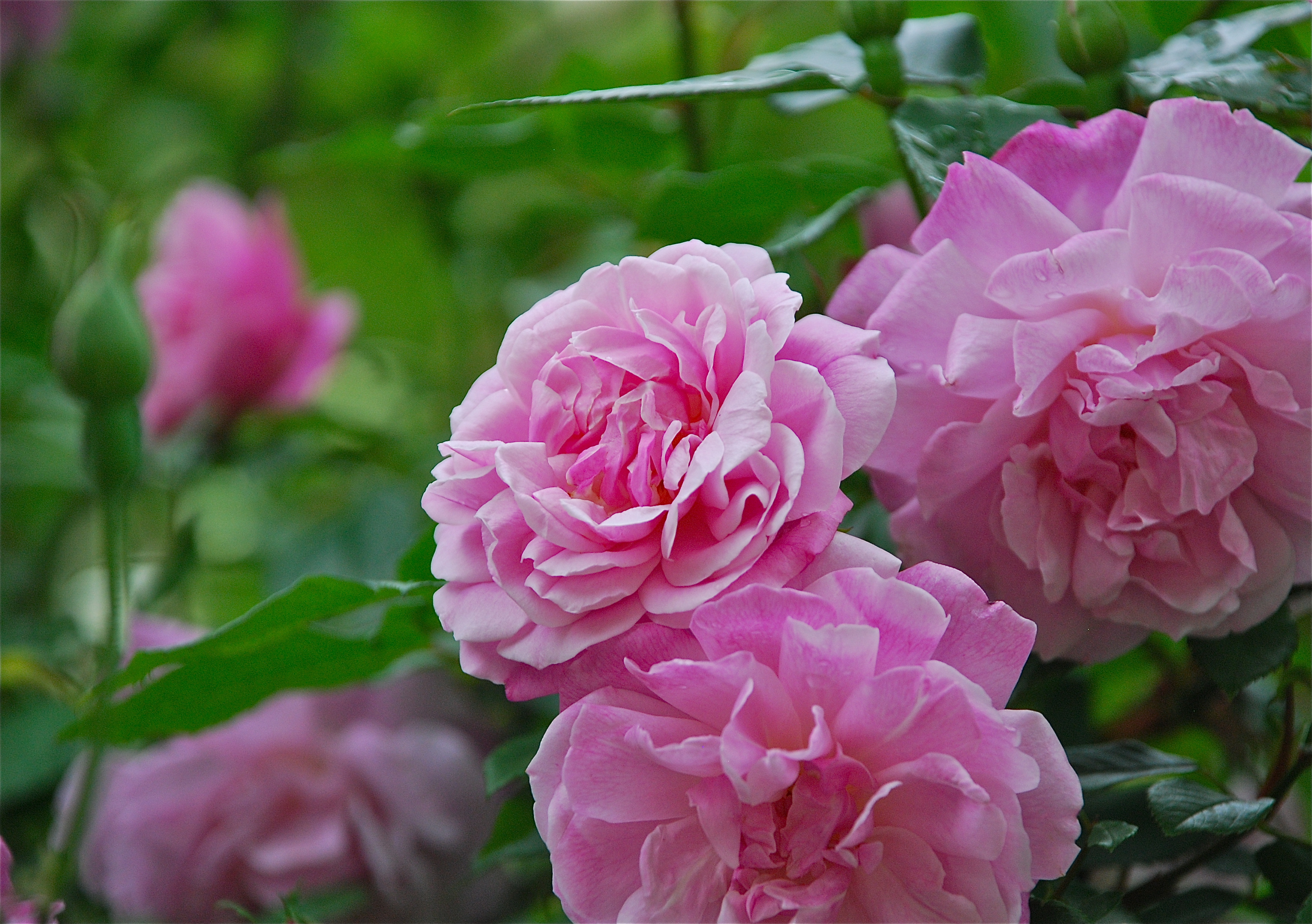
Almost comically what brought roses to Texas began with a “slow boat to China,” as it were.  The Chinese had been cultivating roses for over 5,000 years. Then during the early 19th century, ships of the East India Company brought the repeat-blooming China roses from the Orient to Europe.  Once there the Europeans bred the China roses with their once-blooming roses.  Eventually progeny of the old China roses, the once-blooming European roses, and their hybrids were brought to the Americas by the early settlers.  However as time passed, the public grew to have a greater desire for the more modern roses, and nurseries stopped offering old roses.  Thankfully in the last couple of decades there has been resurgence of interest in the old garden roses, and they are readily available to the public again.  In my garden most of the 70+ roses I’ve planted are roses of antiquity.  I’ve found that they are much hardier, and I love wondering what roads they must have traveled to get here, but the best part is that in every season my old garden roses speak to me more and more distinctly of God, His love, and His faithfulness that can be seen in His rainbows.

I have set my rainbow in the clouds, and it will be the sign of the covenant between me and the earth.  -Genesis 9:13    ✝

*In the photo is the China Rose named, among other things, “Old Blush.”  She is one of the most famous of the China roses and an important parent of literally thousands of other roses.  She is generally accepted as the first East Asian rose cultivar to reach Europe.

152. A bit of fragrance always clings to the hand that gives roses. ~Chinese Proverb

Under a lawn, than skies more clear,
Some ruffled Roses nestling were,
And snuggling there, they seem’d to lie
As in a flowery nunnery;
They blush’d, and looked more fresh than flowers
Quickened of late by pearly showers. . .
~Robert Herrick, 17th century English poet

Image

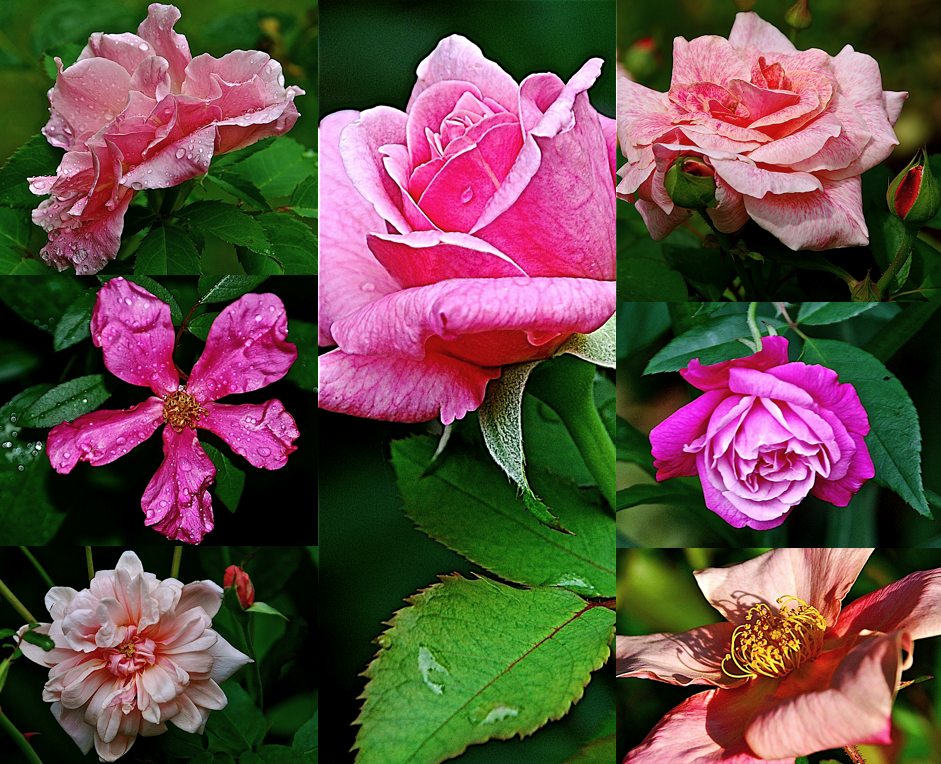
As you can see in my photographic “nunnery,” the “sisters” are all roses, but all are not wearing the same “habit.”  They all have petals, but the number of petals is not the same.  They’re all pink, but it is not the same shade of pink.  They all start out as not-so-different buds, but when open they do not all look alike.  Even the scents are not all the same.  However, there are those who been known to say, like I did at one time, that all roses are more or less the same.  But “a rose is a rose is a rose” is simply not the case.  When I fell in love with gardening, I started learning about the many varieties of roses, and after growing them I realized that each species has its own unique personality and appearance.  What surprised me the most was that according to fossil findings the roses we see today are the descendants of ones that have been growing for over 35,000,000 years.  It wasn’t until after prehistoric times, though, that treks of one kind or another began to spread them all around the world.  These early migrations are reported to have originated in places like Persia, Egypt, Mesopotamia, and China.  Then later on many of them traveled along with the spread of Christianity because monks would move them from one monastery garden to another during the Crusades, and it was some of those early Christians who identified the five petals of the single rose (lower right photo) with the five wounds of  the Messiah.

For we are to God the pleasing aroma of Christ among those who are being saved. . .  ~2 Corinthians 2:15

151. The human spirit needs places where nature has not been rearranged by the hand of man. ~Author Unknown

We need the tonic of wildness. . .
We can never have enough nature. . .
We need to witness our own limits transgressed,
and some life pasturing freely
where we never wander.
~Henry David Thoreau

Image

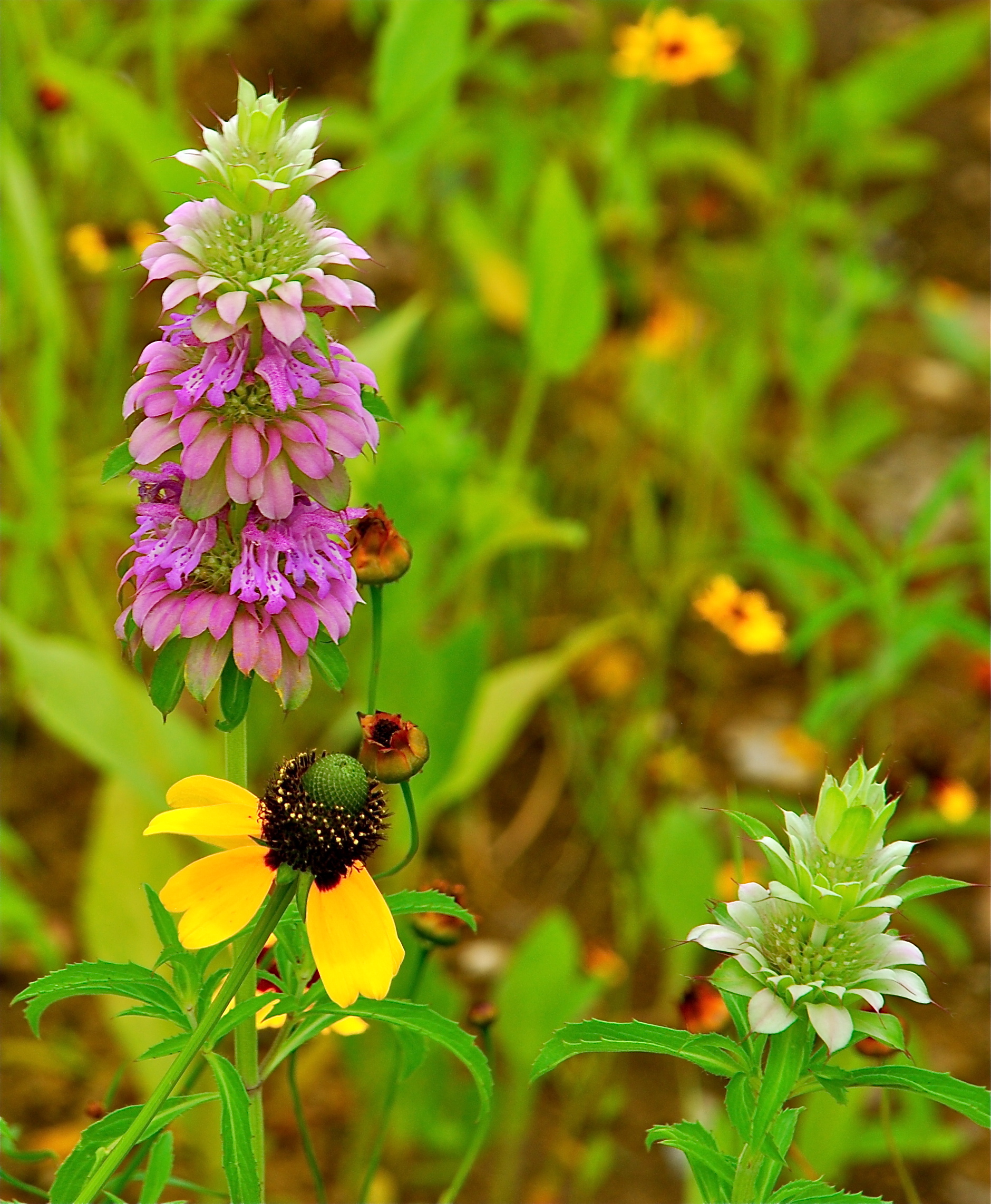
The flowers in these photos are not refined nor polished like the ones often planted and sown in garden plots, but in their wildness and in spite of their neglect they possess a kind of rough elegance.  The fact that they are abused by the elements and thrive in poor terrain increases their charms even more.  In their unbridled wildness they refuse to pass into nothingness and continue to attract, please, and delight mortals as well as wildlife. They may “make no claim to beauty;” but nevertheless, elements of beauty are inherently present in their countenance.  And their presence speaks as loudly of their Maker as anything else in Creation.

You crown the year with Your bounty, and Your carts overflow with abundance.  The grasslands of the wilderness overflow; the hills are clothed with gladness.  ~Psalm 65:11-12

150. He made you a part of Creation, and you praise Him in glorious celebration. ~Katherine R. Lane

Bring to me then the plant
that points to those bright Lucidites
swirling up from the earth,
and life itself exhaling that central breath!
Bring me the sunflower crazed with the love of light.
~Eugenio Montale

Image

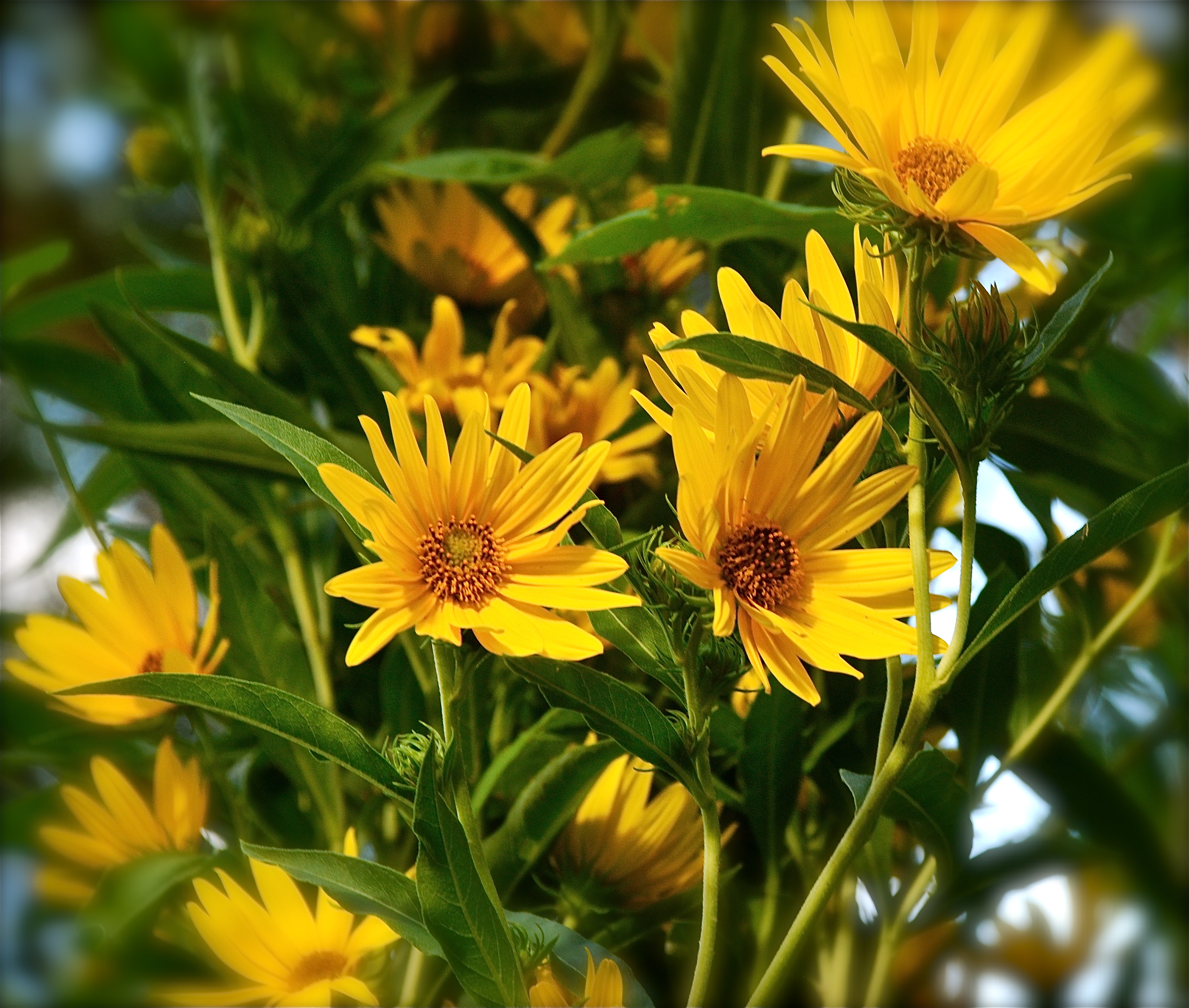
The Maximilian sunflowers in the photo are natives to Texas, but they extend north throughout the tall-grass prairies of the central plains where they were discovered in the 19th century by a German botanist named Prince Maxmilian Alexander Philip von-Wied-Neuwied, thus their rather lofty sounding name.  When I planted 2 of them several years ago, I knew that like their name, they would reach lofty heights before beginning to bloom in September, and that first summer they grew to about 7 feet.  However, by the second year these perennials herbs were reaching heights of 12-16 feet or more, and although I know people like to claim that things are always bigger in Texas, I’m not buying that.  So I did some research and come to find out the more one waters them the taller they grow.  Okay, so now what to do?  Well, before digging them up and moving them or admitting to my husband that I do, in fact, water too much, I’ve decided to give them one more year where they are and try a trick I recently read about; a plantsman in one article said if I pinch off the growing tips when the plants are 3-4 tall I will get shorter plants with more flowers.  More flowers, did he say more flowers?  Now that’s sweet music to my ears!

They are like a well-watered plant in the sunshine, spreading its shoots over the garden. . .  ~Job 8:16  ✝

149. It would be worthwhile having a cultivated garden if only to see what autumn does to it. ~Alfred Austin, British poet laureate

Lord, it is time.
The summer was very big.
Lay thy shadow on the sundials,
and on the meadows let the winds go loose.
~Ranier Maria Rilke

Image

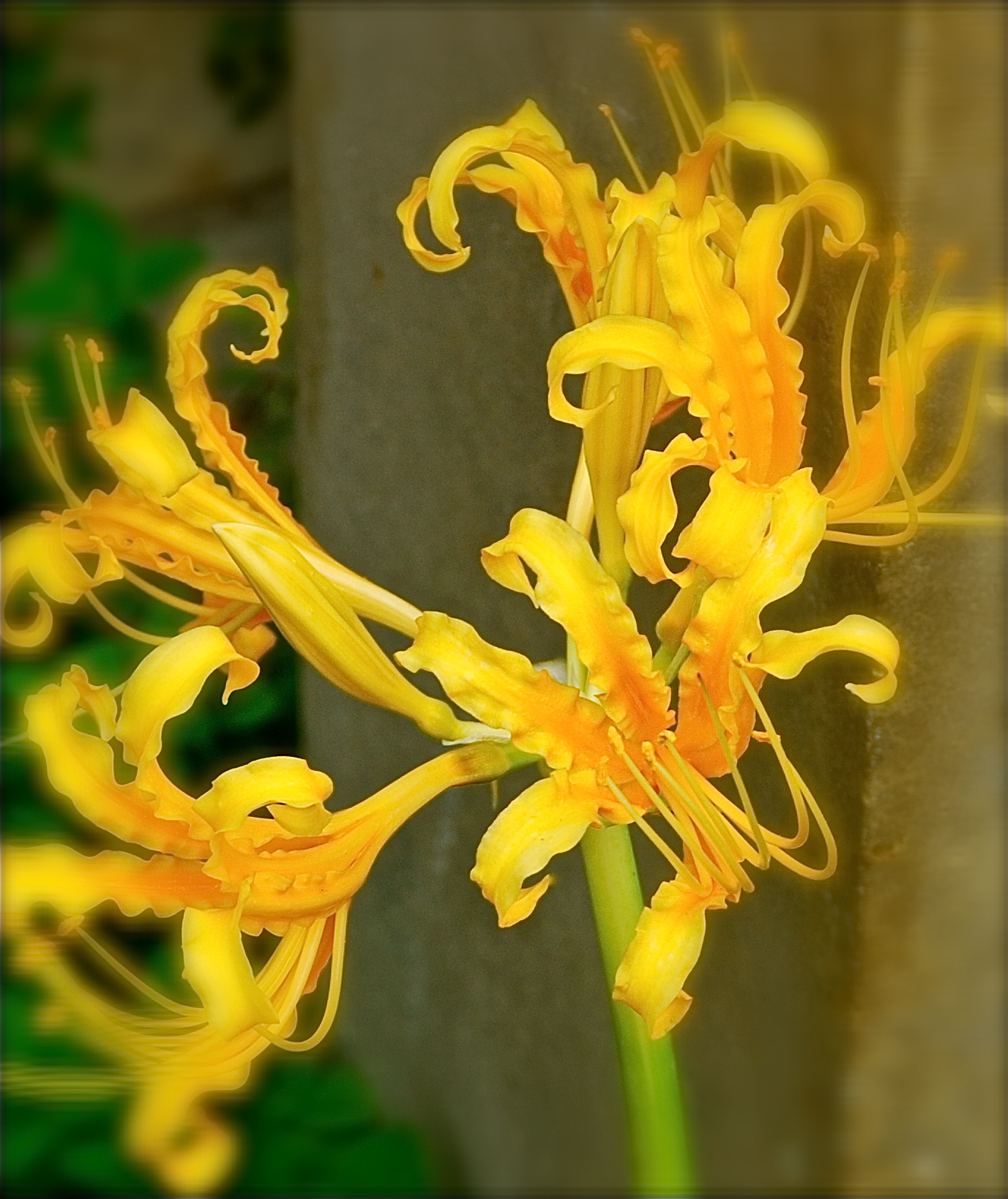
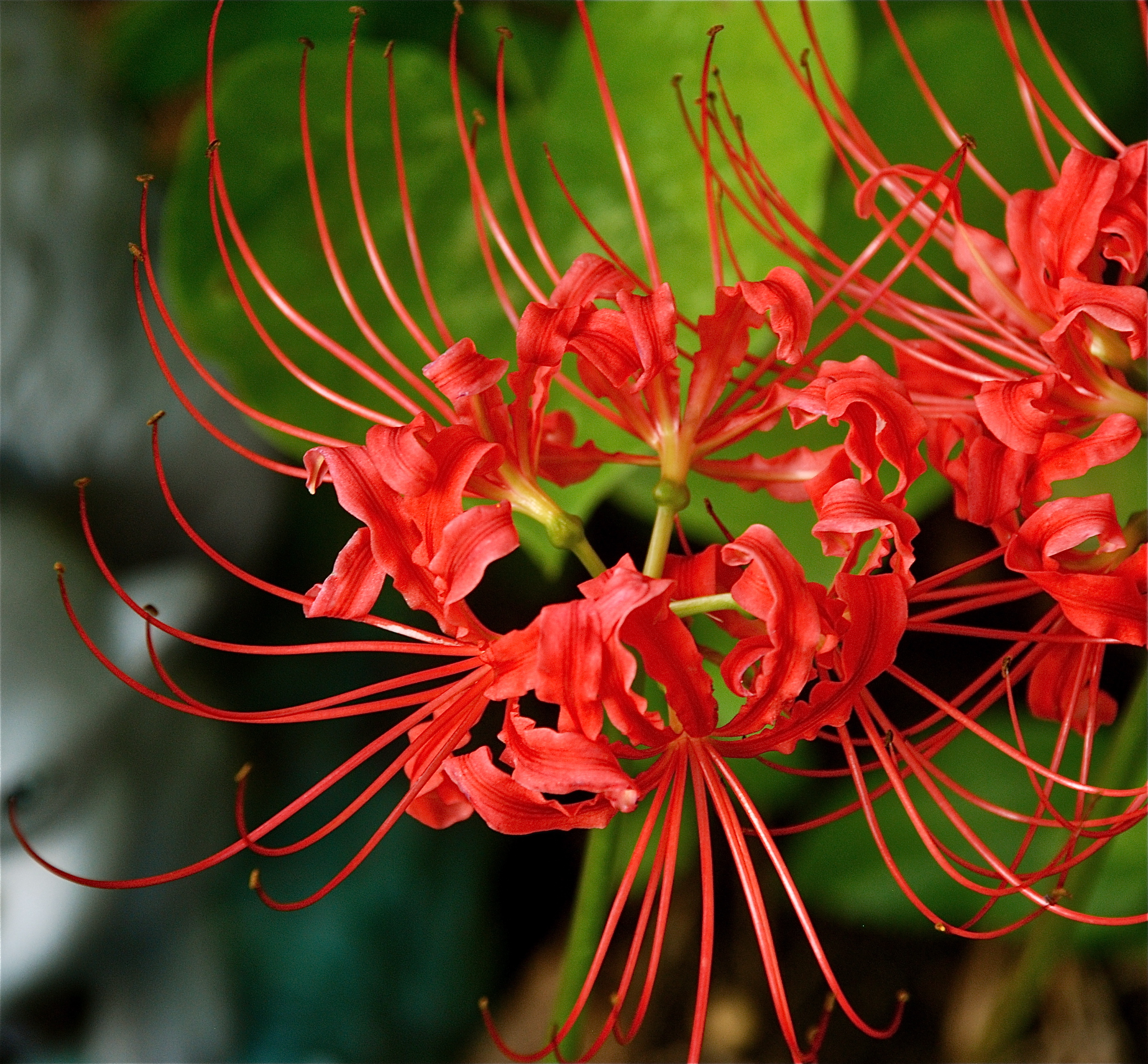
The beauty in the photo above, like the summer sun, is the color of gold.  And her petals have slightly wavy edges that seem to mimic the summer’s waves of heat that lead up to her appearance in the garden where she winks at people passing by with her long, wispy eyelash-like stamen.  In Latin the word “stamen” means “thread of the warp,” and it was Emerson who birthed the idea that “days are made on a loom whereof the warp and woof are past and future time.”  Apparently what he said ‘tis true since these threads of the warp are definitely forerunners of the future.  When they appear in the garden, hurricane season has begun and autumn is drawing near.  But who is she, this fair maiden dressed so elegantly in gold?  She and others like her are called Golden Spider Lilies, Naked Lilies, Surprise Lilies, Golden Hurricane Lilies, and/or Lycoris.  But whatever one calls them, they’re always dressed in their rich, apricot-yellow-orange finery, and their blooms which appear late in the summer after their leaves have disappeared create a lovely sweeping quality in the garden.  The official name of the species is Lycoris aurea, and it originated in China where it is known as “Hudixiao” (Suddenly The Soil Shines).  But she is not an only child; for she has an amazing sibling, Lycoris radiata, the Red Spider Lily.

Image

Now look again at the yellow one.  I deliberately blurred the outer edges of the photograph so the heart she was forming in the middle was more noticeable.

Acknowledge and take to heart this day that the Lord is God in Heaven above and on earth below.  There is no other.  ~Deuteronomy 4:39  ✝

148. If the sight of blue skies fills you with joy, if a blade of grass springing up in the fields has the power to move you, if the simple things in nature have a message you understand, rejoice, for your soul is alive. ~Eleanora Duse

Every vine climbing and blossoming
tells of love and joy.
~Robert G. Ingersoll

Image

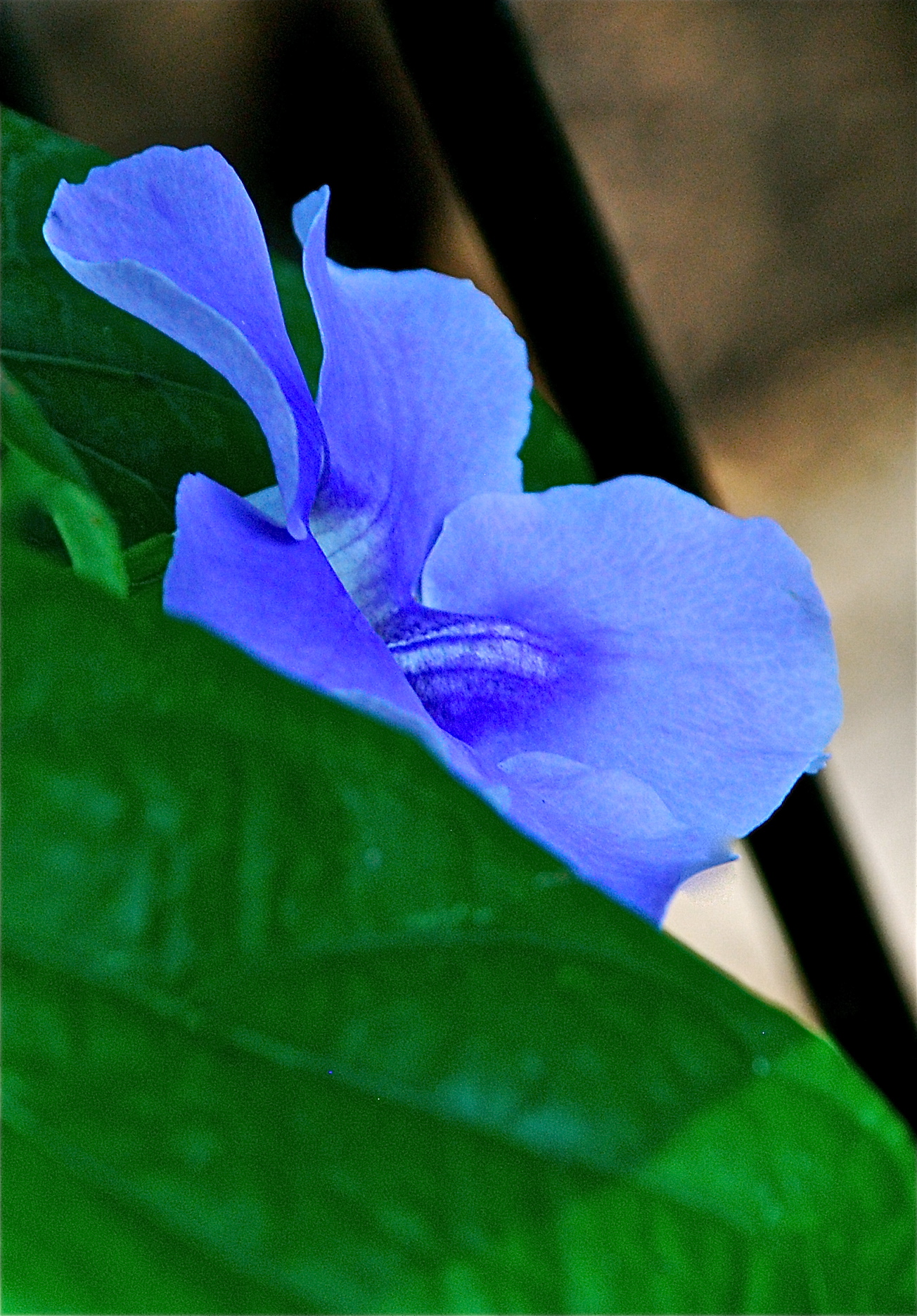
If your soul is indeed alive, you come to realize that like all else in Creation, vines tell also of the nearness of God and the way that He wraps His arms around His children in order to keep them close to Him.  Simply put, whether acknowledged by all or not, mankind is inextricably linked to the Maker of heaven and earth, and because of His supporting and sustaining provisions our souls are eventually drawn into His holy web of life and the Light.  C. S. Lewis said that “Jesus was either a liar, a lunatic, or who He said He was.”  Mr. Lewis’ soul and mine have trusted Jesus to be who He said He was.   Thus I rejoice when He, the Messiah,  tells me:

“I am the bread of life.”
“I am the light of the world.”
“I am the gate for the sheep.”
“I am the good shepherd; the good shepherd gives his life for the sheep.”
“I am the resurrection, and the life.”
“I am the way, the truth, and the life.”
“I am the true vine.”

Return to us, O God Almighty!  Look down from heaven and see!  Watch over this vine, the root your right hand has planted, the son you have raised up for yourself.  ~Psalm 80:14-15  ✝

*The flower in the photo is Thunbergia Grandiflora (commonly called Bengal Clock vine or Sky Flower vine)

147. If you wish to know the Creator, come to know His creatures. ~Columbanus, 6th century Irish monk

A flash of harmless lightning,
A mist of rainbow dyes,
The burnished sunbeams brightening
From flower to flower he flies.
~John Banister Tabb, Roman Catholic priest,
poet and professor of English

Image

Tabb’s description is of a hummingbird, but it could be said as well of bees, butterflies, and dragonflies, hordes of which I’ve seen of late.   Gulf fritillaries and an assortment of swallowtails have been flitting around the garden for weeks.  Then today I spotted the first monarchs which means their migration from Canada to overwintering grounds in Mexico has begun.  I’m guessing the reappearance of the dragonflies is because recent rains have filled their breeding grounds again with enough water for their nymphs.  The bees are back in greater numbers because the cooler temperatures are encouraging more and more blooms, and as for the hummers, two or three at a time have been coming to our feeder since early August.

John Philip Newell says, “the inclusion of creatures in the garden of God in Genesis is pointing not simply to the outward dimension of the creaturely realm.  It is also showing something of the way of God’s seeing or sensing. . .”  That’s why I I love my garden.  It’s not just about the flowers.  Spending time therein lets me be near all God created and keeps me wanting to know more of the Lord and that which is important to Him.

“But ask the animals, and they will teach you, or the birds of the sky, and they will tell you; or speak to the earth, and it will teach you, or let the fish of the sea inform you. . .”  ~Job 12:7-8  ✝