296. March is a month of considerable frustration – it is so near spring and yet…the weather still so violent and changeable… ~Thalassa Cruso

Image

Let there never be forgot,
that once there was a spot,
for one brief, shining moment
that was known as Camelot.
~Lerner and Lowe, 1960

Image

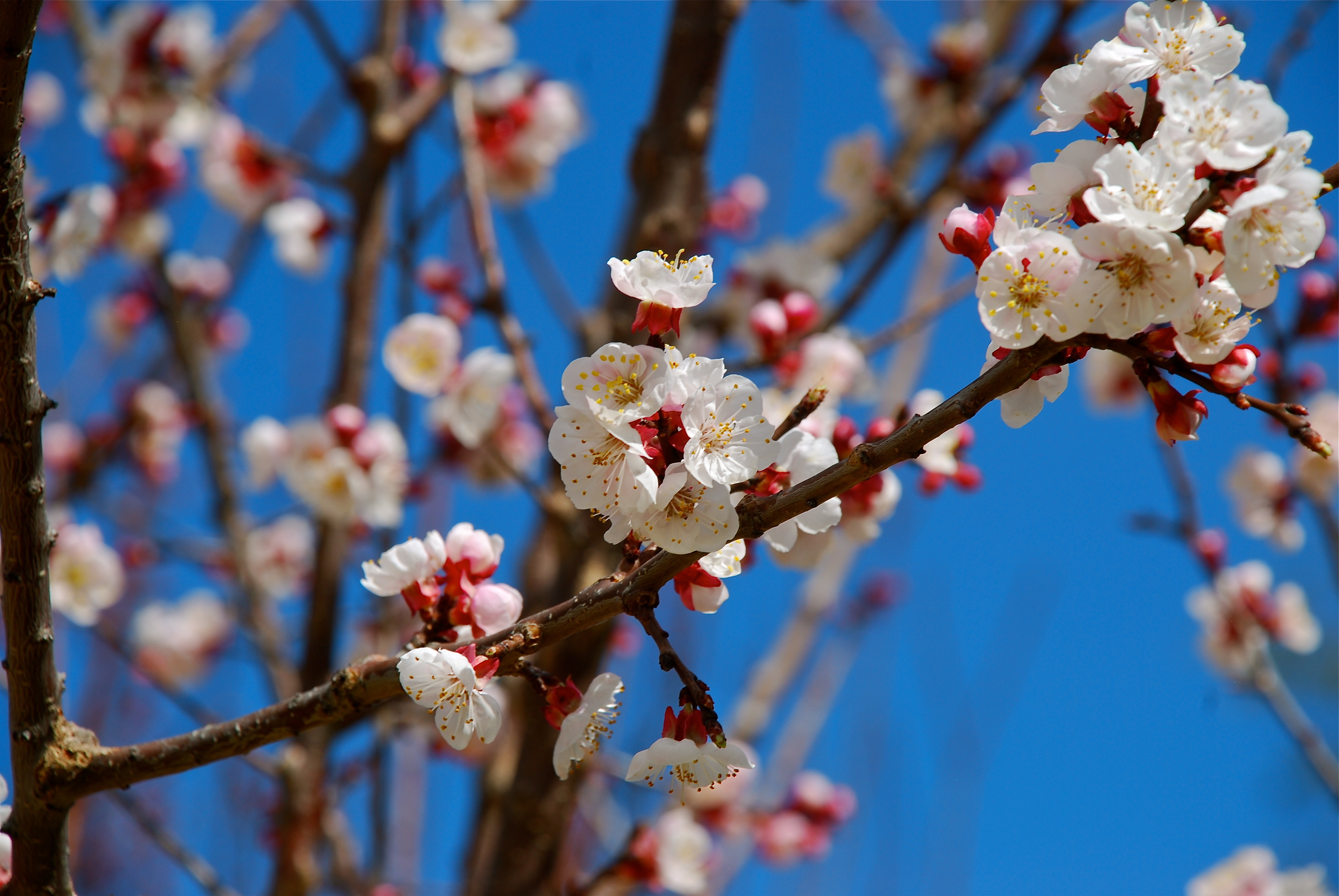
The line above from the Broadway musical makes a statement that in fact there was a Camelot, and many people, including President John F. Kennedy, seemed to believe that it was a real time and place in history.  Real or not so real, it was the legendary, marvelously magical time and place of King Arthur and the Knights of the Round Table. For me it’s magical moments in time when things ever so extraordinary and good are happening in the awakening landscape.  Then sadly when they get nipped in the bud by a bitter, cold snap, it’s a betrayal of sorts not unlike what brought an end to the glory of Camelot.  Such is what happened night before last to the pretty babies in the photographs.  But I shall not curse late February for telling the traitorous lies that led to their demise; instead I rejoice that they came at all.  Even if only for a few days their “brief, shining moment” in the garden’s “kingdom of Camelot” was stunningly beautiful.

Image

By the breath of God ice is given, and the broad waters are frozen fast.  ~Job 37:10  ✝

295. Of all God’s gifts to the sighted man, color is the holiest, the most divine… ~John Ruskin

In the house of words was a table of colors.
They offered themselves in great fountains,
and each poet took the color he needed:
lemon yellow or sun yellow,
ocean blue or smoke blue,
crimson red, blood red, wine red.
~Eduardo Galeano

Image

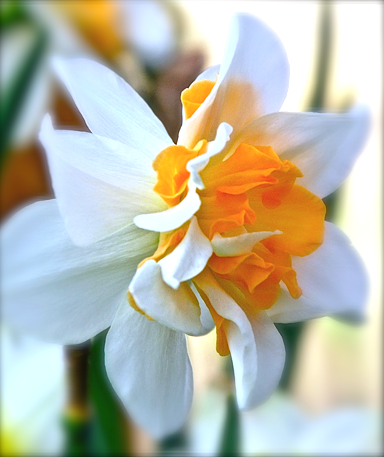
What a glorious tangerine and white dream is the daffodil in the photograph, and holiness indeed is written all over it!  As God speaks to mankind through the Bible and Creation, we can see that He values color, the intent of which seems, like all else, to be that its hallowed voice draw His children closer to Him.  Color appears first in holy writ in the opening pages of Genesis when God fathered the whiteness of light on day 1 of the Creation story.  Then on the second day the Lord created expanses to separate water from water, and both the sky and the reflection of the heavens in it are shades of blue.  On day 3 He created earth’s green vegetation.  Day 4 brought the placement of lights that governed the heavens, and day’s greater light, the sun, is yellow; up close pictures of the sun also show reds and oranges in its make up.  Fish and great sea monsters swam the seas and birds took flight on the fifth day, and whales and sharks have been seen as hallmarks of an ancient pagan idol symbolized by the color orange.  The sixth day brought the creation of man and animals; the name Adam means red and the blood that courses through the veins of man and beast alike is red.  Day 7, the Sabbath, was sanctified by God whose robes and glory are perennially symbolized by white, and later when atoning for man’s sins His son, Jesus, wore a purple robe.

“And to every beast of the earth, and to every bird of the air, and to everything that creeps on the earth, everything that has the breath of life, I have given every green plant for food.” And it was so.  God saw everything that he had made, and indeed, it was very good.  Genesis 1:30-31  ✝

289. Wisdom consists of the anticipation of consequences. ~Norman Cousins

Image

Two Wolves – Cherokee Parable

An old Cherokee chief was teaching his grandson about life.
“A fight is going on inside me,” he said to the boy.
“It is a terrible fight and it is between two wolves.
One is evil – he is anger, envy, sorrow, regret, greed, arrogance, self-pity, guilt, resentment, inferiority, lies, false pride, superiority, self-doubt, and ego.”
He continued, “The other is good – he is joy, peace, love, hope, serenity, humility, kindness, benevolence, empathy, generosity, truth, compassion, and faith.
This same fight is going on inside you – and inside every other person, too.”

The grandson thought about it for a minute and then asked his grandfather,
“Which wolf will win?”
The old chief simply replied, “The one you feed.”

~Author Unknown

…for wisdom will come into your heart, and knowledge will be pleasant to your soul; …  Proverbs 2:10   ✝

285. We men of Earth have here the stuff of Paradise – we have enough! ~Edwin Markham

Image

All things are connected.
Whatever befalls the earth
befalls the sons of the earth.
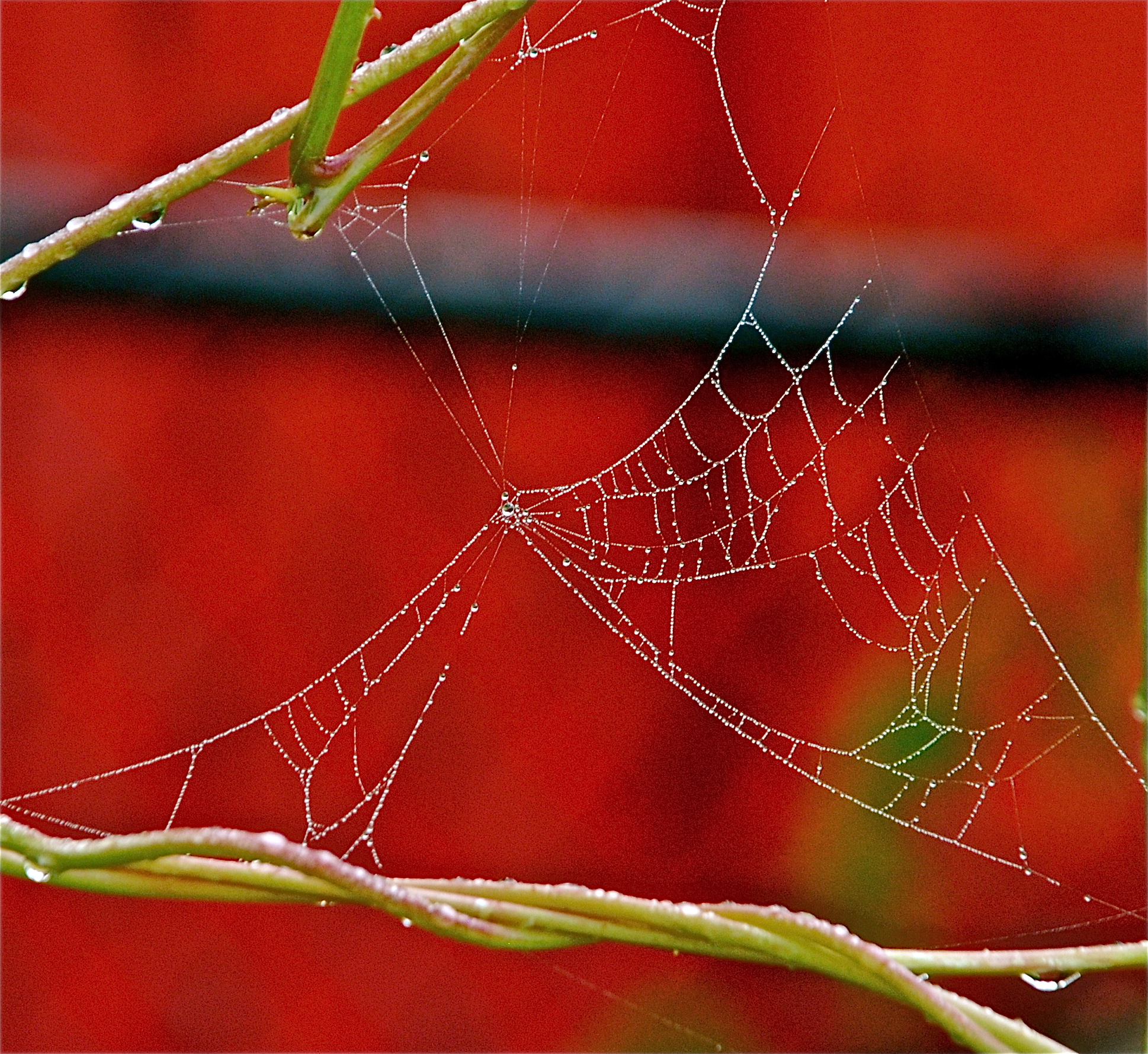
Man did not weave the web of life.
He is merely a strand in it.
Whatever he does to the web,
he does to himself.
~Chief Seattle

So let us not grow weary in doing what is right, for we will reap at harvest time, if we do not give up.  So then, whenever we have an opportunity, let us work for the good of all, and especially for those of the family of faith.  ~Galatians 6:9-10   ✝

281. There are defeats more triumphant than victories. ~Michel de Montaigne

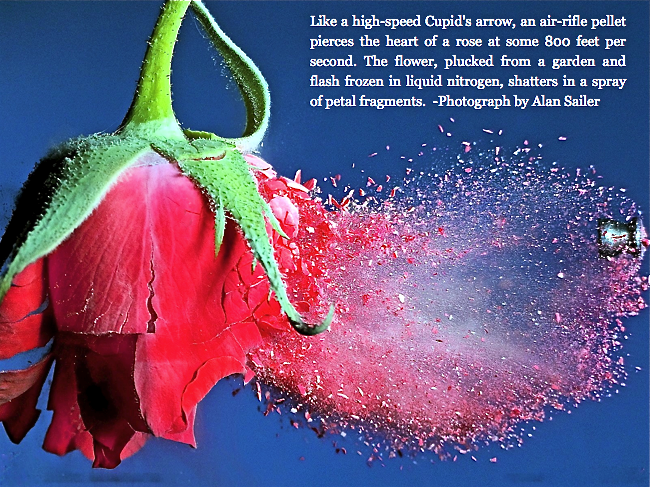
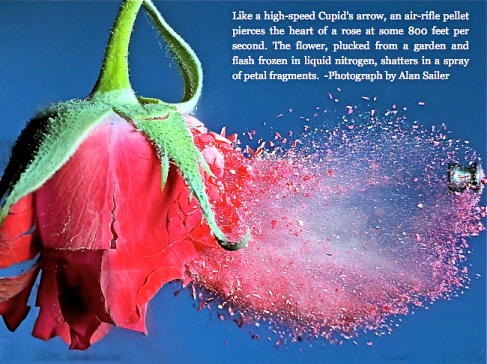
I found this image on the internet, and I’m not sure why I’m so fascinated with it, but I am.  Perhaps it’s because the rose, though now damaged, remains exquisite in color and form or because the spraying bits of freeze-dried petals create a stunning scene.  Or maybe I’m intrigued by the photo because it somehow reassures me that human brokenness touched by God’s grace can produce valuable and worthwhile fruit.  Whatever the case may be, all this pondering about the fragmented rose triggered the memory of the profound story below the photo.
Image

A water bearer in India had two large pots, each hung on each end of a pole which he carried across his neck.  One of the pots had a crack in it, and while the other pot was perfect and always delivered a full portion of water at the end of the long walk from the stream to the master’s house, the cracked pot arrived only half full.  For a full two years this went on daily, with the bearer delivering only one and a half pots full of water in his master’s house.  Of course, the perfect pot was proud of its accomplishments.  But the poor cracked pot was ashamed of its own imperfections, and miserable that it was able to accomplish only half of what it had been made to do. After two years of what it perceived to be a bitter failure, it spoke to the water bearer one day by the stream.  “I am ashamed of myself, and I want to apologize to you.”  “Why?” asked the bearer.  “What are you ashamed of?”  I have been able, for these past two years, to deliver only half my load because this crack in my side causes water to leak out all the way back to your master’s house.  Because of my flaws, you have to do all of this work and you don’t get full value for your efforts,” the pot said. The water bearer felt sorry for the old cracked pot and in his compassion he said, “As we return to the master’s house I want you to notice the beautiful flowers along the path.” Indeed, as they went up the hill, the old cracked pot took notice of the sun warming the beautiful wild flowers on the side of the path, and this cheered it some.  But at the end of the trail, it still felt bad because it had leaked out half its load, and so again it apologized to the bearer for its failure. The bearer said to the pot, “Did you notice that there were flowers only on your side of the path but not on the other pot’s side?  That’s because I have always known about your flaw, and I took advantage of it.  I planted flower seeds on your side of the path, and every day while we walk back from the stream, you’ve watered them.  For two years I have been able to pick these beautiful flowers to decorate my master’s table.  Without you being just the way you are, he would not have this beauty to grace his house.”  ~Author Unknown

Every human “pot” becomes “cracked” in some way, but that does not render the flawed man or woman ugly or useless.  The Creation story in Genesis tells us that each day God looked back at what He had made and saw that it was good.  So, although we humans are imperfect, we started from a place of goodness that is still in us.

Do not remember the sins of my youth and my rebellious ways; according to your love remember me, for you, LORD, are good.  ~Psalm 25:7  ✝

274. When bright flowers bloom parchment crumbles, my words fade, the pen has dropped… ~Morpheus

He who is born with a silver spoon in his mouth
is generally considered a fortunate person,
but his good fortune is small
compared to that of the happy mortal
who enters the world
with a passion for flowers in his soul.
~Celia Thaxter

Image

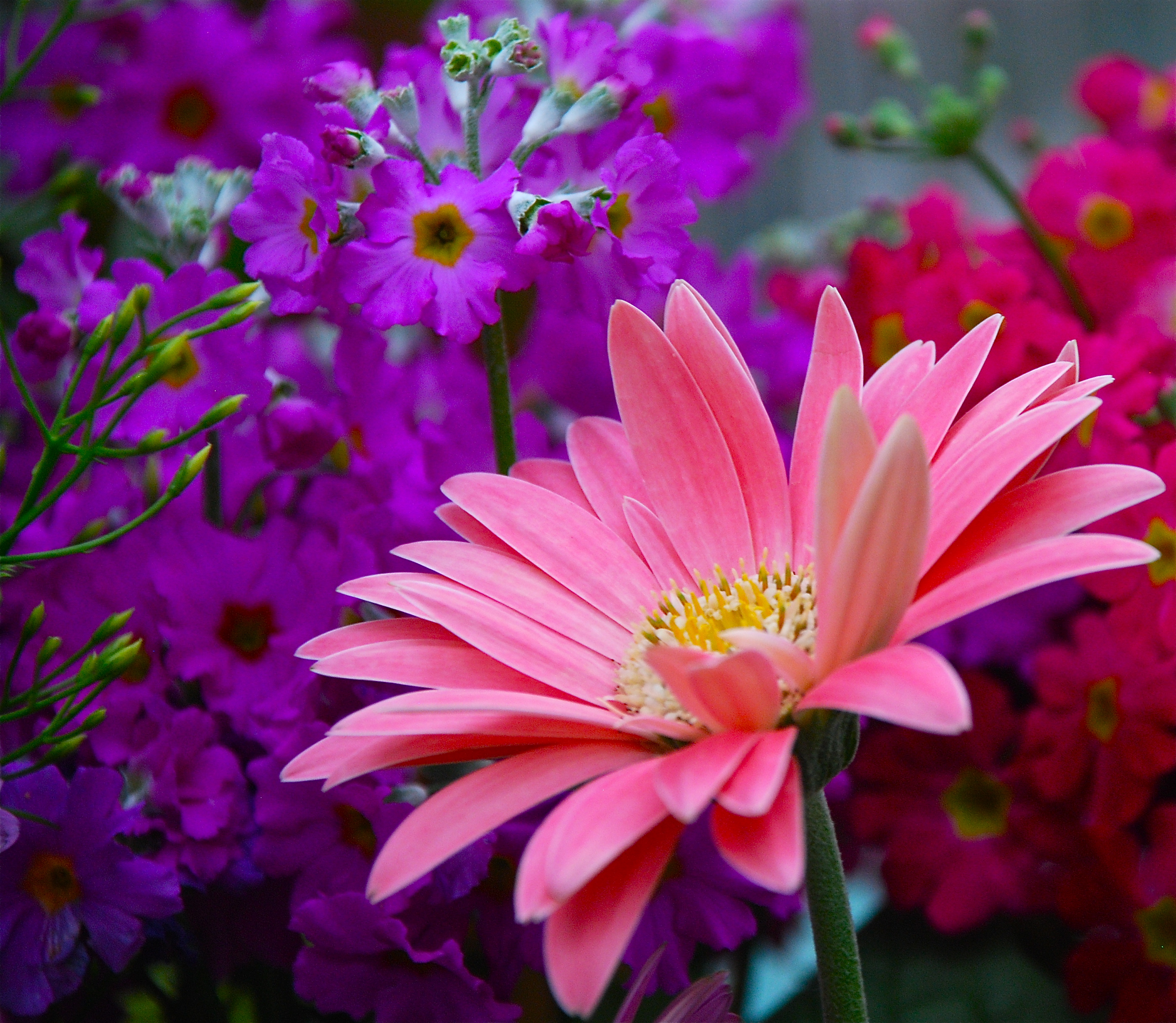
Ambrosia, food or drink of the gods in Greek mythology, brought to Olympus by doves and thought to be a kind of divine exhalation of the Earth–oh how tasty is ambrosia–mouthwatering, yummy ambrosia!  Leastways that’s the first word that comes to my mind when I see flower and color combinations like these is my photo.  But wait, some would say such things can’t be ambrosial because they aren’t food or drink.  And I would have to argue that they are, at least metaphorically speaking, because they are part of earth’s “divine exhalation” that satiates thirst in the spirit and hunger in the soul.   All of Creation shouts to the world that there is a Creator, and such is just one of its many compelling cries–sacred touches, as it were, of a loving God who wants to be found.

Ever since the creation of the world His eternal power and divine nature, invisible though they are, have been understood and seen through the things He has made.  ~Romans 1:20  ✝

**Photo taken in my greenhouse today.

273. The man who has planted a garden feels that he has done something for the good of the whole world. ~Vita Sackville-West

The most noteworthy thing about gardeners
is that they are optimistic, always enterprising, and never satisfied.
They always look forward to doing something better
than they have ever done before.
~Vita Sackville-West

Image

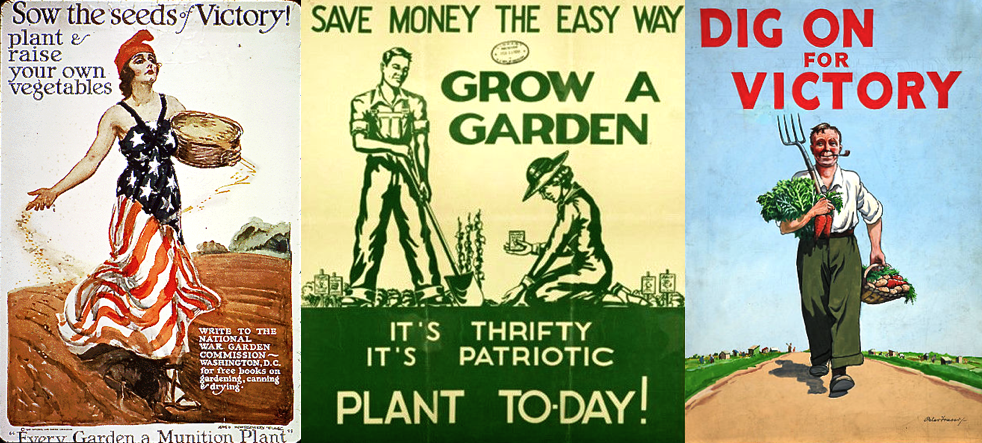
During World War I and World War II, victory gardens were planted at private residences and public parks in the United States, the United Kingdom, Canada, and Germany.  Vegetables, fruits, and herbs were grown to reduce the pressure on the public food supply brought on by the war efforts.  Not only did these gardens indirectly aid in the war efforts, but they were also considered civil “morale boosters.”  By planting them, gardeners felt empowered by their contribution of labor and rewarded by the produce they grew.  As a result victory gardens became a part of daily life on the home front.

Amos Bronson Alcott said, “Who loves a garden still his Eden keeps, perennial pleasures plants, and wholesome harvests reaps.”  Can you imagine what it must have been like to stand in Eden? And to listen for the Lord as He walked in the cool of the day?  There are times when I’m in my garden that I get a sense of the incredible thrill that must have been.  The perennial pleasures of my garden plant a rightness in my days and a comfortable feeling of harmony in my spirit.  And the wholesome harvests I reap are not just the fruits, the flowers, and the beauty all around me but also the peace it brings and the times when the deep sanctity of it touches my soul where the Lord is planting and digging for harvests of His own.

There is nothing better for mortals than to eat and drink, and find enjoyment in their toil.  This also, I saw, is from the hand of God; for apart from him who can eat or who can have enjoyment.  ~Ecclesiastes 2:24-25  ✝

266. When hope is hungry, everything feeds it. ~Mignon McLaughlin

Though you lose all hope,
there is still hope,
and it loves to surprise.
~Robert Brault

Image

Image

Goodbye January and hello February!  Whew, January is a long month, isn’t it?!  So much so that it makes my hope very hungry indeed.  Dada, dada da da da!  I said hello, February…well hello February…It’s so nice you’ve finally come around again.  You’re lookin’ swell, February…And time will tell February…That spring’s a comin’ February…  Okay, to appreciate my attempt here at “cleverosity” with the previous lines, you have to try to remember a song from a musical by the same name called HELLO DOLLY.  Okay, so maybe it was a lame attempt, but today is just that kind of day, one that puts a song in my heart.  Why?  Why you ask?  Well…

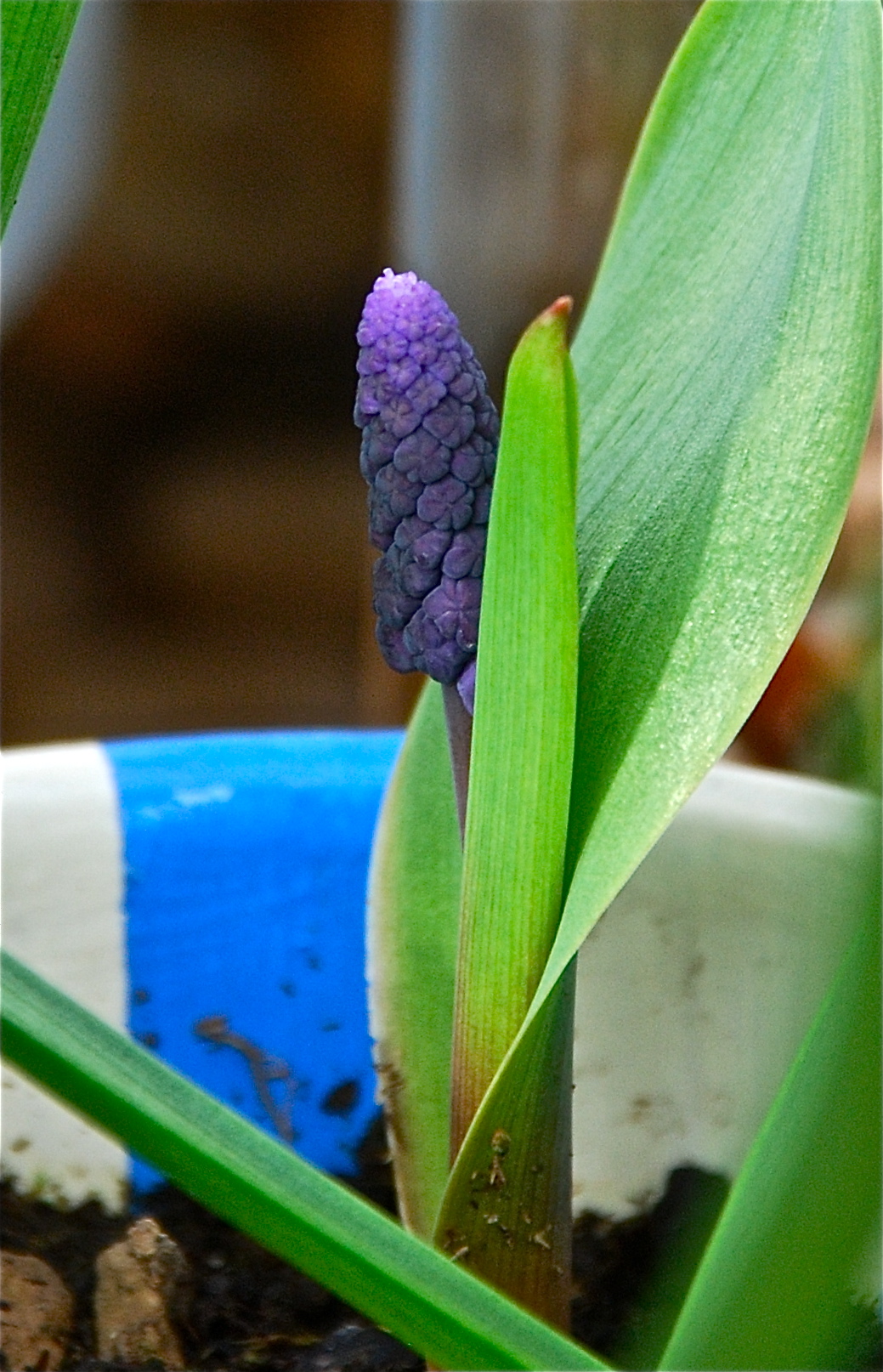
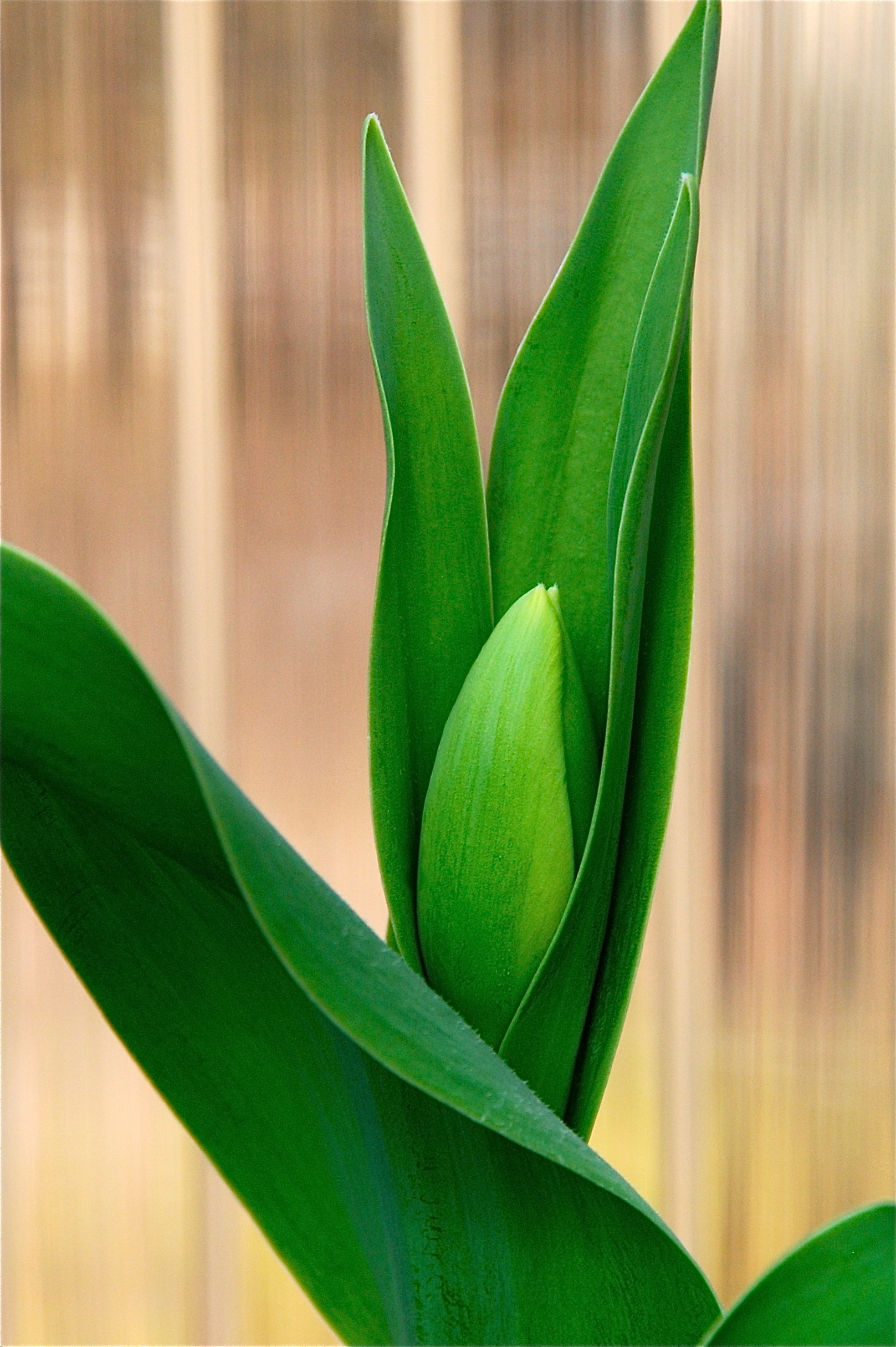
About the time the barrenness of winter starts putting asunder all hope of anything different, February saves the day by bringing forth visible signs of the new spring.  And so it did this year on its very first day.  After I’d watered and waited and watched the bulbs I’d started weeks ago in the greenhouse, I was rewarded today with several emerging buds.  The result: squeals of joy peeled forth inside its walls along with hallelujahs and praise for such glorious surprises amid winter’s gloomy, brown and beige drabness.  But they’re just flowers some might say, but pshaw!  They are pieces in the puzzle of Creation itself, blessed and holy and full of purpose.  They’ve been touched by the very hand of God and then ordained as part of the faithful and reoccurring provision not only for man’s needs but for his pleasure as well.  And if flowers are inconsequential why are so many poems and pieces of literature devoted to them, and why are they considered by many as desirable gifts, and why are their scents revered for use in perfumes, and why have they been worth at times more than gold?

“Come, therefore, let us enjoy the good things that exist, and make use of the creation to the full as in youth.  Let us take our fill of costly wine and perfumes, and let no flower of spring pass us by.  Let us crown ourselves with rosebuds before they wither…”  ~Wisdom 2:6-8  ✝

258. If your heart is straight with God, then every creature will be to you a mirror of life and a book of holy doctrine. ~Thomas à Kempis

If you have men who will exclude any of God’s creatures
from the shelter of compassion and pity,
you will have men who deal likewise with their fellow man.
~St. Francis of Assisi

Image

Image

Between the houses on our street and the ones on the street behind us run power lines which also function as a sort of “interyard” highway for our sizable squirrel population.  During the course of a day’s time the squirrels run back and forth and back and forth along the elevated “freeway” that exits on various nearby “farm to market” tree branch roads.  From there they scamper down to the ground below or up to their hand built “high rise condos” or take “fence-line” lanes into adjoining yards.  When not engaged in foraging for food or water they playfully chase each other round and round.  Their spunky antics whilst doing so are often engagingly comical, and the agility with which they perform daring acrobatics with no fail-safe never ceases to amaze me.

The fluffy-tailed creatures seem to have little fear of me, but they become alarmed if and when a feral cat begins to stalk them.  To date, though they’ve barely escaped being pounced upon a time or two, they’ve perceived the threat in time and avoided being captured by scampering up, up, and away into places too lofty for most cats to follow.  Afterwards the escapee sometimes stays on high making chicken-like noises, until I, the games keeper, chase the predator away, or the cat grows weary of the clucking and leaves of its own accord, or the squirrel’s attention is diverted to or by something else.

The earth, its resources, and its creatures are a part of a holy, good deposit.  And because I’ve always felt a closeness to and reverence for Creation, I try to be a good steward of my deposit–my home, my family, and my little patch of Eden.  To that end through the National Wildlife Federation, my yard has been established as a wildlife habitat– a sacred sanctuary for me and all who dwell in or come here to visit.

Guard the good deposit that was entrusted to you–guard it with the help of the Holy Spirit who lives in us.  2 Timothy 1:14  ✝

234. Year’s end is neither an end or a beginning but a going on, with all the wisdom that experience can instill in us. ~Hal Borland

Time is the coin of your life.
It is the only coin you have, and only you
can determine how it will be spent.
Be careful lest you let
other people spend it for you.
~Carl Sandburg

Image

Recently I heard a college student talking about her graduate studies in Glasgow, Scotland.  As I listened, I remembered how much I’d wanted to study in Paris when I was her age.  That started me thinking about the life choices I’d made and wondering how different my life might have been had I chosen differently.  After pondering the matter for a few days, I came to the conclusion that geography changes very little, if anything.  One can dance and bloom and thrive wherever they are, and joy would be as joyful, sorrow be no less sorrowful, nor would trials be any less difficult.  Scripture states that time is more richly spent in the lives of people who choose to be happy wherever they are, who choose to do good while they live, and who choose to find satisfaction in all of their toils.

An example of God’s hand of blessing in blocking some of the choices one has to make came when my daughter who had 5 collegiate scholarships from which to choose was led to pick one that actually saved her life.  For tragically, at one of the universities she turned down, the girls on the swim team for which she was being recruited were all killed in a heart-rending bus accident that year.  So as another year ends and a new one starts, I praise the Lord who knows so much better than we about where and how to spend the time coin of our lives.  By His hand of goodness and mercy I did in fact finally get to Paris this last summer along with my daughter whose life had been spared so many years ago.

My wish today is that the “going on” of which Borland speaks brings each and everyone of you immeasurable blessings and that you encounter again and again the Holy One by whose Hand they will be delivered.

Trust in Him at all times, O people, pour out your heart before Him; God is a refuge for us.  ~Psalm 62:8  ✝