307. Every spring is the only spring, a perpetual astonishment. ~Ellis Peters

Image

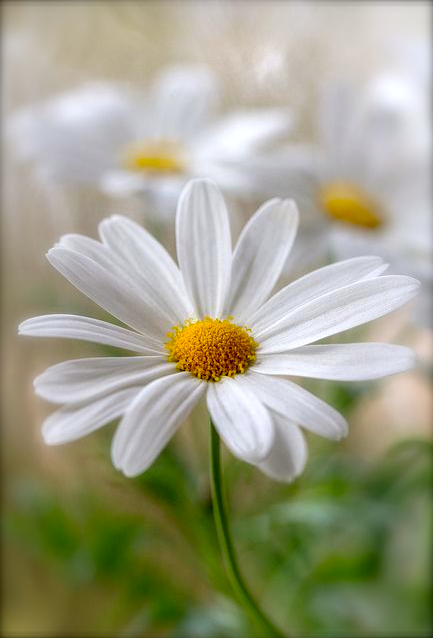
Everything
by Mary Oliver

I want to make poems that say right out, plainly,
what I mean, that don’t go looking for the
laces of elaboration, puffed sleeves. I want to
keep close and use often words like
heavy, heart, joy, soon, and to cherish
the question mark and her bold sister

the dash. I want to write with quiet hands. I
want to write while crossing the fields that are
fresh with daisies and everlasting and the
ordinary grass. I want to make poems while thinking of
the bread of heaven and the
cup of astonishment; let them be

songs in which nothing is neglected,
not a hope, not a promise. I want to make poems
that look into the earth and the heavens
and see the unseeable. I want them to honor
both the heart of faith, and the light of the world;
the gladness that says, without any words, everything.

Come and see what God has done, his awesome deeds for mankind.  ~Psalm 66:5   ✝

**Photo via Pinterest

297. Hand in hand, with fairy grace, will we sing, and bless this place. ~William Shakespeare, English poet and playwright

No child but must remember laying his head in the grass,
staring into the infinitesimal forest
and seeing it grow populous with fairy armies.
~Robert Louis Stevenson, Scottish poet
Image

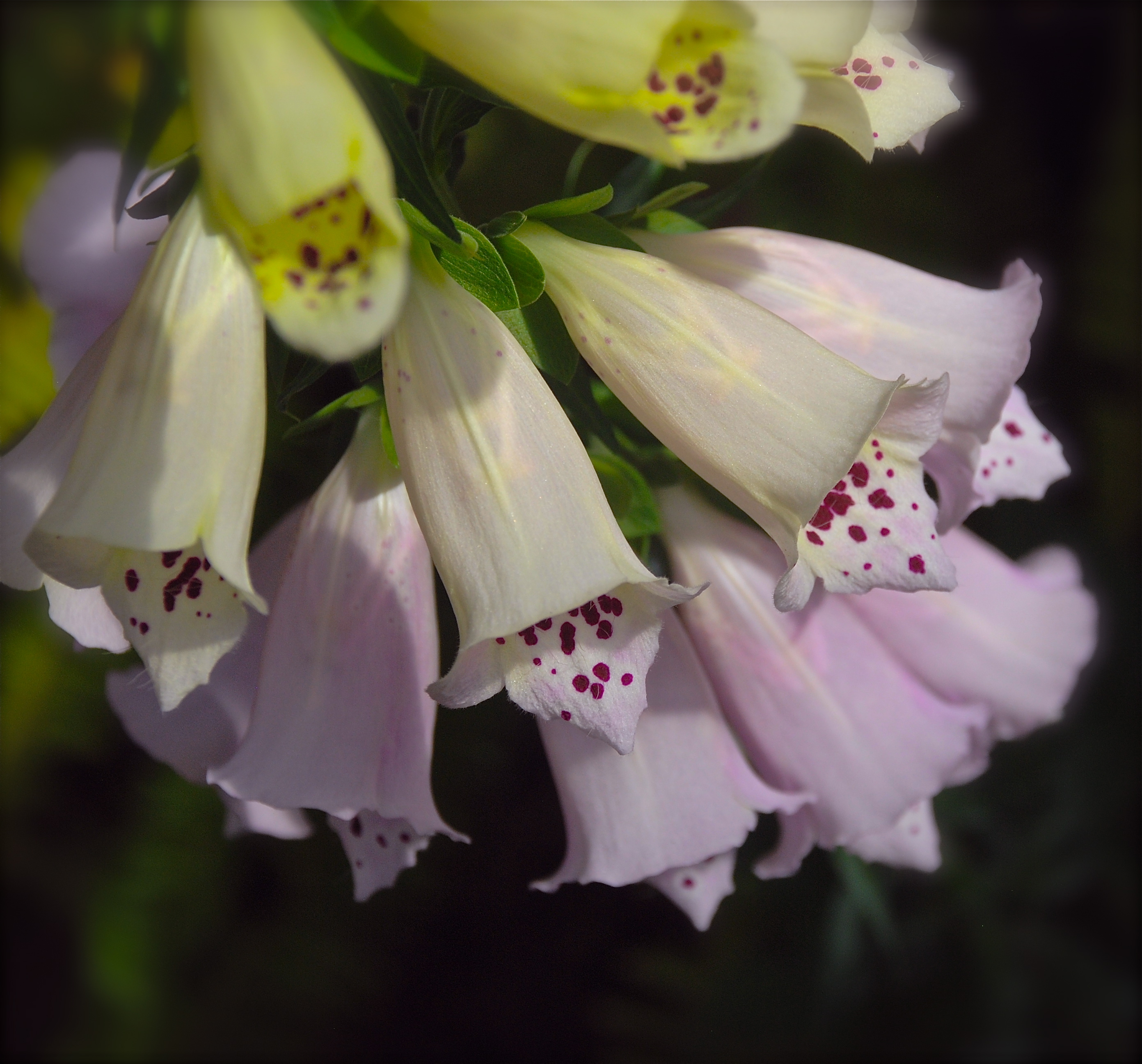
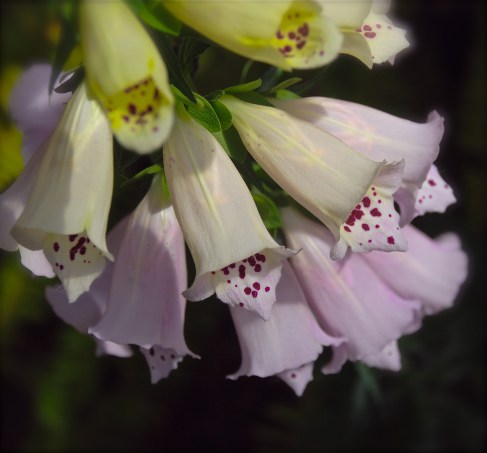
Digitalis, from the Latin Digitabulum, a thimble, derives its common name from the shape of its flowers that resemble the finger of a glove.  It’s a flower we call Foxglove, which delights to grow in deep hollows and woody dells.  However, it was originally called Folksglove because that’s where they, fairies or “good folk,” were thought to live.  Folksglove is one of the oldest names for Digitalis (Foxglove) and is mentioned in a list of plants as old as the time of Edward III.  The earliest known form of the word is the Anglo-Saxon foxes glofa (the glove of the fox, and the Norwegian name Revbielde that translates to Foxbell alludes to the Fox.  It is a name which may have come about from a northern legend about bad fairies who supposedly gave the blossoms of Digitalis to foxes to be put upon their toes so as to soften their tread when prowling amongst the roosts.

I adore Foxglove and believe no other flower in the garden lends itself better to stories of fairies and elves than it does.  Its dangling thimbles or gloves or bells or fingers or whatever one might call them look like enchanted, magical places where children would naturally look for the “wee folk” to lurk.  Nor is it surprising that there have been suppositions claiming the mottling in the flowers mark, like the spots on butterfly wings and on the tails of peacocks and pheasants, where elves have placed their fingers.  Though no longer a child, I have to agree in part with the writer Charles de Lint who penned, “We call them faerie.  We don’t believe in them.  Our loss.”  Sometimes, it does one a world of good to remember what it was like to be an imaginative child, full of awe and wonder and given to flights of fantasy.

Happy is he who still loves
something he loved in the nursery:
He has not been broken in two by time;
he is not two men, but one,
and he has saved not only his soul but his life.
~G. K. Chesterton, English writer, poet,
and lay theologian

If we opened our mind with enjoyment, we might
find tranquil pleasures spread about us on every side.
We might live with the angels that visit us on every sunbeam,
and sit with the fairies who wait on every flower.
~Samuel Smiles, Scottish author

May the Lord give you increase, both you and your children.  May you be blessed by the Lord, who made heaven and earth.  ~Psalm 115:14-15   ✝

282. Life has its own hidden forces which you can only discover by living. ~Soren Kierkegaard

Crowfoot, chief of the Blackfoot Nation, once asked, “What is life?”  He then answered his own question with haunting and graphic wisdom.  He said, “it is the flash of the firefly in the night.  It is the breath of the buffalo in wintertime.  It is the little shadow which runs across the grass and loses itself in the sunset.”

Image

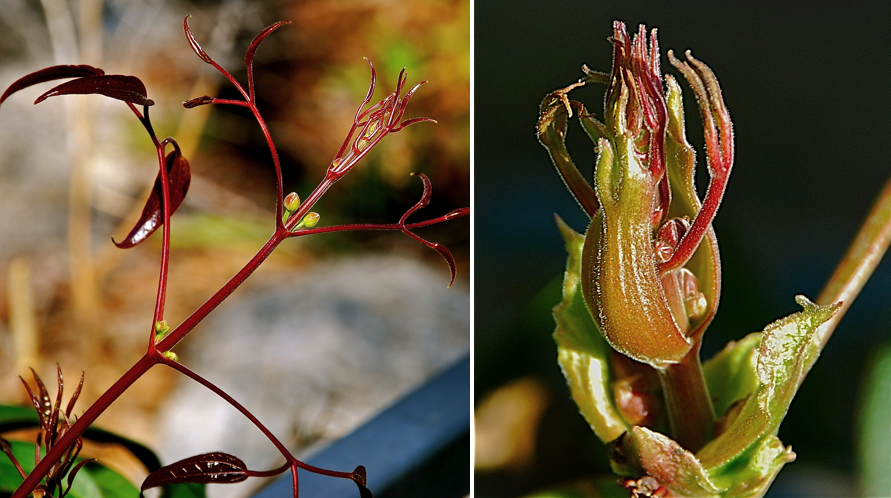
Life, that spark, that whispering breath of God over the void, grows faint in winter.  Cloistered behind the grays and browns of gloomy veils, its glow, its hum, its buzz, pales and lowers, but as we near the vernal equinox, Eden’s heartbeat becomes a little more perceptible each day.  It has been said that “God pours life into death and death into life without a drop being spilled,” and today I’ve discovered right here in my back yard that through dark, seemingly dead branches life into the lifeless has been poured again without any wasted spillage.  It is on the trailing tendrils of a “Clematis armandii” vine that life has flowed silently and secretly until it could no longer be contained.  As it burst forth into the newness you see in my photos, it is proof that the Holy One tends His Eden still.  His divine, hidden forces of life have become tangibly visible, and a new spark has ignited a tiny flame.  Soon a steady succession of similar sparks will fuel a blaze, a blaze that will spread like a wildfire lighting the world anew with evidence of God’s never-ending glory.

Who among all these does not know that the hand of the Lord has done this?  In His hand is the life of every living thing and the breath of every human being.  ~Job 12:9-10  ✝

270. Nature looks dead in winter because her life is gathered into her heart. ~Hugh Macmillan

She (nature) withers the plant down to the root
that she may grow it up again fairer and stronger.
She calls her family together
within her inmost home to prepare them for being
scattered abroad upon the face of the earth.
~Hugh Macmillan

Image

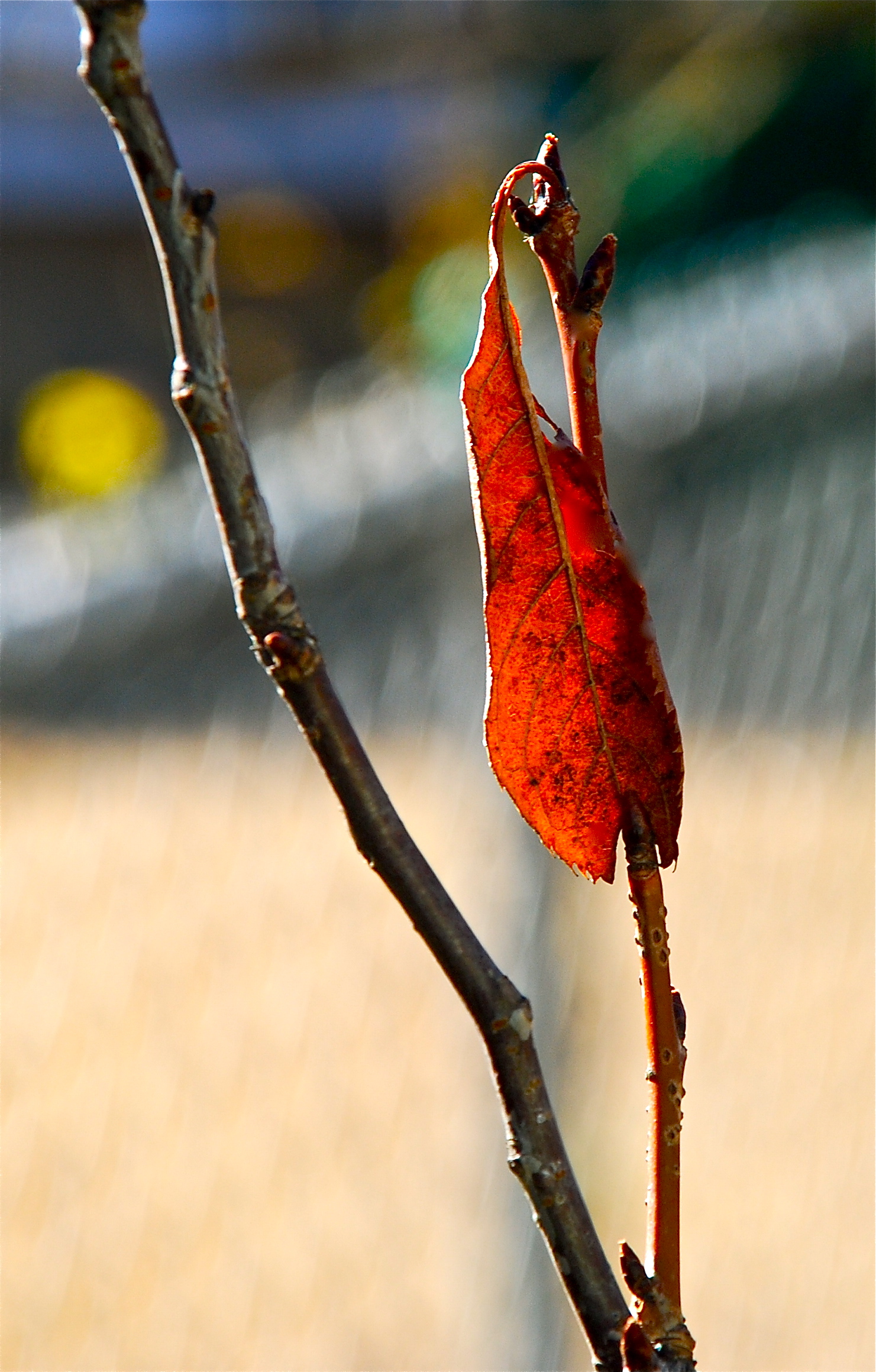
Early morning light steals across straw-colored grass and slowly warms the biting chill of a February dawn.  Splinters of sunlight glisten and sparkle as they move over the garden’s frost-laden, bare bones.  From my vantage point inside I can make out a lone, reddish leaf, not quite ready to be a memory, clinging tenaciously to a branch in the ornamental cherry tree.  It reminds me that a wellspring of life lies dormant below in nature’s “inmost home” where “her life is gathered into her heart.”  My attention is diverted next to the dogs I hear barking up and down the alleyway.  The feral cats must be on the move in search of food.  Then birds begin to show up at the feeders and high above their flutterings I see the first squirrels running the high wires.  Soon birdsong breaks morn’s silence, and lights start coming on in the once darkened houses around us.  The neighborhood is coming alive and gearing up for the day, but no, not I.   Since retirement I’ve been able to linger as long as I like most mornings and from my well-situated chair watch the days and the changing seasons pass over my yard.  Nature’s recurrent patterns and rhythms have always comforted me, and it’s delightful to be able to partake of her daily feasts.  Though evidence of God’s grace is readily apparent in the spectacular moments of life, perhaps sweeter are the ones ferreted out of day to day, ordinary living.  These are blessings that are not unlike the contrast of a mass of diamonds scattered out on a dark piece of velvet in which all are lovely but none seems particularly more special than the other and that of a singular diamond’s loveliness on the same piece of fabric which in its aloneness is brilliantly stunning.

For the word of the Lord is right and true; He is faithful in all He does.  ~Psalm 33:4  ✝

212. It is part of the cure to want to be cured. ~Seneca

To feel keenly the poetry of a morning’s roses,
one has to just have escaped from the claws
of this vulture which we call sickness of body or heart.
~Adapted excerpt from Henri Frederic Amiel

Image

In order to mend and bridge chasms of painful, isolating realities, I often douse the fires of what breaks my heart in cups of tea or tears that flow during quiet dawns or at night when the wee hours find me awake and alone.  After the sipping or crying comes to an end, a numbed stillness often develops.  When it does, I become aware in its clarity of the amazing nearness of God.  Jesus, whom I’ve been calling, is offering to guide me through portals to places where pools of mercy await.  Sometimes the healing waters lie deep within my own being where the Holy Spirit resides in His cloistered sanctuary.  At other times they are found in the beautiful colors of autumn, or in the glistening dew on greening grass and flowers in springtime, or in the gentle gestures of another’s compassion, or in softly spoken prayers proffered by kind and endearing voices.  Wherever the pool and whoever the beneficial bearer of blessing, one or both sustain me, if I yield, in the returning rhythm of fitness as the Lord’s grace works to render me wholly well.

I’ve discovered that tears have amazing restorative powers for frequently it is when my eyes are blurred with wetness from them that a sense of God’s presence is strongest.  For surely in the loss of His own son by the hands of creatures He breathed life into, He shed more tears than we’ll ever know.  We all endure difficult and sorrowful moments in our lives.  So excruciating is the pain on occasion that it nearly stifles our very breath, but one breath and one step at a time begins the journey out of the depths of despair.

“But I will restore your health and heal your wounds,” declares the Lord…  ~Jeremiah 30:17a  ✝

**Whittard’s is a tea, coffee, and cocoa shop that we found in London last summer.

200. For flowers that bloom about our feet; for tender grass, so fresh, so sweet; for song of bird, and hum of bee; for all things fair we hear or see, Father in heaven, we thank Thee! ~Ralph Waldo Emerson

Thanksgiving is the holiday of peace,
the celebration of work and the simple life. . .
a true folk-festival that speaks
the poetry of the turn of the seasons,
the beauty of seedtime and harvest,
the ripe product of the year –
and the deep, deep connection
of all these things to God.
~Ray Stannard Baker (David Grayson)

Image

At the beginning of time the Lord set the wheels in motion for the making of continual banquets for man and creature alike.  And so in light of His abundant provisions and as the Canticle of Creation plays on, it is time to pause and give thanks to our gracious Benefactor.  The year is drawing to its appointed end and before it sinks into winter, the Sabbath of the year, we must look around and take stock of the Lord’s never-ending activity in Creation and be thankful for the constancy of His love and beneficent involvement in each of our lives.  W. J. Cameron said, “. . .a thankful heart hath a continual feast,” and so with beholden hearts, let us give praise and thanks for our Heavenly Father, His Grace, and His goodness.  I pray that this be a blessed time of thanksgiving for all of you and those you love; may all the roads you travel be, now and forever, filled with grace and peace and love.

If I have enjoyed
the hospitality of the Host of the universe,
Who daily spreads a table in my sight,
surely I cannot do less
than acknowledge my dependence.
~G. A. Johnston Ross

Enter His gates with thanksgiving and His courts with praise; give thanks to Him and praise His name.  ~Psalm 100:4  ✝

171. Nature is to be found in her entirety nowhere more than in her smallest creatures. ~Pliny the Elder (Roman Scholar)

She sat down in a weed patch, her elbows on her knees ,
and kept her eyes on the small mysterious world of the ground.
In the shade and sun of grass blade forests,
small living things had their metropolis.
~Nancy Price, Website writer and poet

Image

This writer is describing a kingdom that exists in probably every square foot of ground in any garden, and it is not a singular kingdom.  In and around blossoming things there’s yet another mysterious metropolis.  In it airborne living things yearn to “possess the sweet of every flower that blooms,” and so in that above-ground realm there really is a very simple equation: if there are no flowers there are no pollinators; if there are no pollinators there are no flowers.  One simply doesn’t exist without the other, at least for very long.  The hum or buzz of the pollinating agent and the flower’s blooming go hand in hand.   Together they dance the dance of life and commit their acts of love.  And so it is that different life forms as well as scripture “remind us that there are other voices, other rhythms, other strivings, and other fulfillments…”  How I’d love to hover over the petals of a rose, peer deep into its center, and then dive in to taste its “sweets” like the wasp on this bi-colored Scentimental rose.

God’s voice thunders in marvelous ways; he does great things beyond our understanding.  ~Job 37:5   ✝

165. Some praise the Lord for Light, the living spark; I thank God for the Night, the healing dark. ~Robert William Service, “Weary”

Night, the beloved.
Night, when words fade and things come alive.
When the destructive analysis of day is done,
and all that is truly important becomes whole and sound again.
When man reassembles his fragmentary self
and grows with the calm of a tree.
~Antoine de Saint-Exupéry

Image

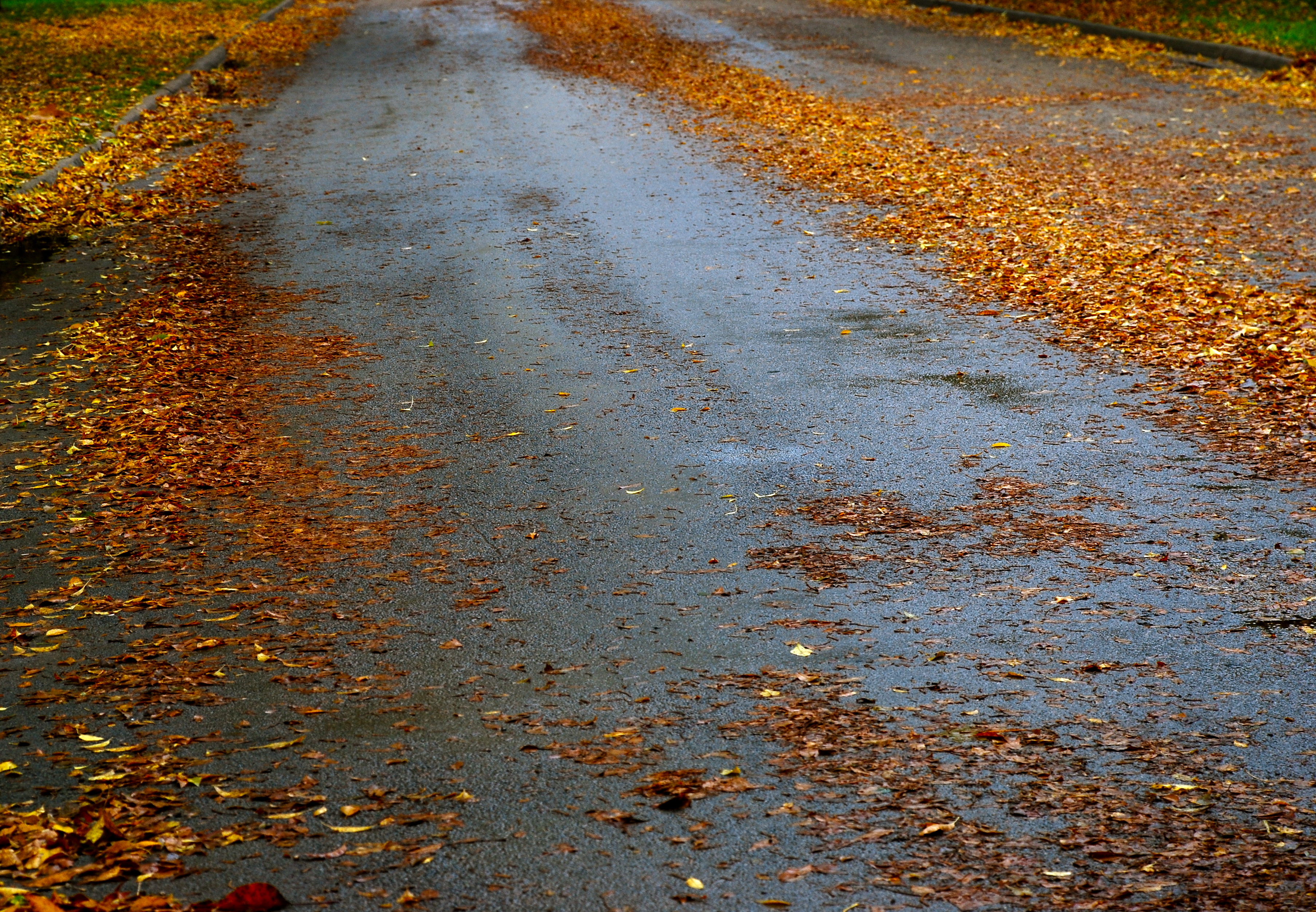
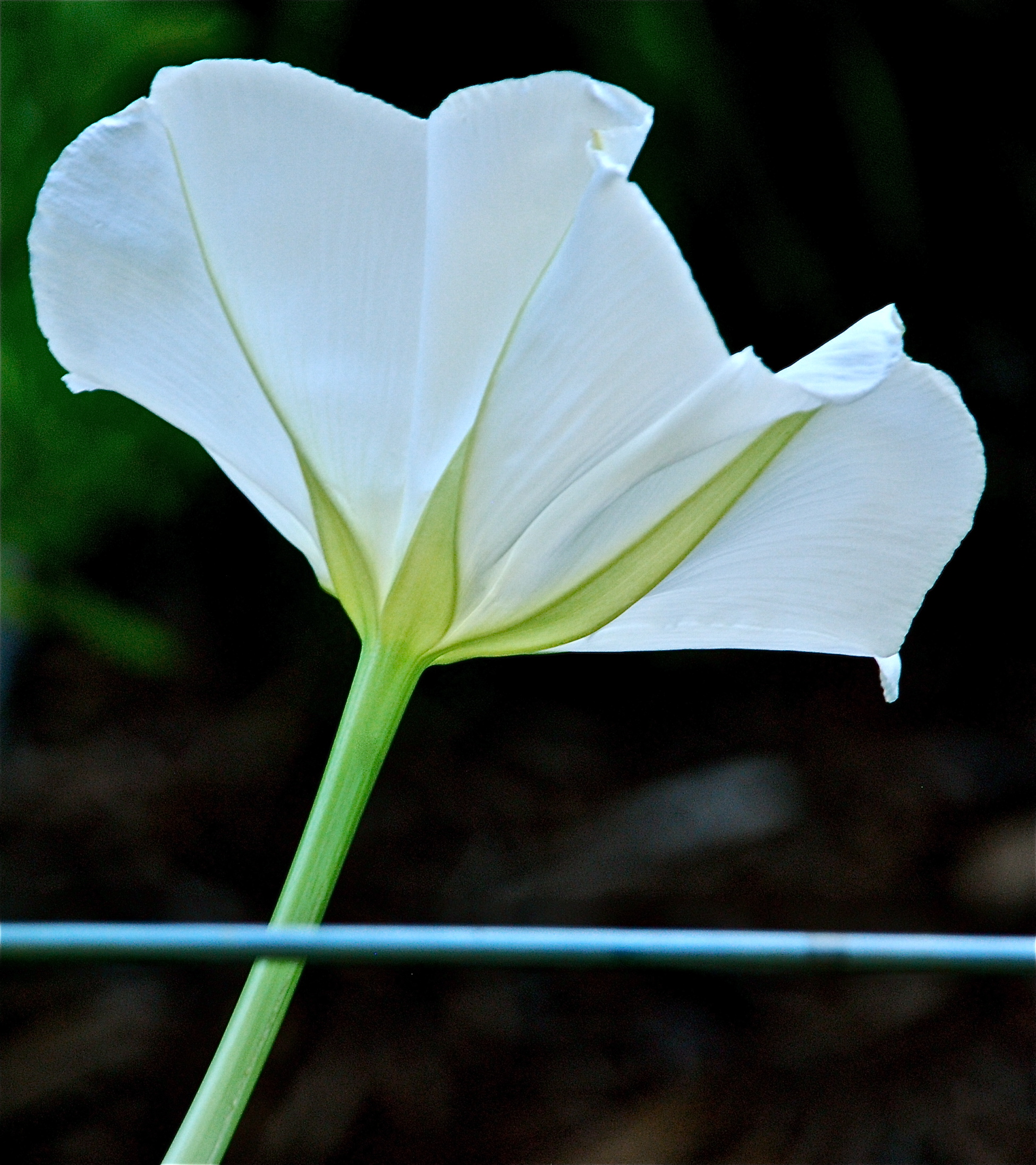
The air was crisp and cool; day’s light had just slipped away.  Wet blades of grass sparkled in a kind of diamond-dusted majesty under the glow of a rising harvest moon.  As if to punctuate my scattered thoughts, tiny aircraft lights glided from time to time through the darkening indigo sky.  When I began glancing around the yard, the images that confronted me seemed to be popping up like photos in a slowly advancing slide show.  The first one I saw was of the red turk’s caps underneath the rose arch, then the white moonflowers on the neighbor’s fence, fattening seed pods under the oak, a Celtic cross, a flying moth, an intermittently  shrouded moon.  The spell was broken only for a short while when the fragrance from my potted herbs temporarily seduced my nose.  Then the slide show started up again with a flash of yellow and white lights, followed by a rustling noise, leafy branches hanging low, a sculpted monk, stone rabbits, and a fleeting little lizard.  Music in the distance floated down the alley, and when I turned to follow the sound, I was startled by ghostly shadows dancing on the shed in the deepening darkness.  However the fear was fleeting and not enough to alleviate my growing sleepiness.  It wasn’t until water tapped noisily in the nearly drained fountain and a pair of feral cats came meowing at my feet that I was jolted out of my reverie.  And it had been such a lovely respite for a weary soul, always is when under the holy hosts of heaven that light the night.

And God said, “Let there be lights in the vault of the sky to separate the day from the night, and let them serve as signs to mark sacred times, and days and year…   ~Genesis 1:14  ✝

148. If the sight of blue skies fills you with joy, if a blade of grass springing up in the fields has the power to move you, if the simple things in nature have a message you understand, rejoice, for your soul is alive. ~Eleanora Duse

Every vine climbing and blossoming
tells of love and joy.
~Robert G. Ingersoll

Image

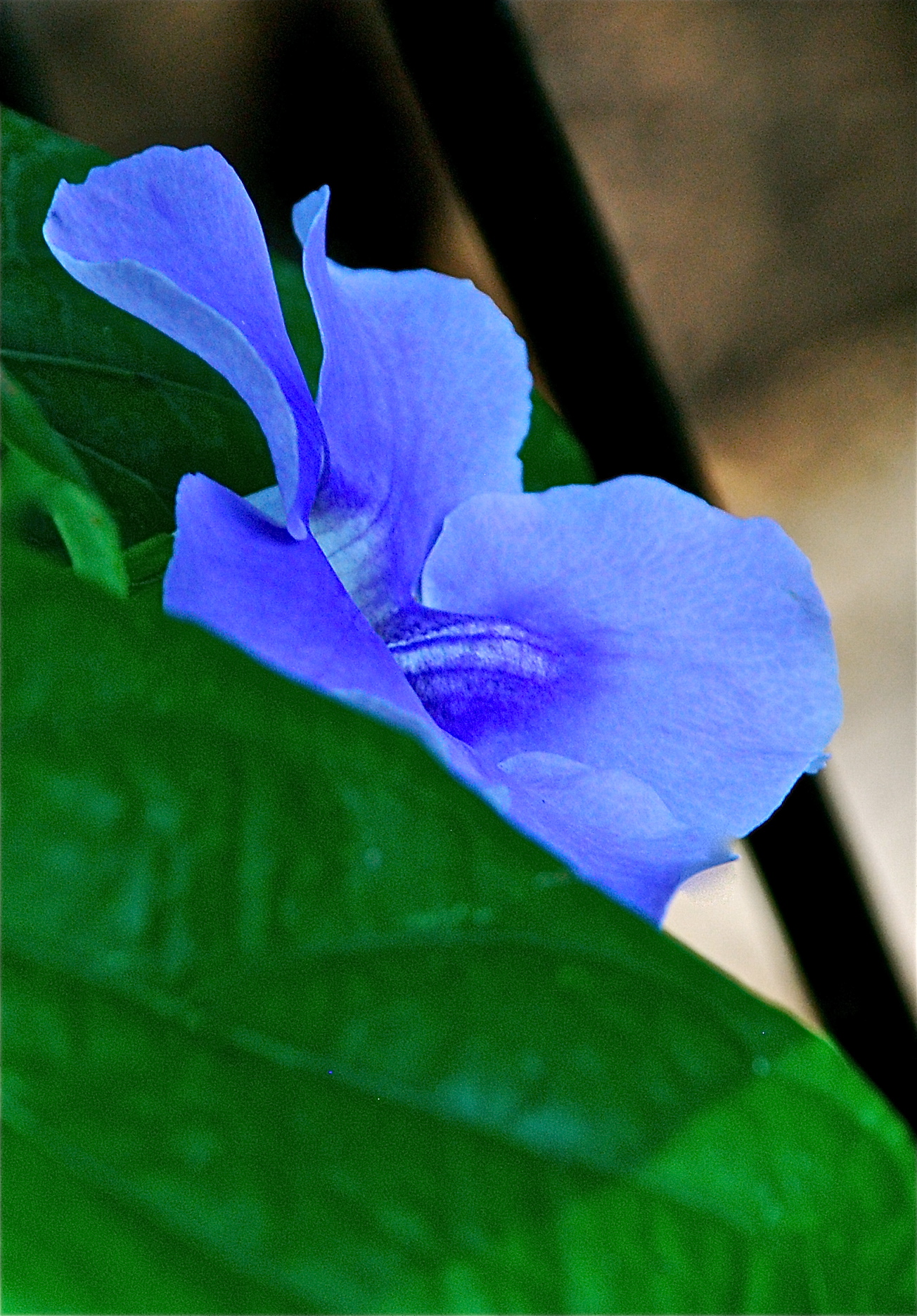
If your soul is indeed alive, you come to realize that like all else in Creation, vines tell also of the nearness of God and the way that He wraps His arms around His children in order to keep them close to Him.  Simply put, whether acknowledged by all or not, mankind is inextricably linked to the Maker of heaven and earth, and because of His supporting and sustaining provisions our souls are eventually drawn into His holy web of life and the Light.  C. S. Lewis said that “Jesus was either a liar, a lunatic, or who He said He was.”  Mr. Lewis’ soul and mine have trusted Jesus to be who He said He was.   Thus I rejoice when He, the Messiah,  tells me:

“I am the bread of life.”
“I am the light of the world.”
“I am the gate for the sheep.”
“I am the good shepherd; the good shepherd gives his life for the sheep.”
“I am the resurrection, and the life.”
“I am the way, the truth, and the life.”
“I am the true vine.”

Return to us, O God Almighty!  Look down from heaven and see!  Watch over this vine, the root your right hand has planted, the son you have raised up for yourself.  ~Psalm 80:14-15  ✝

*The flower in the photo is Thunbergia Grandiflora (commonly called Bengal Clock vine or Sky Flower vine)

140. All nature sings, and round me rings the music of the spheres. ~Maltbie D. Babcock

This is my Father’s world
He shines in all that’s fair,
In the rustling grass I hear Him pass,
He speaks to me everywhere.
~Lyrics from This is My Father’s World by Maltbie D. Babcock

Image

What a glorious morning!  When I raised the shade, my eyes were met with a delicious light pouring down on a corner of the garden.  And it was light not born of the intense heat of past months but instead of the crisp coolness of a 59 degree autumnal equinox morn.  Zephyrs were ruffling leaves, and they were shouting hallelujahs in praise of the Lord’s Sabbath and yesterday’s rain.  Ancient Eden’s unmistakable holy voice reverberated in the air, and all of us, creature and man alike, recognized it and rejoiced.  The “special air of melancholy and magic” typical of September’s opus rose louder and louder as the light moved southward across the yard frosting everything in its wake.  Yahweh’s glory breathed new life into wilted leaves, faded blossoms, and weary bones as the light moved as sweetly as a bow across the strings of a Stradivarius in slanted increments across the yard.

“Arise, shine, for your light has come, and the glory of the Lord rises upon you.”  ~Isaiah 60:1  ✝

*Thanks to Annette Lepple for the great description of September that I quoted above.