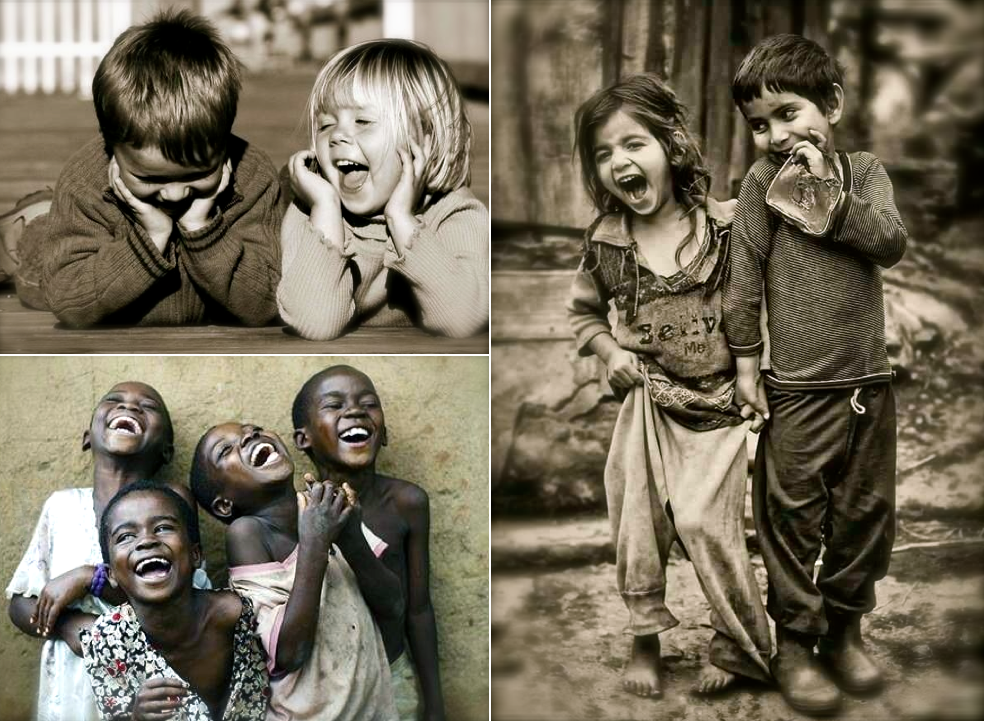
506. Laughter is a sunbeam of the soul. ~Thomas Mann

Take bread away from me, if you wish,
take air away,
but do not take from me your laughter.

Screen shot 2014-10-03 at 6.16.24 PM

Do not take away the rose,
the lance flower that you pluck,
the water that suddenly
bursts forth in joy,
the sudden wave
of silver born in you.

My struggle is harsh and I come back
with eyes tired
at times from having seen
the unchanging earth,
but when your laughter enters
it rises to the sky seeking me
and it opens for me all
the doors of life.

Next to the sea in the autumn,
your laughter must raise
its foamy cascade,
and in the spring, love,
I want your laughter like
the flower I was waiting for,
the blue flower, the rose
of my echoing country.

Laugh at the night,
at the day, at the moon,
laugh at the twisted
streets of the island,
laugh at this clumsy
boy who loves you,
but when I open
my eyes and close them,
when my steps go,
when my steps return,
deny me bread, air,
light, spring,
but never your laughter
for I would die.
~Pablo Neruda

He will yet fill your mouth with laughter and your lips with shouts of joy. ~Job 8:21   ✝

**Images via Pinterest

481. Explanation separates us from astonishment, which is the only gateway to the incomprehensible. ~Eugène Ionesco

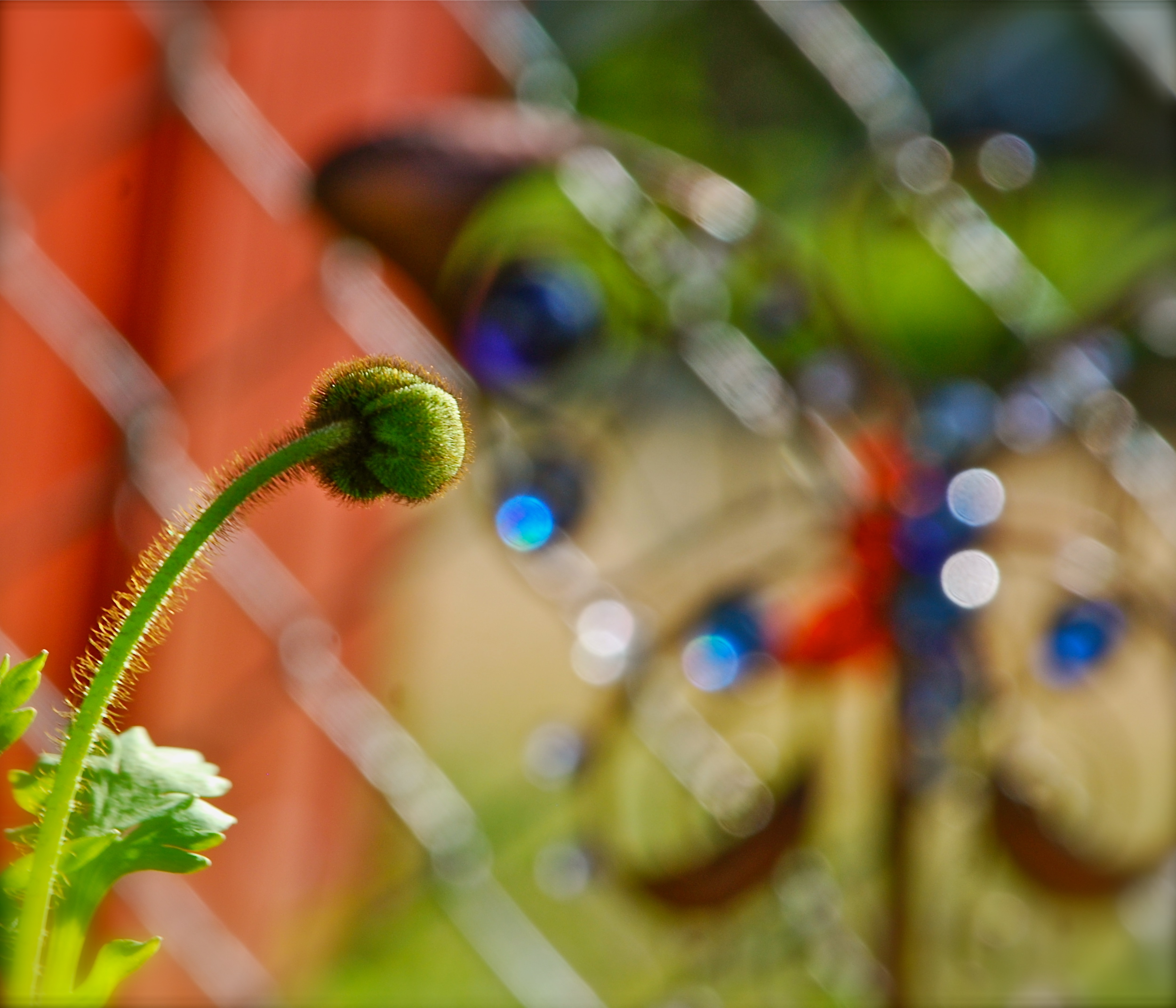
Even the poppy knows to bow its head
in praise before rising to the wonderment of day!

DSC_0027

Truly, we live with mysteries too marvelous
to be understood.

How grass can be nourishing in the
mouths of the lambs.
How rivers and stones are forever
in allegiance with gravity,
while we ourselves dream of rising.

How two hands touch and the bonds
will never be broken.
How people come, from delight or the
scars of damage,
to the comfort of a poem.

Let me keep my distance, always, from those
who think they have the answers.

Let me keep company always with those who say
“Look!” and laugh in astonishment,
and bow their heads.
~Mary Oliver

“Can you fathom the mysteries of God? Can you probe the limits of the Almighty? They are higher than the heavens above—what can you do? They are deeper than the depths below—what can you know?” ~Job 11:7-8    ✝

316. On the first warm day of spring I dig my fingers deep into the soft earth. I can feel its energy and my spirits soar. ~Helen Hayes

…the garden is not only a place
to make things grow and
to display the beautiful flowers of the earth,
but a place that should accord
with various moods of its admirers.
It should be a place
in which to hold light banter,
a place to laugh, and, besides
should have a hidden corner in which to weep.
~Alice Lounsberry

Image

Nor is the fragrant garden ever wholly our own…
Over hedge and wall,
and often far down the highway,
it sends a greeting
not alone to us who have toiled for it,
but to the passing stranger,
the blind beggar,
the child skipping to school,
the tired woman on her way to work,
the rich man,
the careless youth.
~Louise Beebe Wilder

Thank you, Jesus, that you save, you heal, you restore, and you reveal Your Father’s heart to us!

The Lord announces the word, and the women who proclaim it are a mighty throng: Psalm 68:11 ✝

**Photo via Pinterest

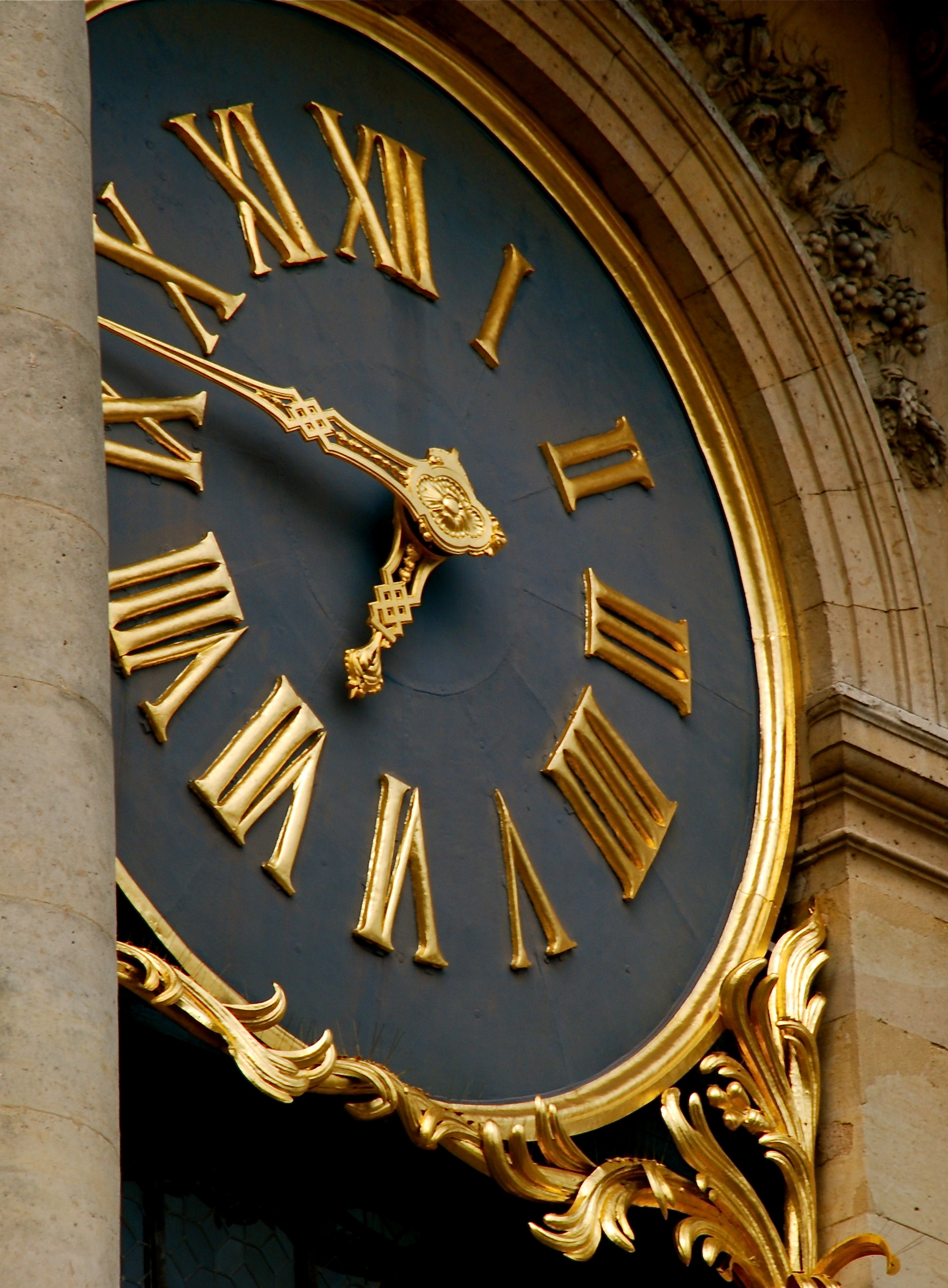
233. The day is of infinite length for him who knows how to appreciate and use it. ~Johann Wolfgang von Goethe

Image

Take time to think; it is the source of power.
Take time to play; it the secret of perpetual youth.
Take time to read; it is the fountain of wisdom.
Take time to pray; it is the greatest power on earth.
Take time to love and be loved; it is a God-given privilege.
Take time to be friendly; it is the road to happiness.
Take time to laugh; it is the music of the soul.
Take time to give; it is too short a day to be selfish.
Take time to be charitable; it is the key to heaven.
~Author Unknown

For everything there is a season, and a time for every matter under heaven: a time to be born, and a time to die; a time to plant, and a time to pluck up what is planted; a time to kill, and a time to heal; a time to break down, and a time to build up; …  ~Ecclesiastes 3:8  ✝

Music’s Mystery

Image

I’ve heard it said that only human beings have been given the gift of music; that only people create songs, sing and serenade their souls with this most magical and uplifting form of communication and communion. Yet, should we not consider the song of the lark? The haunting ballads of the whales? The mournful call of the wolf? The robin’s lyrical laugh at dawn and dusk? The crickets that serenade the nighttide? The burbles of monkeys swaying in the trees? The laughing of the hyena?

Who is to say that in their melodic tunes, caterwauls, howls, wails, and other worldly vocalizations there is not some measure of music. Why should we be the only ones to sing praise, to croon our love, and to bewail our distress? How can we know, in truth, in honesty, that the deliberate scree of the hawk, the piercing bugle of the elk, the chattering of raccoon and ferret, and the murmurings of infrasonic elephant calls is not music to their ears?

Music is a form of communication that lifts the soul, expresses emotion, and brings one being into contact with another being. If this is, indeed, the definition of music (of which it is a form) then can that being not be one other than human? Does not one wolf join another when it sings? Does not the whale song change season to season and year to year, picked up by another whale to be carried on? Does not one roaring lion inspire the entire pride by its lusty cry?

Consider what the morning would sound like without the sweet music of the birds. Contemplate what the summer night might be when not a single chirrup, trill, drone or buzz lilted through the air. Ponder how deep and lonely the oceans would be without the drifting, breathtaking songs of the whales. Can you even imagine a mountain landscape without hearing the echoing howl of a wolf or the bubbling laugh of the loon?

If these sounds, that can captivate us and uplift our thoughts, our hearts and even our souls, are not music and do not do the same for all those who hear them, regardless of race, than perhaps, we must follow that course of logic and say that cave paintings are not art, tap is not dance, improvisation is not acting and free verse is not poetry.

Or perhaps, Music Teaches the Soul what the Heart Feels and Guides the Heart with what only the Soul can Truly Know.

Music’s Mystery is by Morgan at:  http://booknvolume.com

40. Spring shows what God can do with a drab and dirty world. ~Virgil Kraft

Awake, thou wintry earth –
fling off thy sadness!
Fair vernal flowers, laugh forth –
your ancient gladness!
~Thomas Blackburn

Image

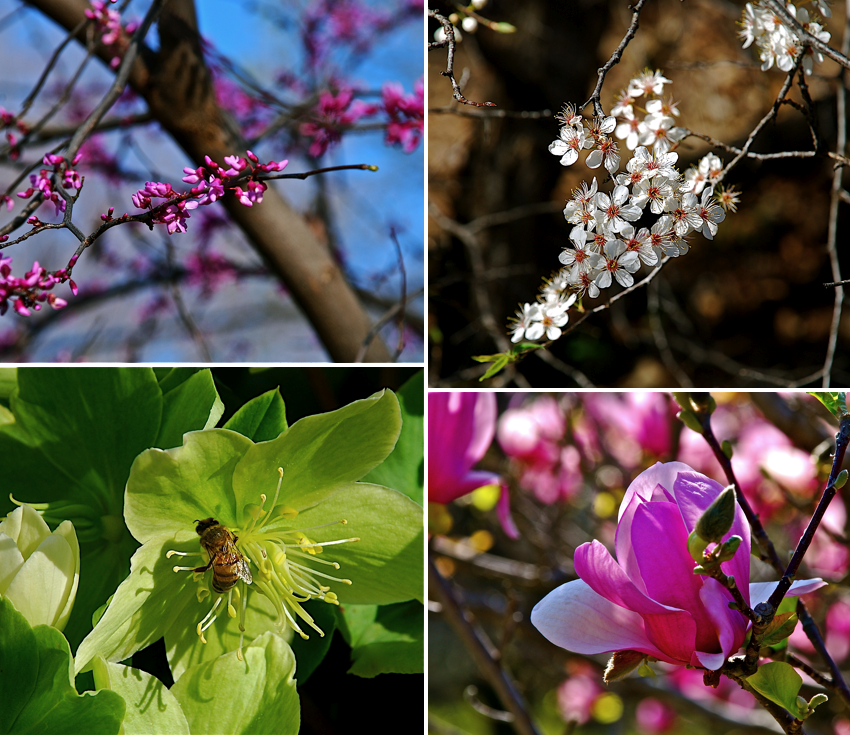
Leaf by leaf, bud by bud, and blossom by blossom the spring of the year advances.   On warmish days, earth casts off its wintry gloom, and breezes broadcast sweetly-scented aromas.  The first butterflies then dare to soar and the hungry bees hum amid the glad laughter issuing forth from flowering bulbs and trees.  As a result the year’s initial poetry of rebirth is penned by the pollinating, aerial whirring of dainty wings.  In the meantime as I hurry about trying to taking photos of the blossoming narratives and their paramours, I often find myself asking the same question Walt Whitman once did.  “Why are there trees I never walk under but large and melodious thoughts descend upon me?”  The answer I’ve decided is that the arms of trees reach towards the heavens to gather sacred messages meant to draw mankind near to “the living Word of God in nature” as well as what is read in Scripture.

In our area the first verses of  “tree” poetry come from Saucer Magnolias.  Their big, goblet-shaped flowers pen exquisite couplets in pink and white.  Soon to follow are the brilliant white blossoms of Star Magnolias.  Though not quite enough lines to form a fourteen-lined sonnet, their twelve exquisite, “petal-poesy” lines form rhyming schemes as lovely as any Shakespearean sonnet.  Next and in perfect rhyming sequences come the double samaras.  Samaras, the scarlet, dual winged fruits of the Red Maple, look like long, slender fairy wings as they dance choric rhymes writ by the winds.  Then come the Eastern Redbuds and Bradford Pears that compose stunning free-verse stanzas in purple and white, each resplendent branch, a psalm written in praise of its Maker.  For a pollinator now there’s no quandary about where sweet nectaries are to be found for stanza after stanza they and I are lead in springtime to earth’s most festive and delicious banquets.

He has taken me to the banquet hall, and His banner over me is love.  ~Song of Songs 2:4