280. Spring, you put a spell on me and you make me feel like dancing… ~Edited and adapted excerpt of lyrics by Vincent, Poncia Jr./Leo Sayer

Happy days are here again!
The skies above are clear again!
So let’s sing a song of cheer again!
Happy days are here again!
~Excerpted lyrics by Milton Ager/Jack Yellen
Image

Image

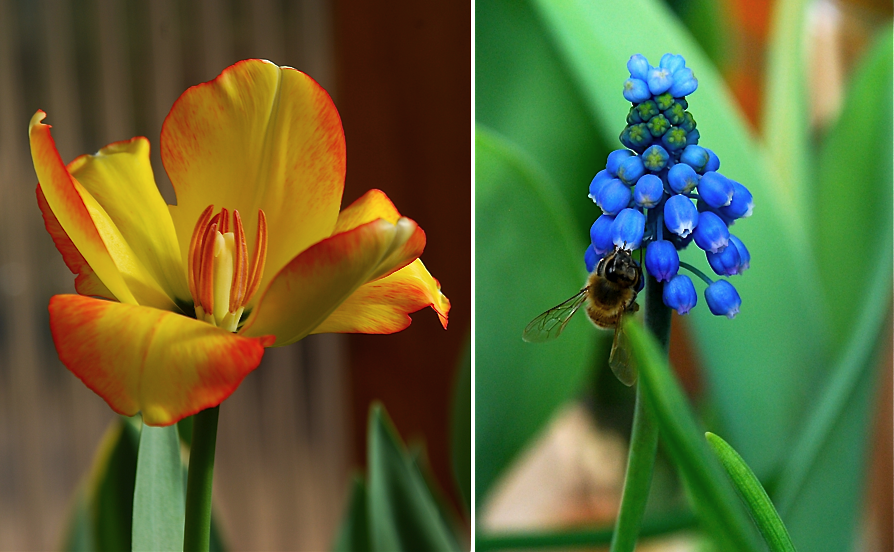
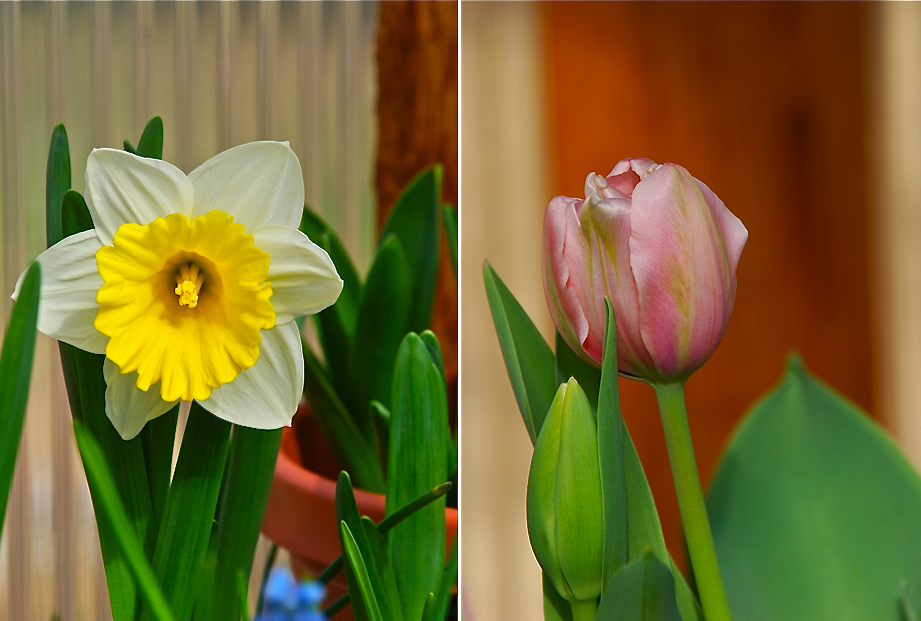
Okay, so it’s not really spring yet, at least not according the the calendar, but springy things sprang up in my greenhouse yesterday.  As a result melodies, not just from the birds, filled the air, and indeed it was an occasion for dancing.  I didn’t care what the neighbors might think about an old lady jumpin’ around like a madwoman, it was definitely time for some singin’ and a little jig.  Why?  Well after weeks of waiting tulips were blooming, a daffodil had opened up, and the first bee of the season had found its way inside to sup on the nectar in my little grape hyacinths.  I don’t know about you, but that’s a formula for springtime in my book.  And every time beauty and miracles like that emerge from seemingly nothingness, I fall in love all over again with the Creator of the Universe.  What amazing things He has made and given to us, we creatures who are often so undeserving of His gifts and His grace!  Now that’s love, is it not?!

He said, “O Lord, God of Israel, there is no God like you, in heaven or on earth, keeping covenant in steadfast love with your servants who walk before you with all their heart.  ~2 Chronicles 6:14  ✝
260. The shortest day has passed, and whatever nastiness of weather we may look forward to in January and February, at least we notice that the days are getting longer. ~Vita Sackville-West

January is the quietest month in the garden.
. . .But just because is looks quiet
doesn’t mean that nothing is happening.
The soil, open to the sky, absorbs the pure rainfall
while microorganisms convert tilled-under fodder
into usable nutrients for the next crop of plants.
The feasting earthworms tunnel along,
aerating the soil and preparing it to welcome
the seeds and bare roots to come.
~Rosalie Muller Wright

Image

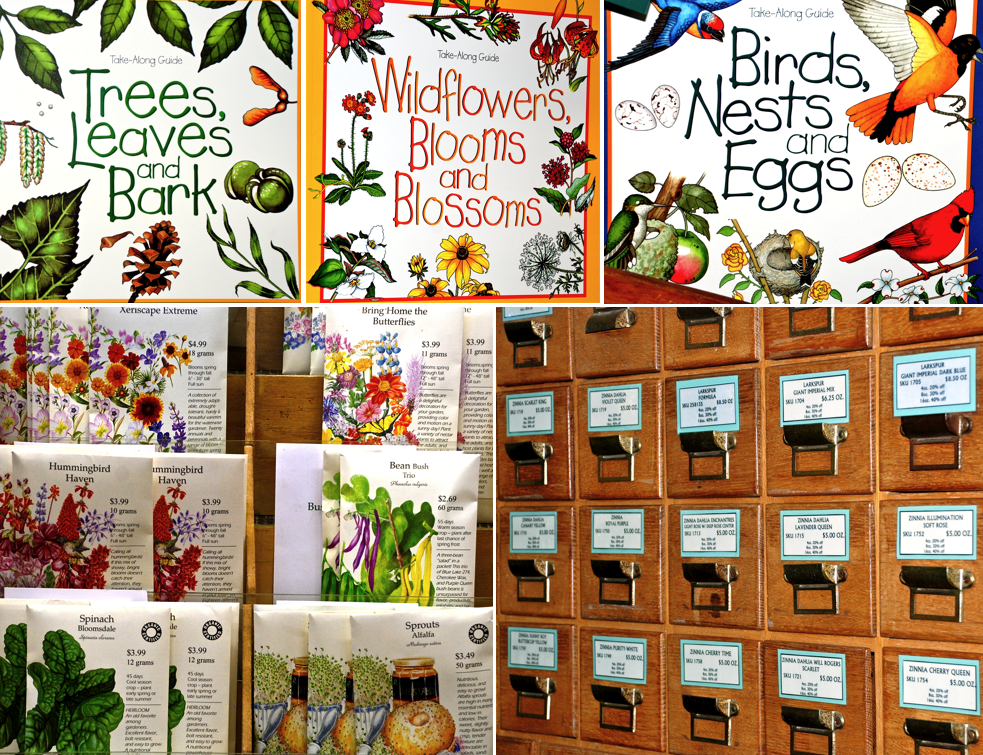
I’ve heard it said that “the color of springtime is in the flowers” whereas “the color of winter is in the imagination.”  Thankfully I’ve got a good imagination, and when that fails, I have a large collection of photos to look back on because by the end of January my spirit is in dire need of a boost.  A place I like to frequent also helps to keep my imagination alive and well.  It’s a nursery, and this particular Dallas nursery not only has a great selection of flowers during the growing seasons, but year round it has all sorts of indoor plants too.  In addition  to the plants it has an oak cabinet with drawers full of fascinating seeds, racks of seed packets, shelves filled with gardening books, and an array of tools.  So between the plant and seed catalogs that start arriving in the mail after Christmas and my visits to Nicholson-Hardie’s nursery, the “dream” is kept alive even when the under-the-surface busy but ravaged-atop January garden appears to be completely shut down.  And it is this “stuff” of which gardener’s dreams are made that keeps my imagination churning and my head full of schemes, schemes that are the spice of a gardener’s life.  What a blessing is our memory, our imagination, and our ability to dream; God is so good.

I will praise the name of God with a song; I will magnify Him with thanksgiving.  ~Psalm 69:30  ✝

246. The flower is the poetry of reproduction. It is an example of the eternal seductiveness of life. ~Jean Giraudoux

I am a symbol of love and immortality.
I have been around since the time of Confucius.
My name came from a Persian word.
At one time I was more expensive than precious metals.
I can be used in the place of an onion in cooking.
I am in the same family as a lily.

Image

Do you know who I am?  I am a native of Central Asia, and I am the world’s most planted flower.  When I arrived from Turkey in the mid-16th century, I was a gift from the Ottoman Empire that took Western Europe by storm.  But I did not come to the United States until the 1800’s.  There are about 3,000 varieties of me grown around the world, some that originated in the seventeenth century.  My petals come in every shade of the rainbow as well as black, but my most popular color is red.  And I can be forced into blooming after I have been stored in a refrigerator for 12-16 weeks.

A tulip doesn’t strive to impress anyone.
It doesn’t struggle to be different than a rose.
It doesn’t have to.
It is different.
And there’s room in the garden for every flower.
~Marianne Williamson

Image

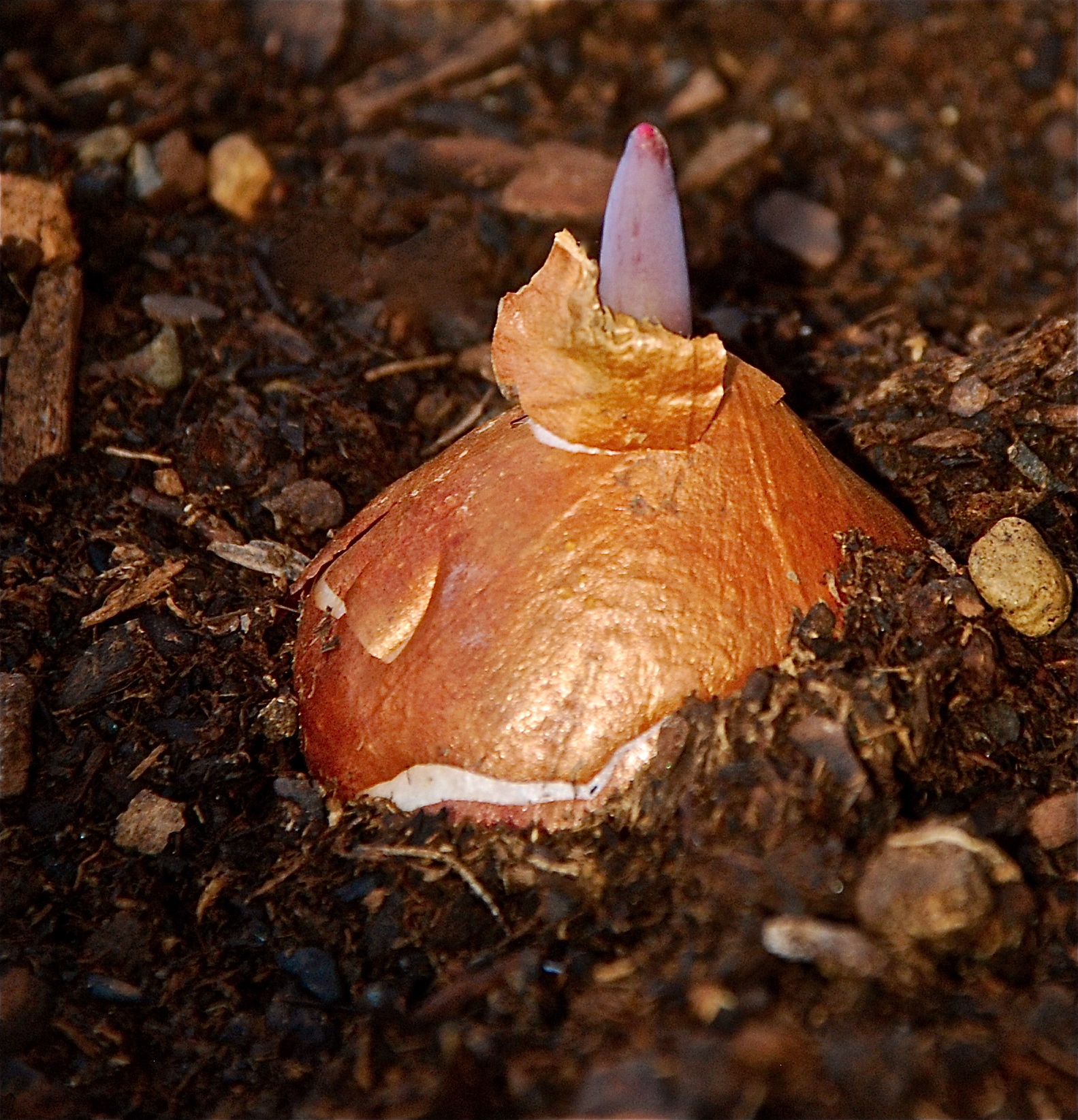
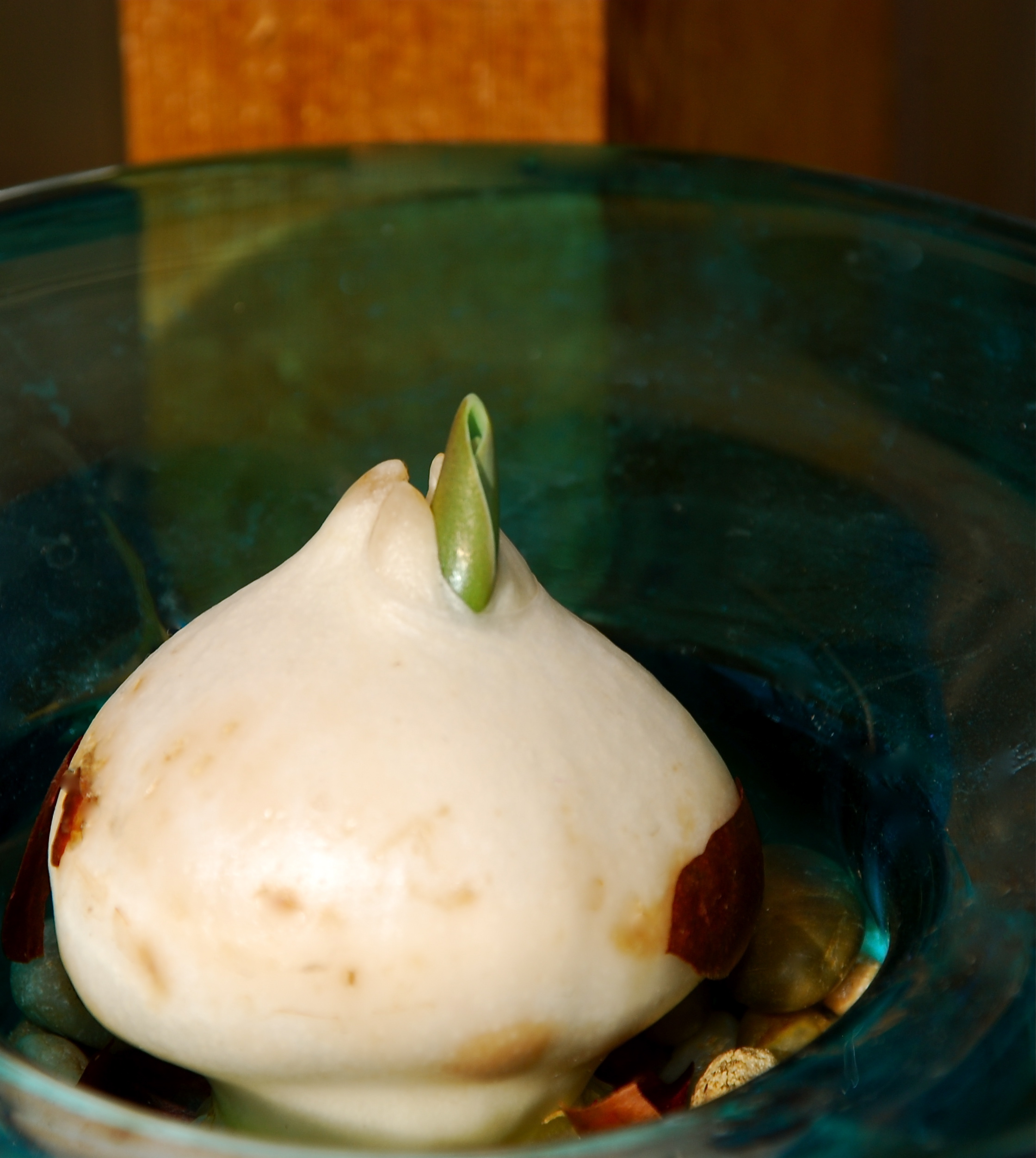
I’ve never had much luck with growing tulips in the ground.  So this year I decided to try forcing them in containers.  Two weeks ago after the bulbs had spent the required amount of time in my refrigerator, I planted some in soil and some in glass containers partially filled with pebbles and water.  As of today I’m proud to report that I have tulips sprouting in both types of containers.  Though it be only the 12th of January, springtime has sprung at least in my greenhouse.  One of the most seductive things in life I know is the thrill of the first spark of life in a garden.  Every time I experience it I feel as if a time machine has transported me back to Eden on the third day when creation was “born of the Spirit in the womb of the universe.”  On that day the first seeds were planted in the earth and their roots reached down for the waters that would sustain them.  Then and now such as this is clearly a manifestation of the goodness of God.

I believe that I shall see the goodness of the Lord in the land of the living.  ~Psalm 27:13  ✝

241. O thou, Who chariotest to their dark wintry bed the winged seeds, where they lie cold and low, each like a corpse within its grave, until thine azure sister of the spring shall blow her clarion o’er the dreaming earth. ~John Davies

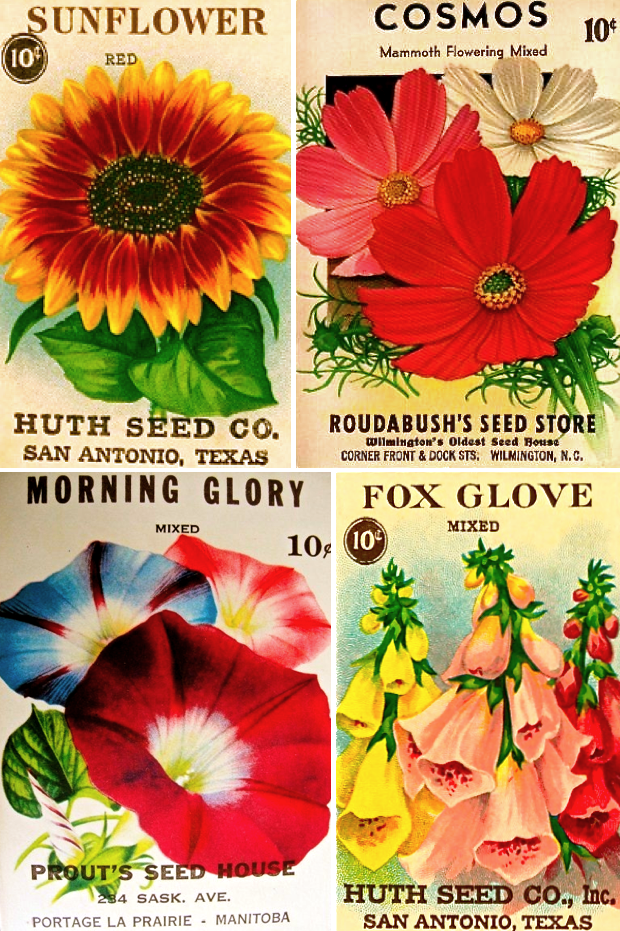
I paid a dime for a package of seeds
And the clerk tossed them out with a flip.
“We’ve got ‘em assorted for every man’s needs,”
He said with a smile on his lip.
“Pansies and poppies and asters and peas!
Ten cents a package and pick as you please!”

Now seeds are just dimes to the man in the store
And dimes are the things he needs;
And I’ve been to buy them in seasons before,
But have thought of them merely as seeds.
But it flashed through my mind as I took them this time
“You have purchased a miracle here for a dime!”

“You’ve a dime’s worth of power no man can create,
You’ve a dime’s worth of life in your hand!
You’ve a dime’s worth of mystery, destiny, fate,
Which the wisest cannot understand.
In this bright little package, now isn’t it odd?
You’ve a dime’s worth of something known only to God.
~Edgar A. Guest

Image

Nowadays a packet of seeds costs more than a dime; yet one can still buy a packet of “miracles” for a reasonable sum.  And the initial investment is small compared to the potential yield not only from the generous number of seeds in each packet but also from the seeds that those plants ultimately produce.  I know because my garden is full of plants started from seeds I never bought.  Not only that but lots of birds eat well on the excess “birdseed” I don’t have to buy.  So it is that in nurturing I am nurtured.  By becoming a part of the “cosmic consciousness,” I  get to participate in the sacred dance of life.

The Book of Genesis tells us that on the third day the Lord created seed-bearing plants and trees.  And from the moment He spoke those words, countless seasons have come and gone and the soil in any given garden has quaked with life from seeds forming in its dark wombs.  As the trembling in “dark wintry beds” increased, an impetus not unlike labor pains pushed roots downward and tiny green shoots upwards toward the light until at last new “miracles” became stable,visible, and tangible.  As more and more darkness melted away in the blaze of lengthening days and intensifying sunlight, the warp and woof of nature began weaving another springtime into existence.  And when the shroud of gloom, winter’s drab garment, was finally sloughed off it was replaced by spring’s brilliant, gauzy garments, garments as colorful as the “silks of Samarkand.”

Isaac sowed seed in that land, and in the same year reaped a hundredfold.  ~Genesis 26:12  ✝

212. It is part of the cure to want to be cured. ~Seneca

To feel keenly the poetry of a morning’s roses,
one has to just have escaped from the claws
of this vulture which we call sickness of body or heart.
~Adapted excerpt from Henri Frederic Amiel

Image

In order to mend and bridge chasms of painful, isolating realities, I often douse the fires of what breaks my heart in cups of tea or tears that flow during quiet dawns or at night when the wee hours find me awake and alone.  After the sipping or crying comes to an end, a numbed stillness often develops.  When it does, I become aware in its clarity of the amazing nearness of God.  Jesus, whom I’ve been calling, is offering to guide me through portals to places where pools of mercy await.  Sometimes the healing waters lie deep within my own being where the Holy Spirit resides in His cloistered sanctuary.  At other times they are found in the beautiful colors of autumn, or in the glistening dew on greening grass and flowers in springtime, or in the gentle gestures of another’s compassion, or in softly spoken prayers proffered by kind and endearing voices.  Wherever the pool and whoever the beneficial bearer of blessing, one or both sustain me, if I yield, in the returning rhythm of fitness as the Lord’s grace works to render me wholly well.

I’ve discovered that tears have amazing restorative powers for frequently it is when my eyes are blurred with wetness from them that a sense of God’s presence is strongest.  For surely in the loss of His own son by the hands of creatures He breathed life into, He shed more tears than we’ll ever know.  We all endure difficult and sorrowful moments in our lives.  So excruciating is the pain on occasion that it nearly stifles our very breath, but one breath and one step at a time begins the journey out of the depths of despair.

“But I will restore your health and heal your wounds,” declares the Lord…  ~Jeremiah 30:17a  ✝

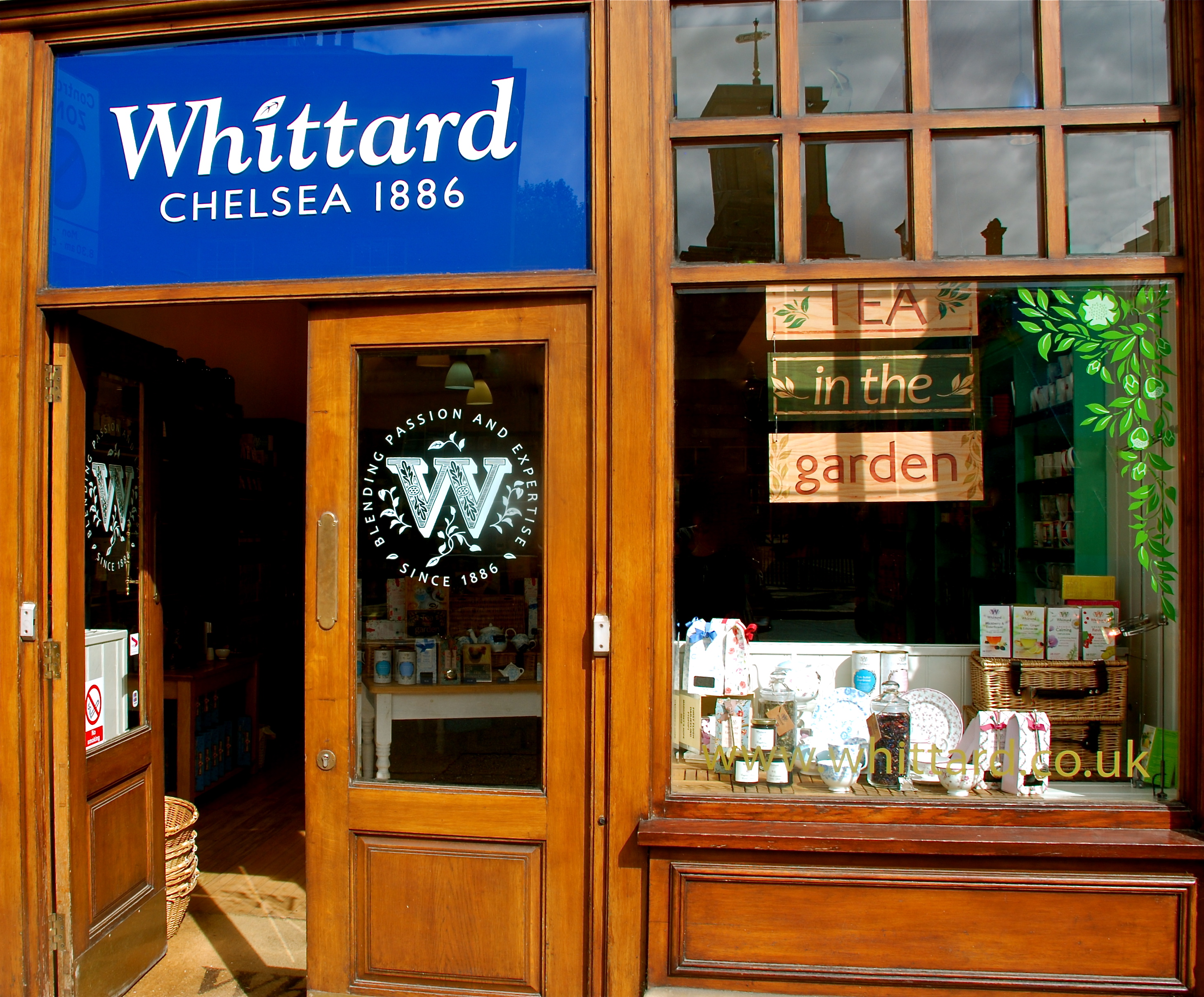
**Whittard’s is a tea, coffee, and cocoa shop that we found in London last summer.

208. It is the life of the crystal, the architect of the flake, the fire of the frost… ~John Burroughs

We feel cold, but we don’t mind it
because we will not come to harm.
And if we wrapped ourselves against the cold,
we wouldn’t feel other things,
like the bright tingle of the stars,
music of the Aurora,
or best of all the silky feeling of moonlight on our skin.
~Philip Pullman

Image

Image

After last night’s winter storm, we woke to find the ground, the streets, and the rooftops covered in a solid blanket of sleet mixed with snow.  Icicles were hanging from eaves and other solid objects; branches, stems, leaves and the few remaining roses had been encapsulated in ice.  The forbidding frozen world outside was steeped in silence but for the occasional gusts of wind that sent falling leaves round and round in capricious little whirlwinds tapping softly against the icy ground.

In the coming days the garden will shrink dramatically.  It’s beauty will be harder to see, but for those who continually walk its paths with searching eyes and vivid memories, emerging treasures can be spotted and glory envisioned in places where it was and shall rise again from seeming nothingness.  During the warmer spells in the next few months, I’ll clean up the growing season’s spreading, untidy tangle and reshape her fetching figure while below in her fertile womb mysteries, ancient and sacred, are coming together to birth yet another springtime.

Then the Lord spoke to Job out of the storm.  He said From whose womb comes the ice?  Who gives birth to the frost from the heavens when the water become hard as stone, when the surface of the deep is frozen?  ~Job 38:1 and 29-30  ✝

204. The autumn leaves drift by my window, the autumn leaves of red and gold…and soon I’ll hear old winter’s song… ~Excerpts from a tune by Johnny Mercer

There is music in the meadows, in the air…
Leaves are crimson, brown, and yellow…
There is rhythm in the woods,
And in the fields, nature yields…
~Excerpts from LYRIC OF AUTUMN by
William Stanley Braithwaite

Image

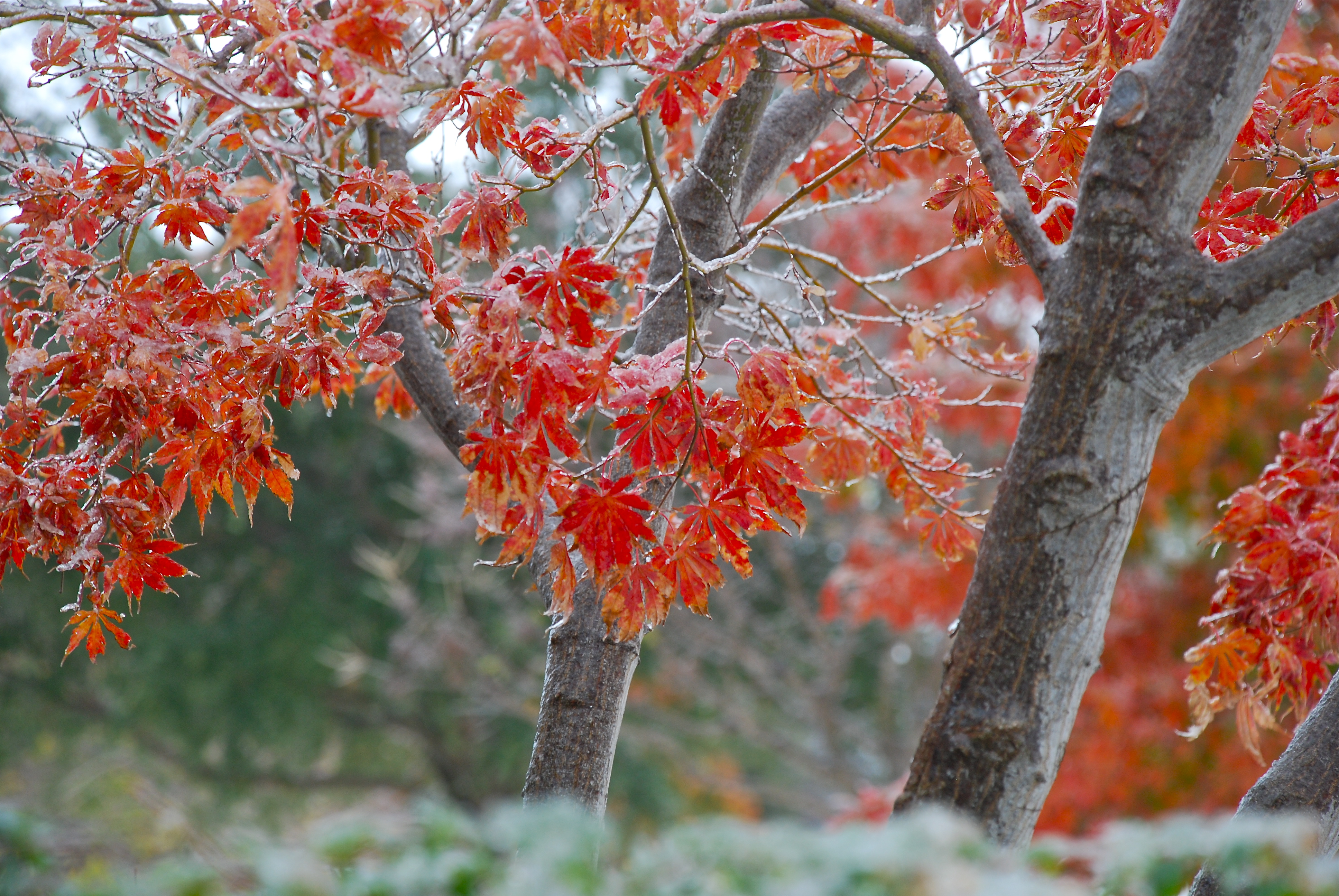
It was 1947 when Johnny Mercer borrowed lines from a French song to create the lyrics to his unforgettable melody, AUTUMN LEAVES, a song I find myself singing, at least the parts I remember, almost every year as I tear November’s page off the calendar.  Why?  I don’t know.  The words just seem appropriate when autumn’s persistent winds, wild with leaves, blow wide open the final month’s portals, and this year’s opening was no different.  November’s yet in place blustery gales did in fact sweep December onto its throne.  Once seated, the 12th month opened under bright, sunny skies, but by noon day one had become shrouded in unending shades of gray.   When night fell, there were few, if any, remaining leaves on the redbud and willow at the back of the yard.  The beneficiaries of these as well as the oak’s leaves when they fall are the big island bed and my secret garden in the north corner.  So now not only can my voice be heard singing autumn’s anthems, but wherever these tinted tidbits lie, I’ll be able to hear them crooning their embracing ballads of promise.  And theirs, songs different from the ones in springtime, pledge warmth and declare they’ll keep my plants safe during the bitter, stone-cold days of winter.  But wait, things like trees and leaves sing?  Really? As a matter of fact, according to some Scriptural references and to those of us who listen carefully, they do!

The Lord reigns…Let the heavens rejoice, let the earth be glad; let the sea resound, and all that is in it.  Let the fields be jubilant, and everything in them; let all the trees of the forest sing with joy.  ~Psalm 96:11-12  ✝

198. Autumn is the dim shadow that clusters about the sweet precious things that God created in the realm of nature. ~Northern Advocate

That soft autumnal time…
The year’s last, loveliest smile,
Thou comest to fill with hope the human heart,
And strengthen it to bear the storms a while,
Till winter days depart…

Far in a shelter’d nook
I’ve met, in these calm days, a smiling flower,
A lonely aster, trembling by a brook…
~John Howard Bryant

Image

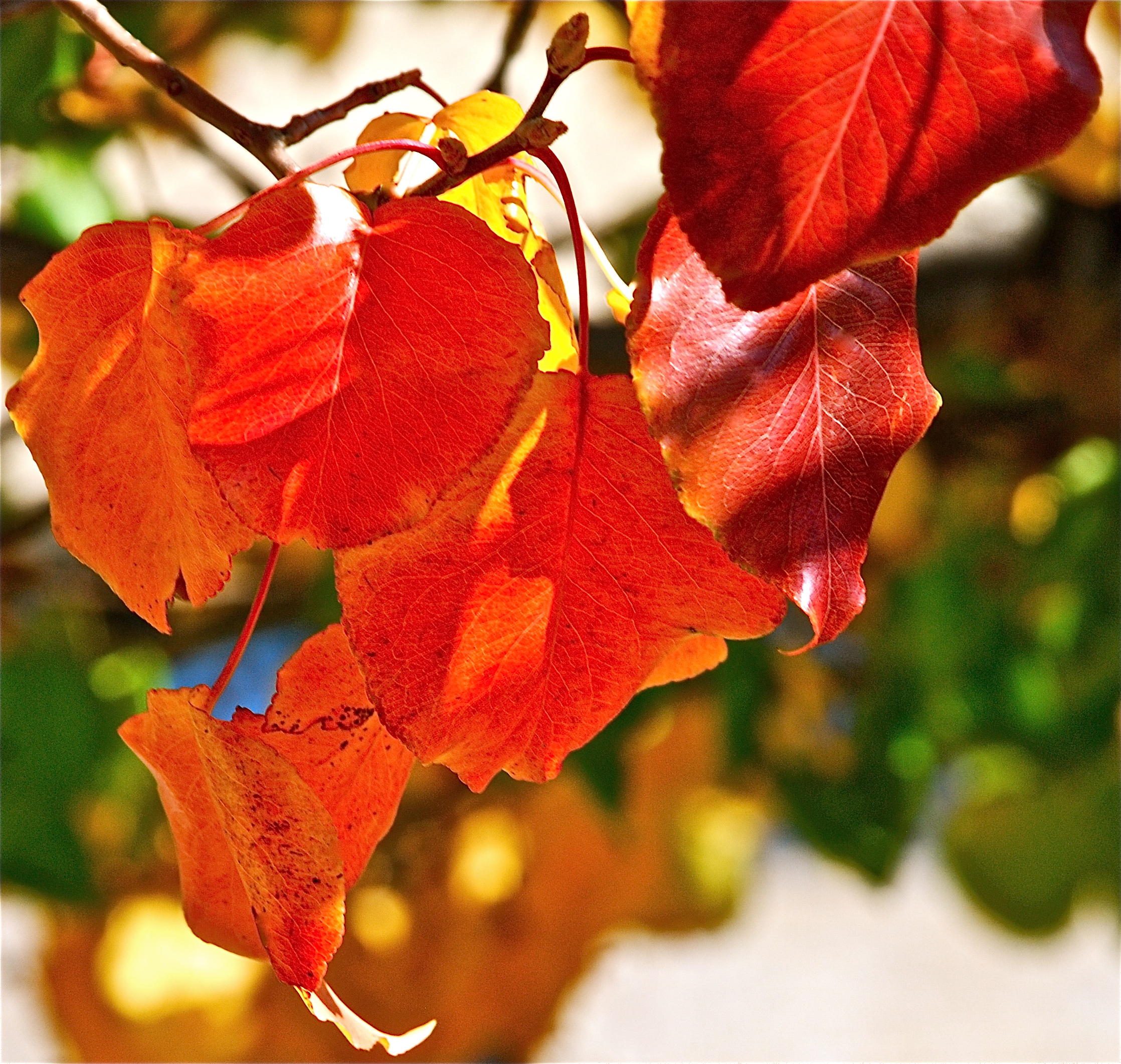
In autumn the Maker’s pigments turn from the soft pastels of springtime to emboldened, jewel tones.  Glad witnesses are we to the green leaves on shining sumac, flowering dogwoods, Bradford pears, sweet gums, Shumard oaks, and crape myrtles changing to mixtures of burgundy, crimson, orange, and gold.  Other treats are setting buds for next year’s blossoms among the fiery red, ripening fruits of the dogwoods, and the deeper shades of blues and pinks that adorn the thickened petals of hydrangeas.  And if that is not enough to make the year smile, there are the willow leaves, among the other falling foliage, that rain down golden glory in one wave after the other like confetti from a ticker-tape parade.  In the gusting winds they litter the streets, and as cars pass by the multicolored leafage gives a festive look to curbs and lawns.  But again, that’s not all.  Roses bloom in deeper hues than before, the red fruits on the Prairifire crabapples shine forth, and sweet purple asters with their bright yellow eyes provide a closing feast for hordes of humming bees.  So smile on, lovely Autumn, and fill my heart with the hope I need to be strengthened against winter’s gathering storms.

Faithfulness spring’s forth from the earth, and righteousness looks down from heaven.  The Lord will indeed give what is good, and our land will yield its harvest.   ~Psalm 85:11-12  ✝

76. Through the dancing poppies stole a breeze most softly lulling to my soul. ~John Keats

Of all the wonderful things in the wonderful universe of God,
nothing seems to me more surprising than the planting of a seed
in the blank earth and the result thereof.
Take the Poppy seed, for instance: it lies in your palm,
the merest atom of matter, hardly visible, a speck, a pin’s point in bulk,
but within it is imprisoned a spirit of beauty ineffable,
which will break its bonds and emerge from the dark ground
and blossom in a splendor so dazzling as to baffle all powers of description.
~Celia Thaxter

Image

I love poppies, not just the flowers but also the lovely, fat pods that contain the future of the species.  The plants that put on silky, paper-thin blossoms can grow to be 3 or 4 feet tall here if the “hardly visible” seeds are sown in the fall.  So it is that in late October I toss out seeds from the ones I harvested from last’s years pods, and then all winter long I wait for the beauties which “baffle description” to make their appearance in my garden.  As winter moves along, I keep myself reassured by going out to check on them after especially frigid days or after occasional snowfalls to make sure the burgeoning “babies” have not succumbed to the elements.  And each time I go out, I almost squeal with delight when I discover that most of them, if not all, are still slowly but surely growing bigger and stronger.  Then sometime in the early spring the day comes when the waiting is over and standing before me are the first fruits of my labors and watchfulness.  Like dainty chalices, the cup-like flowers open up and drink in the day’s light while penning God’s autograph on the “scenes” of yet another springtime.  Day by day after each individual flower’s petals fall to the ground, the intriguing seed pods take their place, and as temperatures climb, they begin to ripen.  Some of these I eventually let fall to the ground to self sow; the remainder I gather and keep safe and dry until autumn comes and it is again time for me to partner with Creation and scatter abroad the “merest atoms” of such beautiful matter.

For as the soil makes the sprout come up and a garden causes seeds to grow, so the Sovereign Lord will make righteousness and praise spring up before all nations.  ~Isaiah 61:11

40. Spring shows what God can do with a drab and dirty world. ~Virgil Kraft

Awake, thou wintry earth –
fling off thy sadness!
Fair vernal flowers, laugh forth –
your ancient gladness!
~Thomas Blackburn

Image

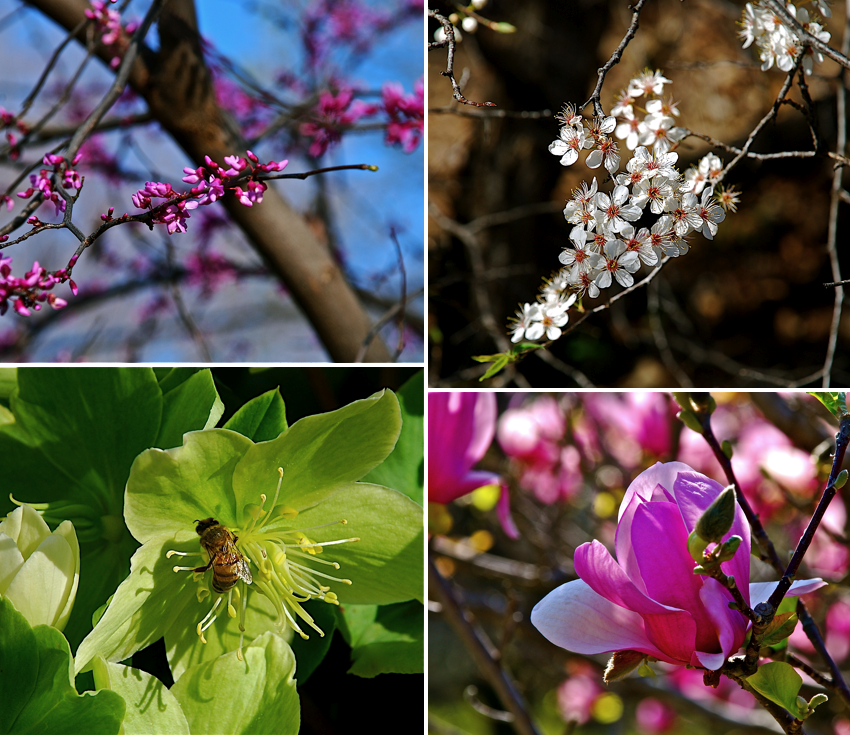
Leaf by leaf, bud by bud, and blossom by blossom the spring of the year advances.   On warmish days, earth casts off its wintry gloom, and breezes broadcast sweetly-scented aromas.  The first butterflies then dare to soar and the hungry bees hum amid the glad laughter issuing forth from flowering bulbs and trees.  As a result the year’s initial poetry of rebirth is penned by the pollinating, aerial whirring of dainty wings.  In the meantime as I hurry about trying to taking photos of the blossoming narratives and their paramours, I often find myself asking the same question Walt Whitman once did.  “Why are there trees I never walk under but large and melodious thoughts descend upon me?”  The answer I’ve decided is that the arms of trees reach towards the heavens to gather sacred messages meant to draw mankind near to “the living Word of God in nature” as well as what is read in Scripture.

In our area the first verses of  “tree” poetry come from Saucer Magnolias.  Their big, goblet-shaped flowers pen exquisite couplets in pink and white.  Soon to follow are the brilliant white blossoms of Star Magnolias.  Though not quite enough lines to form a fourteen-lined sonnet, their twelve exquisite, “petal-poesy” lines form rhyming schemes as lovely as any Shakespearean sonnet.  Next and in perfect rhyming sequences come the double samaras.  Samaras, the scarlet, dual winged fruits of the Red Maple, look like long, slender fairy wings as they dance choric rhymes writ by the winds.  Then come the Eastern Redbuds and Bradford Pears that compose stunning free-verse stanzas in purple and white, each resplendent branch, a psalm written in praise of its Maker.  For a pollinator now there’s no quandary about where sweet nectaries are to be found for stanza after stanza they and I are lead in springtime to earth’s most festive and delicious banquets.

He has taken me to the banquet hall, and His banner over me is love.  ~Song of Songs 2:4